Self-serve vs. managed programmatic advertising

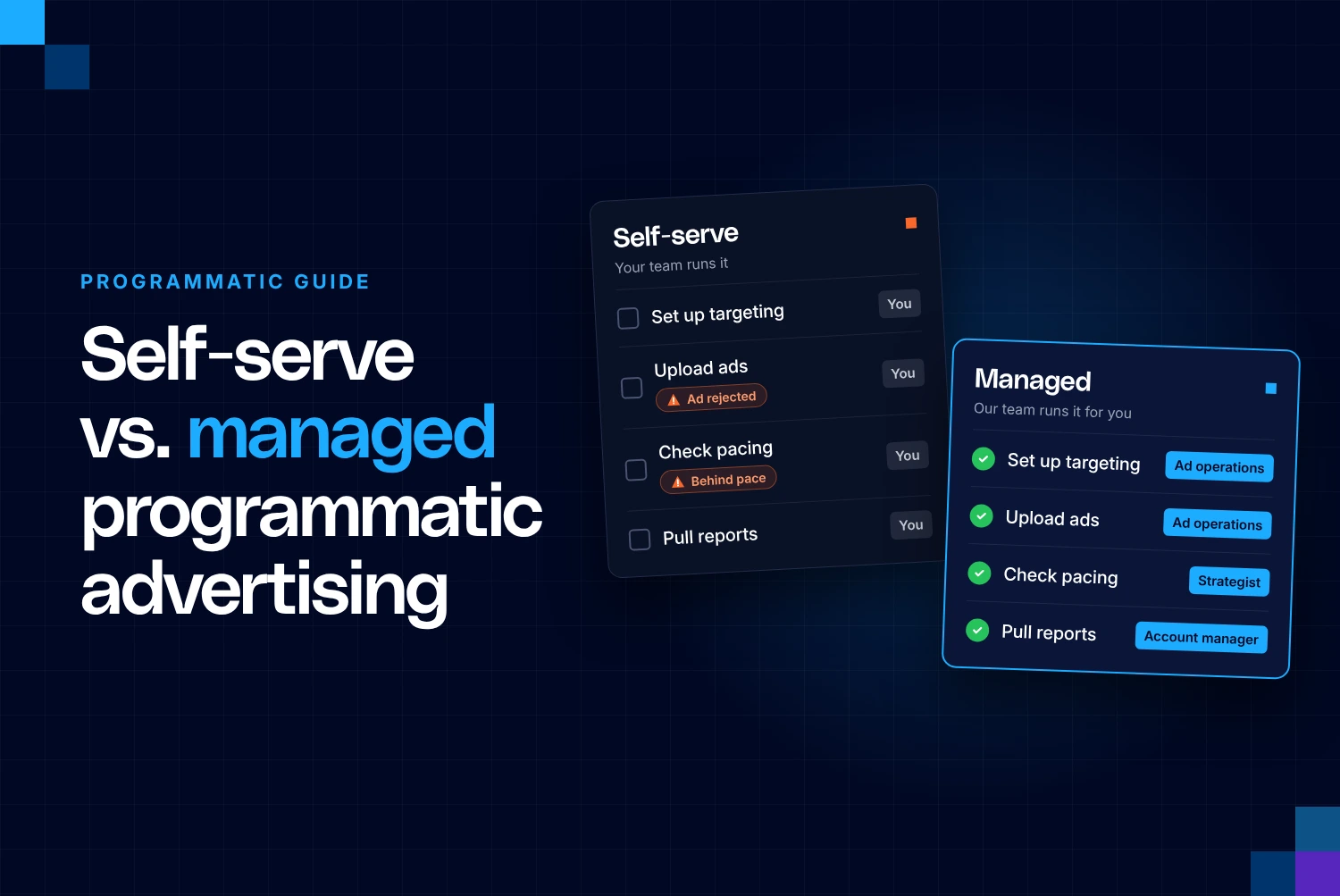
Table of Contents
Once you decide to buy ads programmatically, the next question is who does the buying. With self-serve programmatic advertising, your own team does it, working inside a demand-side platform (DSP) and running campaigns day to day.
With a managed service, you hand that work to a partner whose team plans, buys, and fine-tunes the campaigns for you. Which one fits depends on your team, your spend, and how many channels you want to run.
Key takeaways
- Self-serve gives you full control, but your team supplies the time, skills, data contracts, and measurement.
- A managed price usually bundles the team, data, and measurement, so compare total cost, not a platform fee against a CPM.
- Self-serve fits teams with trained traders and steady spend. Managed fits advertisers who want results without building that team.
- You can mix the two: keep one channel in-house and hand the rest to a partner.
- Before you sign with a managed partner, ask how they buy, how they price, and who you’ll talk to each week.
This guide covers programmatic buying across channels, from display and online video to audio and digital out-of-home. Connected TV has enough options of its own that it gets a separate guide: self-serve vs. managed CTV advertising.
Self-serve DSP vs. managed service: side by side
When self-serve programmatic makes sense
Self-serve works best when the people and the spend are already in place:
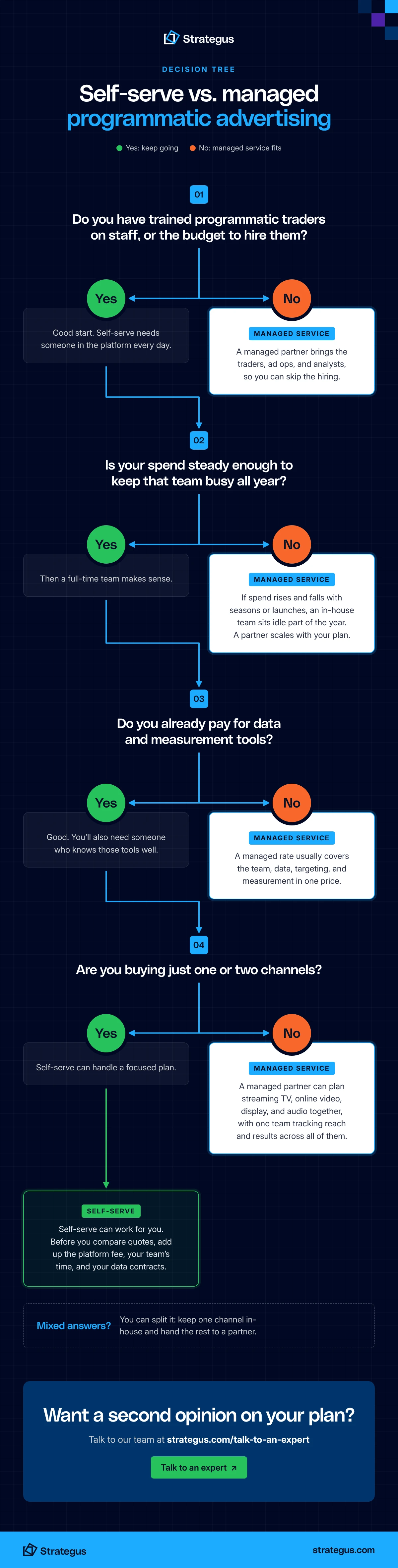
- You have trained traders on staff, or the budget to hire and train them.
- Your spend is steady enough to keep that team busy all year.
- You already pay for data and measurement tools and want to run them yourself.
- Your team wants hands-on control of bids and settings every day.
If most of those are true, the platform fee is usually the cheaper route. If they aren’t, the savings tend to disappear into hiring, training, and extra contracts.
When a managed programmatic service makes sense
Managed service earns its cost when the work is bigger than the team you have for it:
- Nobody on your team has run programmatic buys, and hiring for it doesn’t make sense yet.
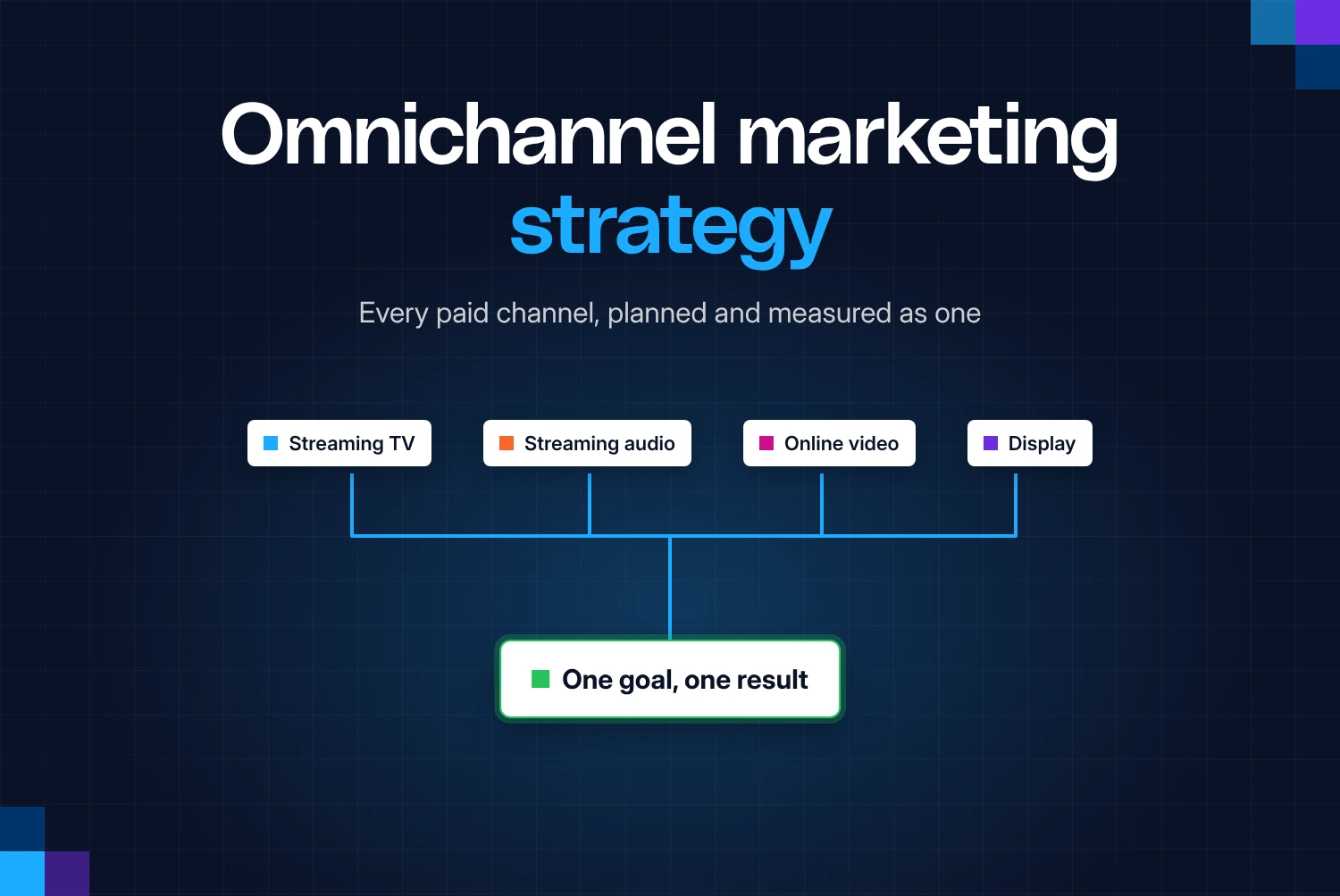
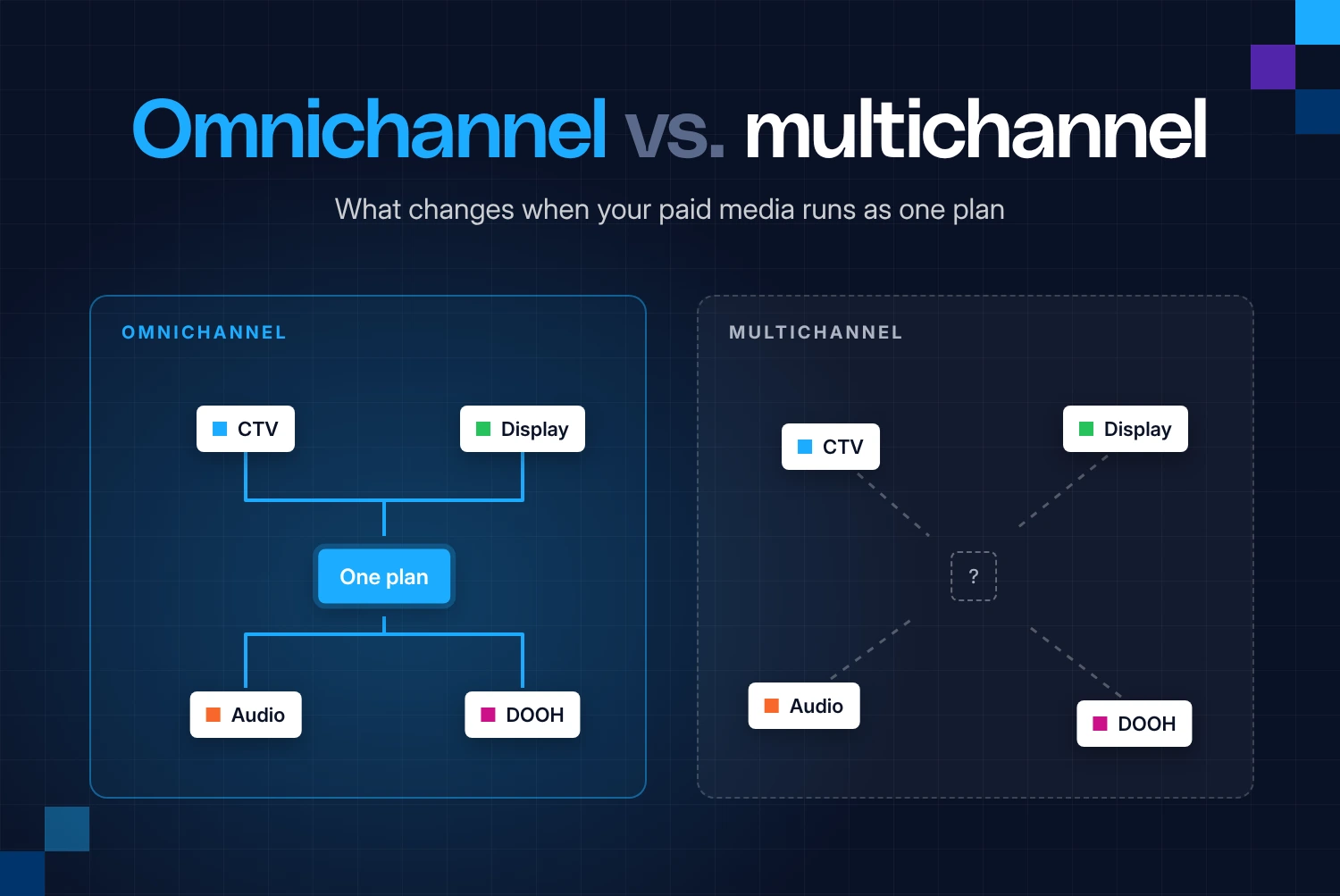
- You run several channels, like connected TV, online video, display, and audio, and want them planned as one campaign.
- Your spend rises and falls with seasons or launches, so a full-time trading team would sit idle part of the year.
- You need campaigns running soon, without waiting to hire and train a team.
- You’re an agency adding programmatic for clients without building a trading desk. See programmatic for agencies.
What self-serve and managed programmatic really cost
A self-serve quote often looks cheaper because it shows only the platform fee. The rest of the cost lands in your own budget: a trained trader’s salary, hours from your ad ops and analytics staff, and the data and measurement contracts a managed partner would include. Budget for the learning curve too, since wrong settings or uneven pacing can waste spend while a new team ramps up.
Managed partners fold most of that into one rate, so line up the two totals before you compare. Whichever model you choose, plan on enough budget to buy real reach and frequency, or the results won’t tell you much. For every layer of cost in a programmatic buy, read our breakdown of programmatic fees.
Comparing a platform fee to a managed rate? We’ll help you add up the full cost of each.

A hybrid setup: keep some in-house, hand off the rest
You don’t have to pick one model for everything. Many advertisers keep one channel on their own platform and hand the rest to a managed partner, and agencies often split accounts the same way. If you mix the two, agree on one goal and one way of counting results, so both sides don’t take credit for the same sale.
Questions to ask a managed programmatic partner
Two managed partners with the same pitch can price, staff, and buy in very different ways, and most of that only shows up once you ask.
- Which DSPs do you buy through? A partner with seats on several can route each part of your plan to the platform with the best deal for it.
- What does the rate include? Get the list in writing, and ask which extras, like new audience data or a brand lift study, cost more.
- Who will I talk to, and how often? Find out who your day-to-day contact is and when reports and recommendations arrive.
- Will I see where my ads ran? Ask whether reports break results down by app, site, or show, or only give one blended number.
- How do you tie ads to results? Ask which actions they can connect to your ads, like site visits, store visits, or sales.
Our take
Make the call one channel at a time. Display advertising is usually the simplest channel to run in-house. Connected TV, audio, and out-of-home take more specs, private deals, and measurement setup, so they’re where a managed partner earns its rate first.
If your team already runs a platform well, keep what it handles and hand off the rest. We’ll plan around it.
See how our team runs it on our managed programmatic advertising page.
Not sure which model fits your team?
Send us a recent campaign report and a sense of your team’s hours. We’ll point out which channels are worth handing off, which to keep in-house, and what that split would cost.
Frequently Asked Questions
Is Netflix AVOD or SVOD?
Layer interests, purchase behavior, and viewing habits on top of age and location — so every impression reaches someone who actually matters to your business.
Is a managed service more expensive than a self-serve DSP?
Not always. A managed rate usually includes the team, data, and measurement that a self-serve buyer pays for separately. Compare the total cost of each, staff time included, instead of the platform fee against the managed rate.
What are the alternatives to a managed programmatic service?
A self-serve DSP run by your own team, an in-house trading desk with direct DSP contracts, or a hybrid where a partner runs some channels and your team runs the rest.
How do I know when to move from self-serve to managed?
Watch for campaigns that sit unchanged for days, reports nobody has time to read, or a plan that keeps adding channels your team hasn’t run before. Any of those usually means the work has outgrown the time you have for it.
get in touch
Subscribe to our
newsletter
Stay ahead with strategies and insights from streaming advertising experts.
Learn from the field


Talk to an expert
Let's plan your next campaign
Tell us what you're trying to hit and what you have to spend. A strategist will show you which channels fit and how we'd measure success.