






.svg)














 Tyler Wise
19 minutes read
.png)
Tired of bidding wars that don’t deliver real value? Frustrated with campaigns that deliver impressions but not conversions?
This is where supply side platforms (SSP) come in.
A supply-side platform connects publishers to multiple ad exchanges, making it easier for advertisers to access targeted inventory at scale. No need to negotiate individual deals.
But how exactly do SSPs work, and how do they fit into the broader programmatic advertising ecosystem? Importantly, are they the right solution for your advertising goals?
In this guide, we explain supply side platform advertising and why it matters for smarter media buying. We’ll also cover alternatives to SSPs, such as connected TV, that help advertisers reach premium audiences with greater precision and accuracy.
What is an SSP in advertising?
An SSP, or supply-side platform, is a technology platform that helps publishers manage, sell, and optimize their ad inventory across multiple channels, including websites, mobile apps, and connected TV (CTV). It also makes it easier for advertisers to access a diverse inventory.
How Linear TV Extension Works
The foundation of Linear TV Extension is exposure-based decision-making rather than assumptions tied to ratings or schedules.
First, household-level data is used to identify where linear TV ads actually ran and which households were exposed. This data can come from set-top box sources, Automatic Content Recognition (ACR), or other verified TV measurement partnerships.
Once exposure is established, households are segmented based on whether they saw the linear ad. From there, Connected TV is used as the delivery mechanism to complete the reach.
Instead of layering CTV broadly across the market, it is activated with intent. Every impression serves a defined purpose, whether that is extending reach, reinforcing messaging, or eliminating duplication.
How do SSPs work?
SSPs automate the sale of ad inventory by connecting publishers with advertisers through the following functions:
- Ad server integration: SSPs act as a “hub” for ad inventory. They connect publishers to ad exchanges and other demand sources to coordinate the buying and selling of ads. Advertisers can reach audiences at scale without managing individual relationships.
- Real-time bidding: SSPs use real-time bidding (RTB) to auction off ad impressions to multiple advertisers. Advertisers then submit bids based on their targeting criteria. This ensures publishers get the best possible price for their inventory.
- Ad delivery: The highest bidder wins the impression, and the ad is instantly served to the user on their device — all within milliseconds of the page loading.
Difference between an SSP and a demand-side platform (DSP)
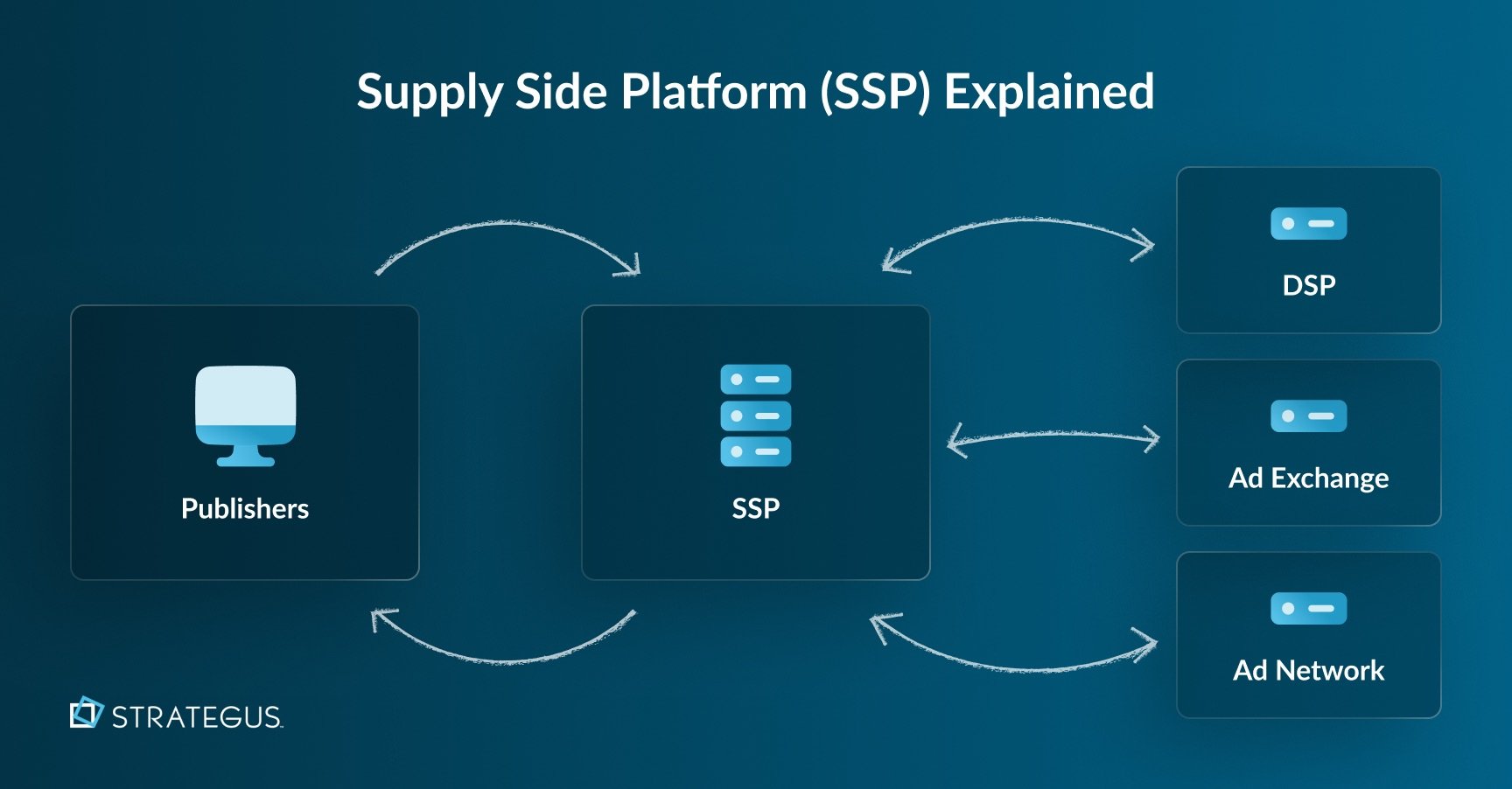
Publishers turn to SSPs to sell their ad inventory, while demand side platforms (DSPs) enable advertisers to bid on that inventory in real-time across publishers. Think of DSPs as the other side of the programmatic advertising coin.
Here’s a graphic that illustrates the differences between SSPs and DSPs:
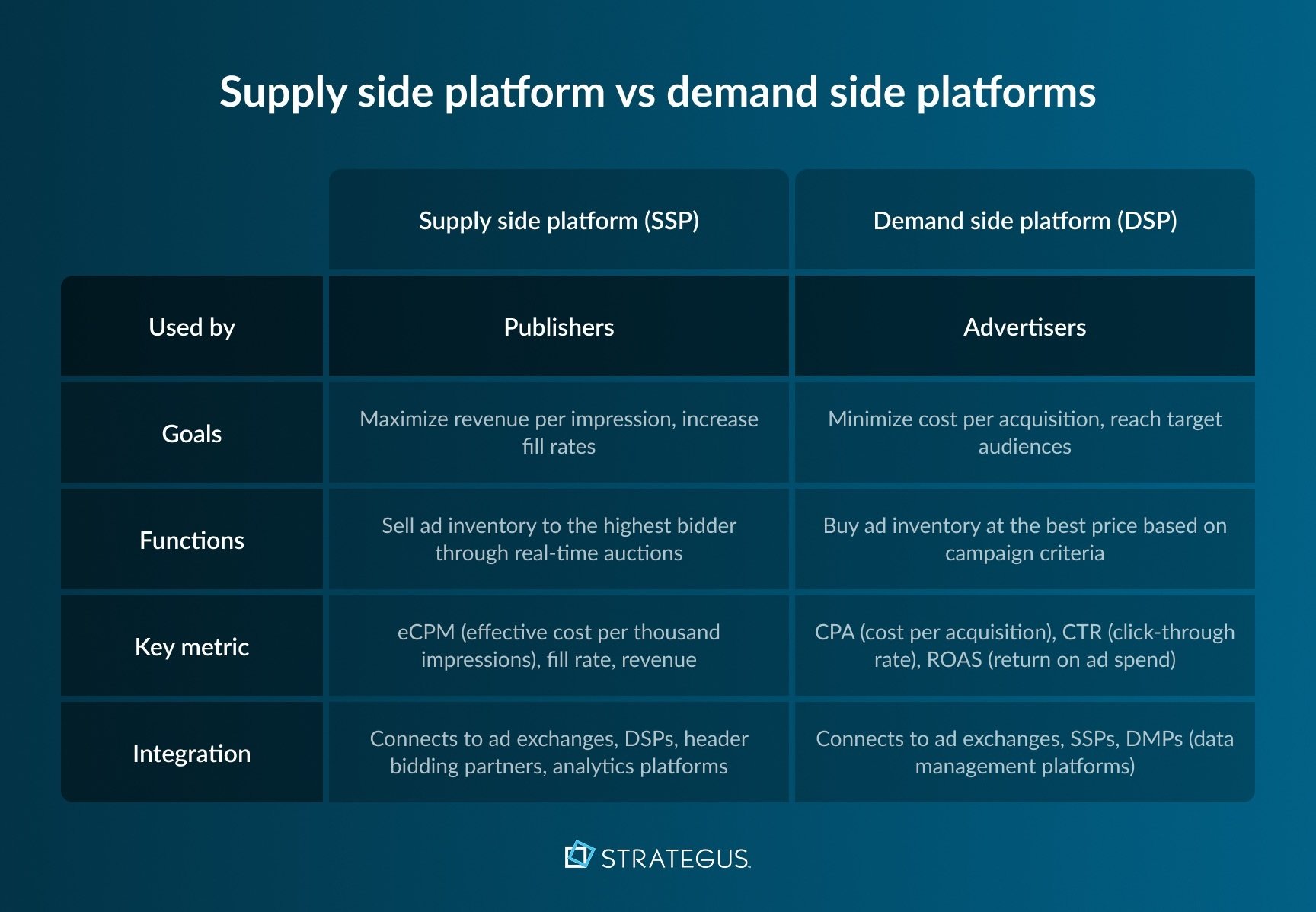
SSPs and DSPs play different roles in the programmatic advertising ecosystem — SSPs cater to the supply side (publishers), and DSPs serve the demand side (advertisers). However, these platforms work in tandem to facilitate real-time ad transactions.
What are the key functions of a supply side platform (SSP)?
SSPs have several key features that are designed to help publishers manage their ad inventory and maximize revenue. Let’s take a closer look at each.
1. Inventory management
Brands often pay higher slotting fees to retailers to have their products displayed at eye level to increase visibility. But it’s not always practical for them to deal with every retailer. Instead, they might work with brokers who act as intermediaries to negotiate product placements.
Similarly, publishers use SSPs to manage their ad inventory across channels like websites, mobile apps, and connected TV (CTV).
SSPs provide publishers with tools to set pricing rules, define ad placements, and control which ads appear on their assets. They can use these tools to:
- Set minimum price floors
- Optimize ad inventory
- Control ad quality
2. Real-time bidding transactions
SSPs play a crucial role in the RTB process, which enables programmatic media buying and facilitates the sale of ad space by publishers.
Here’s a basic overview of how it works:
- A user streams content on a CTV device
- The SSP sends a bid request to multiple demand sources
- Advertisers submit bids based on their campaign criteria
- The SSP evaluates the bids against the publisher’s criteria
- The winning bid is selected, and the advertiser’s ad is served
All of this happens in milliseconds.
The process above describes the marketplace that SSPs create. Advertisers bid against each other for impressions, and publishers receive fair value for their inventory. It’s a win-win for all parties.
3. Ad relevancy
Poor ad quality can negatively impact the user experience and result in lost revenue. An estimated 77% of consumers have encountered bad ads, yet most don’t report them. Even more concerning: 56% say bad ads will cause them to leave a site or close an app immediately.
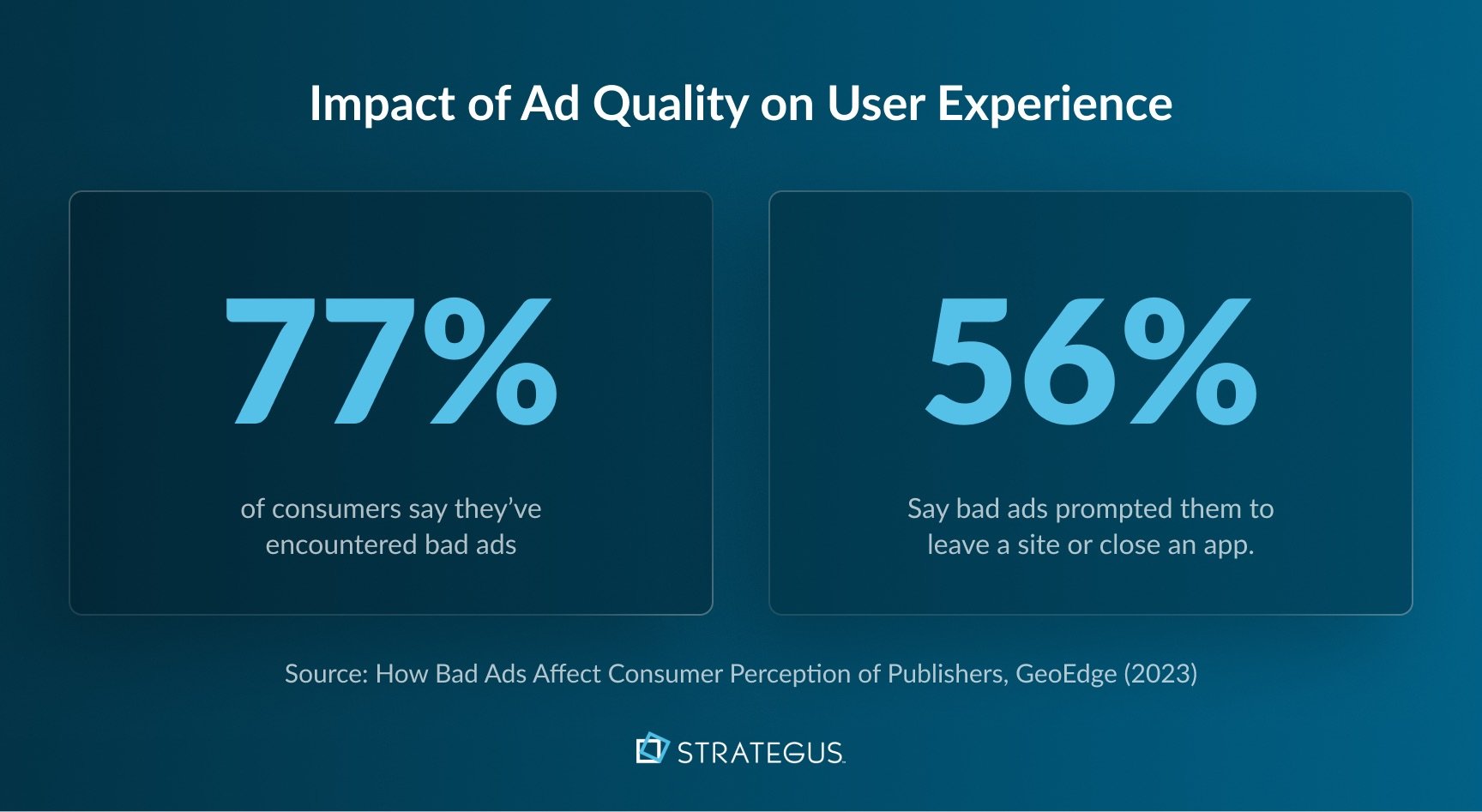
Bad ads can erode trust in publishers — 77% of consumers say that poor ad experiences are a signal that publishers prioritize revenue over protecting their safety. While publishers should maximize their ad revenue, it shouldn’t come at the cost of user experience.
SSPs can serve relevant ads to users based on their interests. This relevancy is achieved through contextual targeting, audience targeting, and geotargeting. SSPs analyze a publisher’s website or app and the user’s characteristics to determine which ads are most likely to resonate with that particular user.
By delivering relevant ads, SSPs can help publishers:
- Increase revenue for publishers
- Enhance user experience
- Increase Click-Through-Rate (CTR)
- Improve inventory value
- Reduce waste in ad spend
4. Frequency capping
Target audiences can get “ad fatigue” when they see the same ads too many times. This can affect engagement and lower click-through rates. According to a Harris Poll, 61% of TV viewers said excessive ad frequency made them less likely to purchase advertised products.
Another important function of SSPs is frequency capping, which limits the frequency at which a specific ad is shown to users within a given timeframe. SSPs work with DSPs to deliver fresh ad experiences.
Frequency capping is essential for preventing ad fatigue and ensuring that users aren’t overwhelmed by the same ads. Publishers can maintain a positive user experience while still maximizing their ad revenue.
SSPs enable publishers to establish custom frequency caps based on various factors, including ad formats, ad campaigns, and user segments. This granular control enables publishers to strike the right balance between ad exposure and engagement, resulting in improved performance and higher returns on their ad inventory.
5. Reporting and insights
Advertisers need the correct data to understand what works and what doesn’t.
SSPs provide comprehensive analytics and reporting that provide insights into their ad inventory. These tools report on key metrics, such as:
- Fill rates (percentage of ad requests filled with ads)
- Viewability (how often users actually see certain ads)
- Effective cost per thousand impressions (eCPM)
- Revenue trends across inventory types
- Buyer demand patterns
With these insights, publishers can spot opportunities to optimize pricing strategies. For example, analytics data may reveal that video ad slots during the afternoon generate higher eCPMs than those during the evening. Publishers can adjust floor prices accordingly to maximize revenue.
These key functions make it easier to manage ad inventory in one place. But what ultimately matters to publishers is the concrete benefits they unlock.
Key Benefits of Using Linear TV Extension with CTV Campaigns
Linear TV Extension improves TV performance by making reach intentional.
Instead of buying more impressions in hopes of reaching new viewers, advertisers can directly target households that were missed. This leads to broader market coverage without inflating spend.
Frequency becomes more controlled. Budgets are not wasted over-serving the same households simply because they watch more linear TV.
Measurement improves as well. While linear TV alone is limited to reach and frequency estimates, Linear TV Extension introduces CTV-level reporting and attribution, allowing advertisers to understand how exposure connects to site visits, store traffic, and conversions.
Most importantly, Linear TV Extension modernizes TV buying without forcing advertisers to abandon linear altogether. It complements what already works while addressing what linear TV cannot do on its own.
3 main benefits of SSPs for publishers
Partnering with an SSP offers numerous advantages that can boost ad revenue and streamline ad operations.
Here are the main benefits of SSPs for publishers:
1. Increased ad fill rates
Maximizing revenue comes down to one key metric: ad fill rates. A high fill rate indicates efficient monetization of ad inventory, while a low fill rate means ad space is going unfilled.
Fill rates can vary based on factors like ad formats, device type, and time of day. However, an 80-90% fill rate is a good benchmark for publishers with a solid ad inventory.
- Formula: Ad fill rate = [Total ad impressions ÷ Total ad requests ] x 100

For example, if a publisher sends 1,000 ad requests and gets 800 ads in response, their ad fill rate is 80%. Tracking this metric can help you measure overall demand for your inventory.
One of the key benefits of an SSP is that it helps publishers increase their ad fill rates. More demand sources mean more opportunities to sell available impressions.
SSPs achieve higher fill rates through advanced algorithms that match your inventory with the most relevant advertisers. This targeted approach increases the likelihood of ads being served on your website or app, leading to more revenue.
2. Improved yield optimization
Yield optimization is another benefit that SSPs provide to help publishers generate more revenue. They offer various tools to help publishers maximize the value of their inventory.
One such tool is the ability to set price floors, which establish a minimum acceptable price for your ad impressions. This way, you can keep your inventory from being sold at low rates and maintain a healthy revenue stream. Without price floors, advertisers could purchase ad impressions at low prices and undervalue premium ad placements.
Additionally, many SSPs support header bidding, a programmatic advertising technique that allows multiple demand sources to bid on your inventory simultaneously. Header bidding creates a more competitive auction environment, driving up the price of your ad impressions and increasing your overall yield.
3. Expanded demand sources
One of the most significant benefits of working with an SSP is access to a broader range of demand sources. SSPs have established partnerships with advertisers, ad agencies, ad exchanges, and DSPs, providing you with a diverse pool of buyers for your inventory.
Increased competition for your ad space drives higher CPMs and more revenue growth. SSPs also often have direct relationships with premium brands, providing you with access to high-quality, relevant ads that resonate with your target audience.
SSPs offer compelling advantages for publishers to manage and automate their ad inventory. However, they also come with trade-offs that individuals should be aware of before proceeding.
Limitations of SSPs
SSPs are valuable tools for automating ad sales. However, they come with a few limitations that can impact campaign performance, targeting precision, and overall effectiveness for advertisers.
Here are a few limitations.
Minimal control over campaign strategy
SSPs primarily serve as platforms for ad placements, but they don’t offer the hands-on campaign management that ensures each aspect aligns with broader marketing goals. Advertisers may find it challenging to achieve cohesive campaign strategies when working with an SSP alone.
SSPs focus on ad inventory sales and typically don’t assist with ad creative development, testing, or real-time optimization. This can limit the effectiveness of campaigns, particularly for brands that need ongoing adjustments to maximize engagement.
Limited support for connected TV
Connected TV is one of the fastest-growing advertising channels — streaming now accounts for 43.8% of overall TV time in the US. That’s great news for advertisers looking to drive growth.
Many SSPs have evolved to support CTV, but often lack advanced capabilities, such as cross-device retargeting or hands-on support, that brands need to maximize their investments.
Without CTV capabilities, advertisers may miss opportunities to reach audiences on streaming platforms where they’re increasingly spending their time. Relying solely on SSPs can leave gaps in your advertising strategy, particularly as engaged audiences migrate to streaming platforms like Netflix, Hulu, and Amazon Prime Video.
Rise of FAST/Streaming TV
Free Ad-Supported Streaming TV (FAST) platforms, such as Pluto TV and Tubi, offer free streaming at virtually no cost. The only tradeoff is that viewers have to watch ads. However, FAST TV is surging in popularity — the number of FAST channels has grown 76% since 2023.
These services offer the kind of premium, long-form viewing environments that advertisers value, but they can fragment audiences across platforms. SSPs often can’t keep pace with the inventory management and specialized ad delivery requirements that FAST TV demands.
These challenges underscore the need for managed CTV partners that can navigate these complexities and execute campaigns successfully.
Lack of cross-device retargeting
Consumers rarely make an immediate purchase; they typically engage with a brand multiple times across channels. A report from eMarketer found that 22.8% of consumers research products five or more times before making a purchase. For example, someone might see a shoe ad on their phone, research options on their laptop, and purchase on their desktop days later.
Many SSPs are limited to single-device environments, which restricts an advertiser’s ability to re-engage users across multiple screens. Without robust cross-device targeting, brands miss out on retargeting opportunities to re-engage viewers as they switch between devices.
So if SSPs have these limitations, what are your options? The answer lies in partnering with managed CTV advertising partners who can address these challenges head-on.
Best advertising alternative to SSPs
For companies seeking to optimize their CTV advertising without the limitations of a traditional SSP, partnering with a full-service CTV agency like Strategus is a game-changing solution.
Strategus provides a completely managed advertising service that transforms CTV campaigns from basic placements into strategic growth engines.
Here’s why Strategus offers a smarter alternative to the fragmented and hands-on requirements of an SSP.
1. Seamless campaign strategy and execution
SSPs offer ad placements, but they leave advertisers to develop and execute their own strategies. In contrast, Strategus becomes an integral part of your team, offering personalized campaign strategies and flawless execution tailored to your business goals.
Every step, from identifying the target audience to launching the campaign, is meticulously planned to achieve the best possible outcomes.
A pizza franchise faced a common challenge: driving foot traffic to their locations. Strategus implemented a 12-week cross-device advertising campaign that combined CTV ads and strategic display retargeting.
The results?
A 31% lift in store visits, with 12,195 confirmed users visiting one of their locations after viewing a CTV ad. The results demonstrate the effectiveness of CTV campaigns — and partnering with a fully managed provider.
2. Advanced audience targeting and retargeting
Strategus leverages a vast network of over 400 inventory and demand partners, allowing unparalleled audience targeting across devices.
These include:
- Bloomberg
- Disney+
- ESPN+
- Hulu
- Peakcock
- Netflix
- Prime Video
- Sling
- Viacom
- Warner Media
And many more.
Unlike SSPs, which offer limited targeting flexibility, Strategus can reach specific demographics, behaviors, and interests, ensuring ads are served to the most relevant audiences. This helps you eliminate wasteful ad impressions and reach those who are more likely to take action.
With the added benefit of cross-device retargeting, Strategus ensures a cohesive brand experience, allowing you to capture potential customers wherever they go.
3. Real-time optimization for maximum impact
While SSPs may facilitate basic ad delivery, Strategus offers ongoing, real-time optimization of ad placements. Our team continuously monitors campaign data and fine-tunes individual elements to improve engagement and conversion rates.
Every dollar you spend is optimized to drive measurable impact, removing the need for advertisers to invest time in constant adjustments.
4. In-depth analytics and attribution
SSPs lack comprehensive reporting and attribution, which can leave advertisers in the dark about which campaigns delivered results. Strategus provides clients with detailed insights into customer journeys, conversion rates, and ROI.
“Working with Strategus, we’re now able to report data showing how many people saw our spots, how many took the next step and went to our website,and what percentage of those engagements resulted in transactions. This has really helped quantify our ROI.” Brian Bowsher, University Of Washington Associate Athletic Director
Through advanced attribution models and 24/7 reporting dashboards, advertisers have complete visibility into the performance of their campaigns.
5. Fraud protection and brand safety
Ad fraud is a risk that SSPs often struggle to manage effectively. Strategus addresses this with built-in fraud prevention and brand safety tools to ensure your ads are displayed to genuine viewers in authentic contexts. These measures help protect your ad budget and maintain your brand’s reputation.
6. Hands-Off Management
Unlike the self-managed nature of SSPs, Strategus offers a hands-off, white-glove service that frees your time and resources. Our team of CTV experts manages everything, from campaign planning to optimization and reporting. You can focus on your core business while getting the benefits of a strategic, expertly managed CTV campaign.
In a digital world where CTV is reshaping the future of advertising, Strategus allows brands to bypass the limitations of SSPs with a fully integrated advertising experience that’s as effective as it is effortless.
But don’t take our word for it, see how we helped a beauty brand achieve remarkable results with a targeted CTV campaign.
CTV case study: How targeted advertising delivered $200k in revenue for a beauty brand

A beauty brand wanted to elevate its digital presence, but they knew it wouldn’t be easy against established brands in the cosmetics market. They partnered with Strategus and redirected their TV budget into a CTV campaign. The goal was to increase online traffic and generate revenue.
Strategus launched a 3-month campaign across nine designated market areas (DMAs). It targeted women aged 24-54 in the market for premium cosmetics and skin care products.
Our experts implemented a full-funnel CTV strategy, starting with CTV ads on the big screen then retargeting viewers with online video and display ads to drive clicks and online purchases.
The results were impressive.
The campaign helped the company generate over $200,000 in eCommerce revenue from 4,024 online purchases. It continued delivering additional revenue weeks after it ended. This case study demonstrates the measurable impact a tailored CTV campaign can have.
Go beyond SSPs: Partner with Strategus for smarter CTV advertising
SSPs are useful tools to automate ad inventory. But basic targeting, limited reporting, and little campaign support don’t make them the best choice for brands looking to maximize ROI.
It’s time to consider a better path forward.
Strategus offers a fully managed CTV solution that delivers results, not just impressions. When you partner with our team, you get:
- End-to-end campaign management: From planning to execution, our team handles everything.
- Advanced targeting and retargeting: Reach precise audiences across all devices with 400+ data and media partners.
- Real-time optimization: Maximize impact with hands-on performance tuning throughout the campaign.
- 24/7 analytics and attribution: Gain complete visibility into ROI and user behavior with actionable reporting.
- Fraud protection and brand safety: Protect your ad budget and reputation with built-in safeguards.
- Zero operational lift: Our white-glove service frees up your team while driving measurable outcomes.
Leave the complexity of SSPs behind.
Connect with Strategus today to drive better performance, smarter targeting, and real business growth through CTV advertising.
Frequently asked questions
What is an SSP in advertising?
An SSP, or supply-side platform, helps publishers manage and sell their digital ad inventory. It connects them with ad exchanges and DSPs, enabling real-time auctions for ad space. Publishers can earn more by allowing multiple advertisers to bid on each impression.
How do SSPs work?
When a user visits a publisher’s site, the SSP sends a bid request to multiple demand sources. These sources submit bids in real time. The SSP selects the highest bid and serves the winning ad instantly. This process maximizes revenue and ensures relevant ads are shown.
What is the difference between a DSP and an SSP?
A demand side platform (DSP) is used by advertisers to buy ad space. A supply side platform (SSP) is used by publishers to sell that space. DSPs seek the best inventory at the best price, while SSPs strive to obtain the highest price for each impression.
What does ad inventory mean in digital advertising?
Ad inventory refers to the available ad space a publisher has on their website, app, or CTV platform. This can include banner placements, video pre-rolls, or native ads. SSPs help manage and sell this inventory to advertisers through programmatic auctions.
What are the main functions of an SSP?
SSPs manage inventory, enable real-time bidding, apply frequency capping, ensure ad relevance, and optimize yield. They act as the interface between publishers and buyers, allowing inventory to be priced, packaged, and sold to maximize ad revenue.
What are the limitations of using SSPs alone?
SSPs don’t offer a whole campaign strategy, creative support, or advanced analytics. Advertisers may face limited attribution, weak cross-device performance tracking, and an increased risk of ad fraud. For greater control and enhanced performance, many brands opt for full-service managed CTV partners.
What is yield optimization in programmatic advertising?
Yield optimization refers to the process of maximizing revenue from available ad inventory. SSPs use tools like price floors and header bidding to attract high-value bids. The goal is to sell more impressions at higher prices without compromising user experience.
Can SSPs help with frequency capping?
Yes, SSPs allow publishers to set limits on how often a user sees the same ad. Frequency capping helps avoid ad fatigue, maintains a positive user experience, and enhances engagement. SSPs apply these limits across multiple apps and websites in collaboration with DSPs.
Are SSPs vulnerable to ad fraud?
Yes, without strong fraud detection, SSPs can serve ads to bots or invalid traffic. This wastes advertiser budgets and distorts performance metrics. That’s why many brands partner with companies that offer built-in fraud protection and brand safety tools to ensure high-quality impressions.
What’s the alternative to using just an SSP?
A managed CTV partner, such as Strategus, offers a better alternative. You get end-to-end campaign management, advanced targeting, full-funnel optimization, real-time reporting, and fraud protection—all in one place. This delivers more effective advertising without the hands-on burden of managing an SSP.


Strategus is a managed services connected TV(CTV) advertising agency with over 60,000+ campaigns delivered. Find out how our experts can extend your team and drive the result that matter most.
What to read next