Self-serve vs. managed CTV advertising

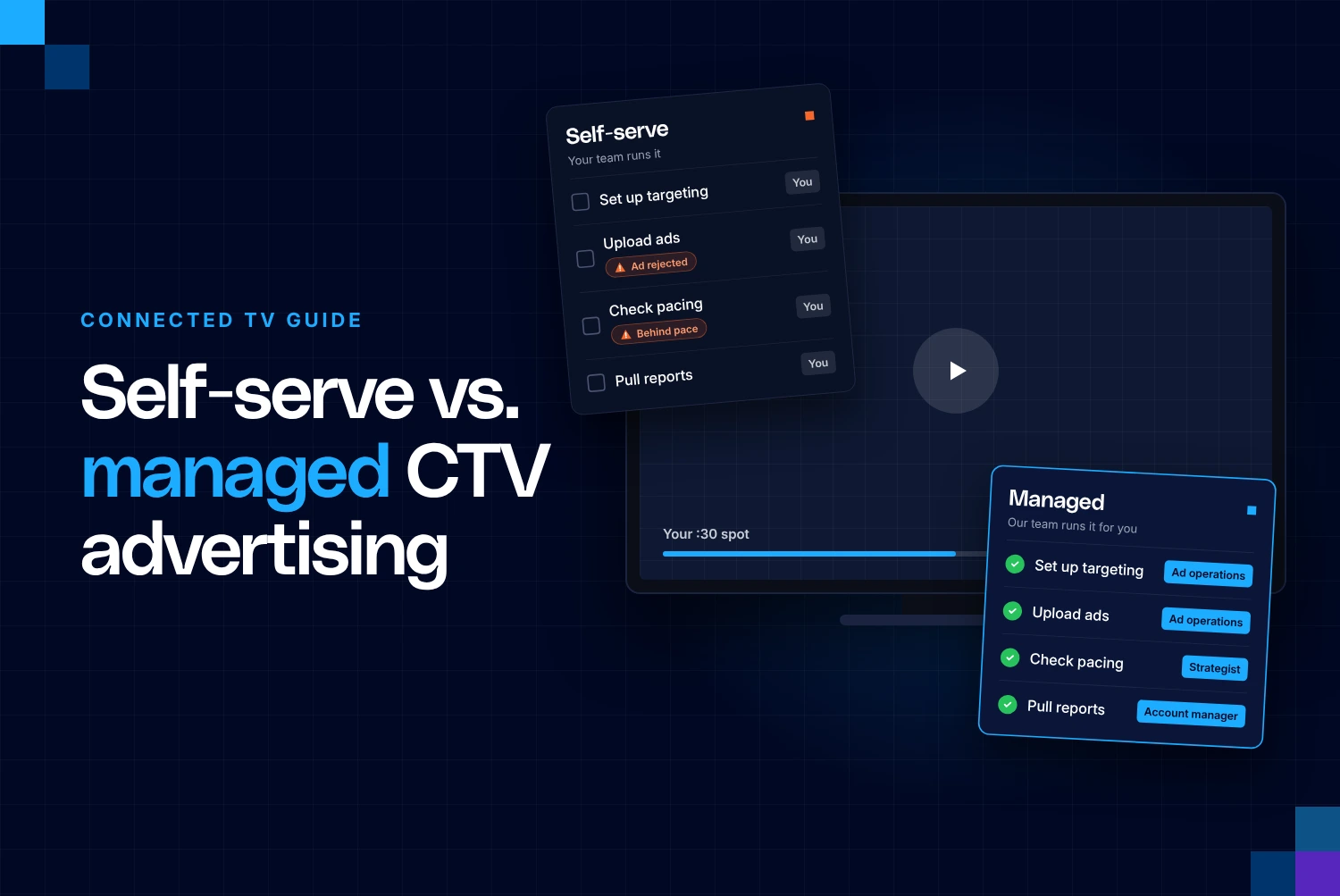
Table of Contents
Self-serve CTV advertising means your team buys connected TV ads in a platform’s dashboard and runs the campaign itself. Managed CTV advertising means a partner plans, buys, and adjusts the campaign for you. Many self-serve CTV platforms now sell a managed option as well, which falls in between.
Key takeaways
- Self-serve CTV is quick to start and puts every setting in your hands, along with the video specs, buying, and measurement.
- A managed option on a self-serve platform usually adds advice and setup help, with the buying limited to that platform’s inventory.
- A fully managed partner plans, buys, and adjusts the campaign for you, often across several DSPs and alongside your other channels.
- Fees, data access, and how fast changes happen vary more by partner than by model, so ask before you sign.
- A first TV campaign, a move from linear, or several markets at once are the usual signs that managed is worth it.
Three ways to run CTV campaigns
Most CTV options fall into one of three setups, and they differ mainly in how much of the daily work stays with your team. For the kinds of platforms and how the buying works behind them, see our guide to CTV advertising platforms.
| | Self-serve | Self-serve with a managed option | Fully managed |
|---|---|---|---|
| Who runs it | Your team, in the platform | Your team, with an account manager who advises and sometimes makes changes | The partner’s strategists and ad operations team |
| Inventory | The apps and deals that platform has | The apps and deals that platform has | Often several DSPs and private deals, picked for the plan |
| Creative | You supply TV-ready video | You supply it, and some platforms offer build tools | The partner checks specs and can arrange or adapt video |
| Reporting | The platform’s dashboard, read by your team | The platform’s dashboard, plus check-ins | A live dashboard, plus a team that explains results and what to change |
| Pricing | Media cost, sometimes with a platform fee | Media cost, sometimes with a service fee or a higher minimum | Either a management fee on top of media or one all-in rate |
| Best for | Teams that already run paid media in-house | Teams that run CTV themselves and want backup | Advertisers who want the results without staffing the work |
Where self-serve CTV works well
Self-serve platforms have made connected TV much easier to buy. Setup is quick, spend minimums are usually low, and your team can change the audience or swap a video whenever it wants. If you already run search and social in-house, the dashboards will feel familiar, and many platforms can send results to the analytics tools you already use.
What makes CTV harder to run yourself
Connected TV asks for a few things search and social don’t, and most of them show up after launch.
- Video built for TV: each streaming app sets its own rules for length, file size, and audio, and a spot that misses them can get rejected. Video cut for phones usually needs a new edit.
- Premium inventory: a lot of the best-known streaming content is sold through private deals. A new account on one platform may only reach the apps that platform has signed.
- Frequency across apps: the same household can see your ad on three apps in one night. Keeping that in check takes household-level planning across every place you buy.
- Measurement without clicks: nobody clicks a TV ad, so results come from matching the households that saw it to later site visits and sales. That takes a tracking pixel on your site and a platform that can make the household match.
- Brand safety and fraud: CTV has its share of fake devices and low-quality apps. Someone has to check where the ads actually ran and block the bad sources.
Short on TV-ready video or hours to optimize each week? See what a managed team would take on.

What a managed service option on a self-serve CTV platform includes
Plenty of self-serve CTV platforms now advertise a managed service, and the term can mean very different things. Usually it’s an account manager who helps with setup, suggests audiences, and reviews results with you. Some will make changes in the account for you once your spend passes a set level.
The buying still runs on that platform’s own inventory and tools, so its team can’t move your budget to another DSP when a better deal shows up there. For a first campaign that may be all you need. Before you count on it, ask who makes the daily changes, whether the help costs extra or needs a higher minimum, and how many other accounts your contact covers.
Common concerns about managed CTV, and what to ask
Self-serve platforms make a fair case against some managed setups. Each of their points turns into a question you can put to any managed partner.
- Will I pay a management fee on top of media? Some agencies add one as a percentage of spend. Ask for the full price per thousand impressions with fees included, and how many of those impressions run on TV screens, since some CTV buys mix in phones and laptops.
- Who owns the data and the logins? Ask for your own dashboard login and results broken out by streaming app and device, and confirm the data stays yours if you leave.
- How fast do changes go live? Ask who approves a new audience or video and how long each takes. A new TV spot also has to pass each app’s ad review, whoever runs the campaign, so plan swaps ahead.
- Who decides how results are counted? Agree on the attribution window and what counts as a conversion before launch, and ask whether a third party checks the numbers.
Which CTV model fits your team
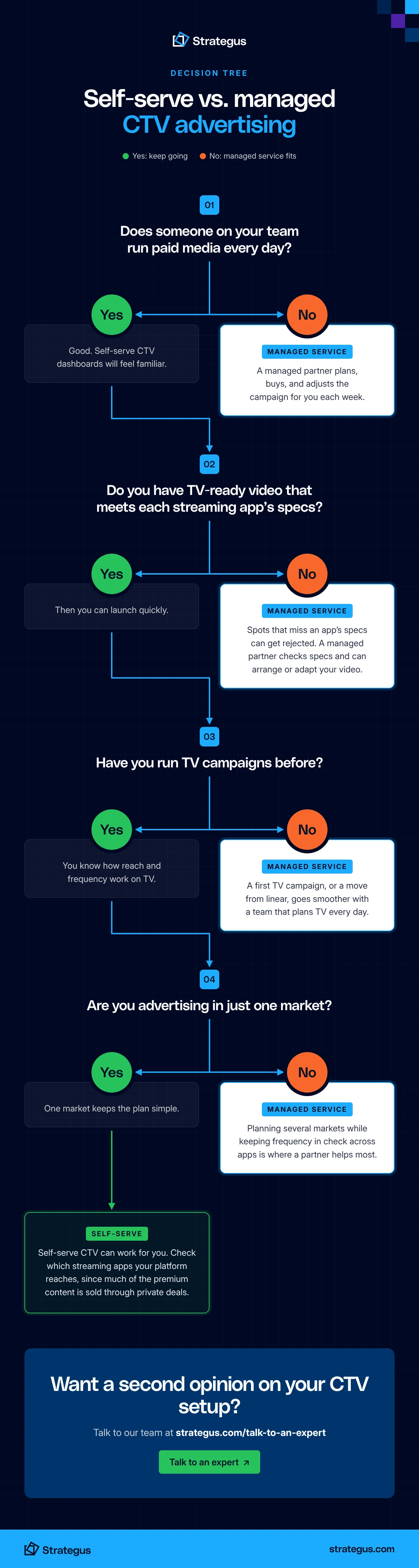
Start with who will do the work each week. If someone on your team already runs paid media day to day and you have TV-ready video, self-serve can carry it. If you’d like to run it yourself with a second set of eyes on setup and results, a self-serve platform with a managed option fits.
A fully managed partner makes more sense when this is your first TV campaign, you’re moving budget over from linear TV, or you need several markets planned at once. Regulated categories like finance, healthcare, and legal often go managed too, since their content and targeting rules take experience to get right.
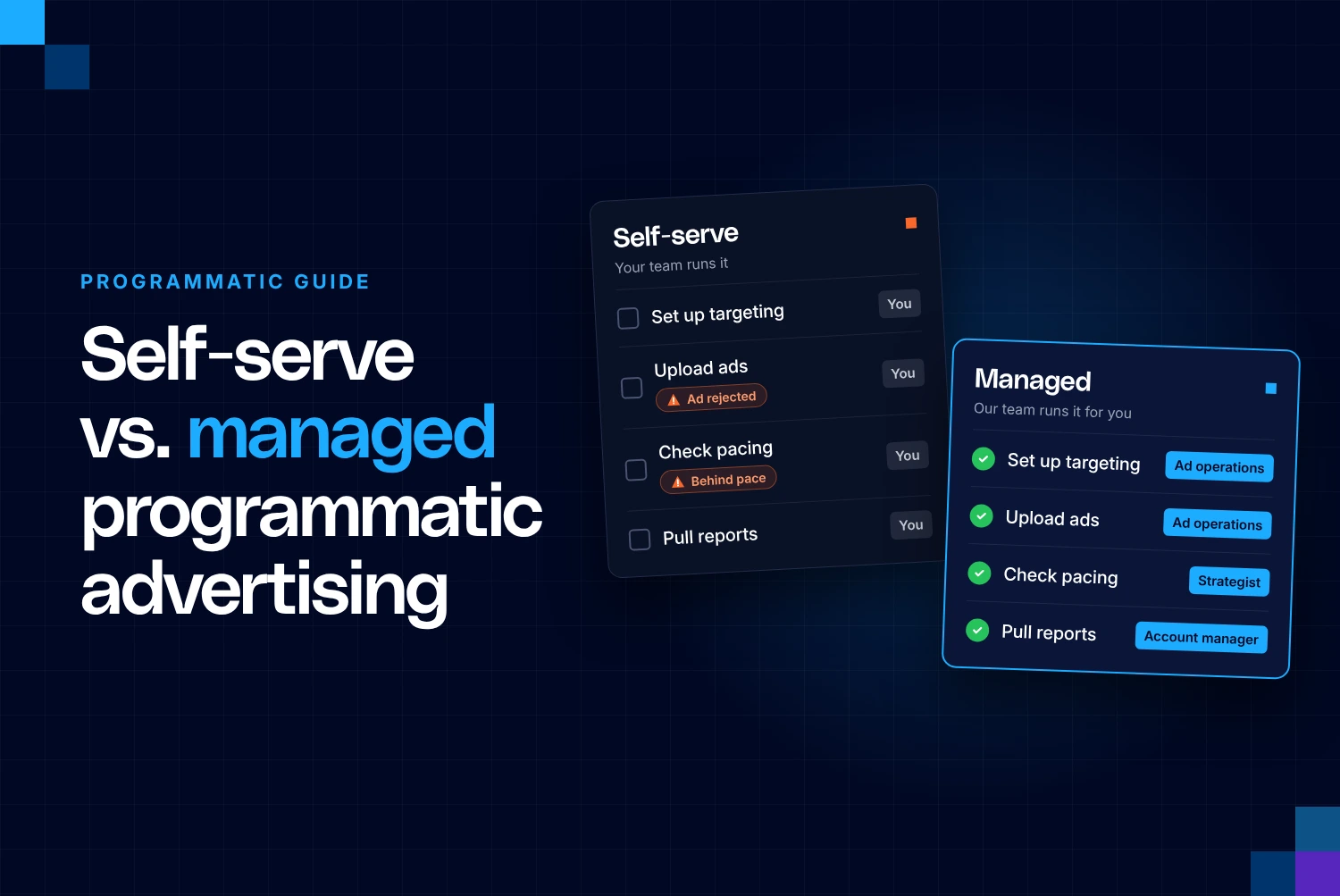
If you’re weighing the same choice for display, online video, or audio, our guide to self-serve vs. managed programmatic advertising covers it channel by channel.
Our take
CTV does its best work as part of a wider plan. A platform that sells only its own CTV inventory can’t follow the same household onto phones and laptops or count results across them, whoever runs it. We pioneered programmatic CTV in 2015 and run it today as a managed service, on its own or as part of a full plan. Our CTV advertising page shows how we run it. For what’s included and how pricing works, see our managed programmatic advertising page.
Want a second opinion on your CTV setup?
Already running CTV on a self-serve platform? Our team will review your setup and tell you what we’d keep and what we’d change. New to TV? Tell us the markets you want to reach, and we’ll sketch a managed plan and what it would cost.

Frequently Asked Questions
Is Netflix AVOD or SVOD?
Layer interests, purchase behavior, and viewing habits on top of age and location — so every impression reaches someone who actually matters to your business.
What are the best self-serve CTV advertising platforms with a managed service option?
It depends on where you want your ads to run. Streaming services’ own ad managers reach only their apps. Self-serve CTV platforms reach many apps, and several add an account team once you spend enough. If you want a team to plan and buy across several DSPs, an independent managed partner is the closer fit. Compare them on inventory, minimums, who makes changes, and what reporting you get.
Do I need a TV commercial to run CTV ads?
Yes, you need video that meets connected TV specs, usually a 15- or 30-second spot. Self-serve platforms expect you to bring it, though some have tools that build one from images and clips. If you work with a managed partner, ask whether creative help is included or billed separately.
Is self-serve CTV a good fit for local businesses?
It can be, if someone has time to run it. Local campaigns need tight geographic targeting and enough budget to reach the same households more than once, and a small budget spread across too many apps is hard to read. A managed partner can build the plan around your market from day one.
How do I measure a self-serve CTV campaign?
Since nobody clicks a TV ad, most platforms match ad views to later site visits and conversions from the same household, within a window you set. Use the same window you use for your other channels so the results line up.
get in touch
Subscribe to our
newsletter
Stay ahead with strategies and insights from streaming advertising experts.
Learn from the field


Talk to an expert
Let's plan your next campaign
Tell us what you're trying to hit and what you have to spend. A strategist will show you which channels fit and how we'd measure success.