




.svg)










 Tyler Wise
21 minutes read
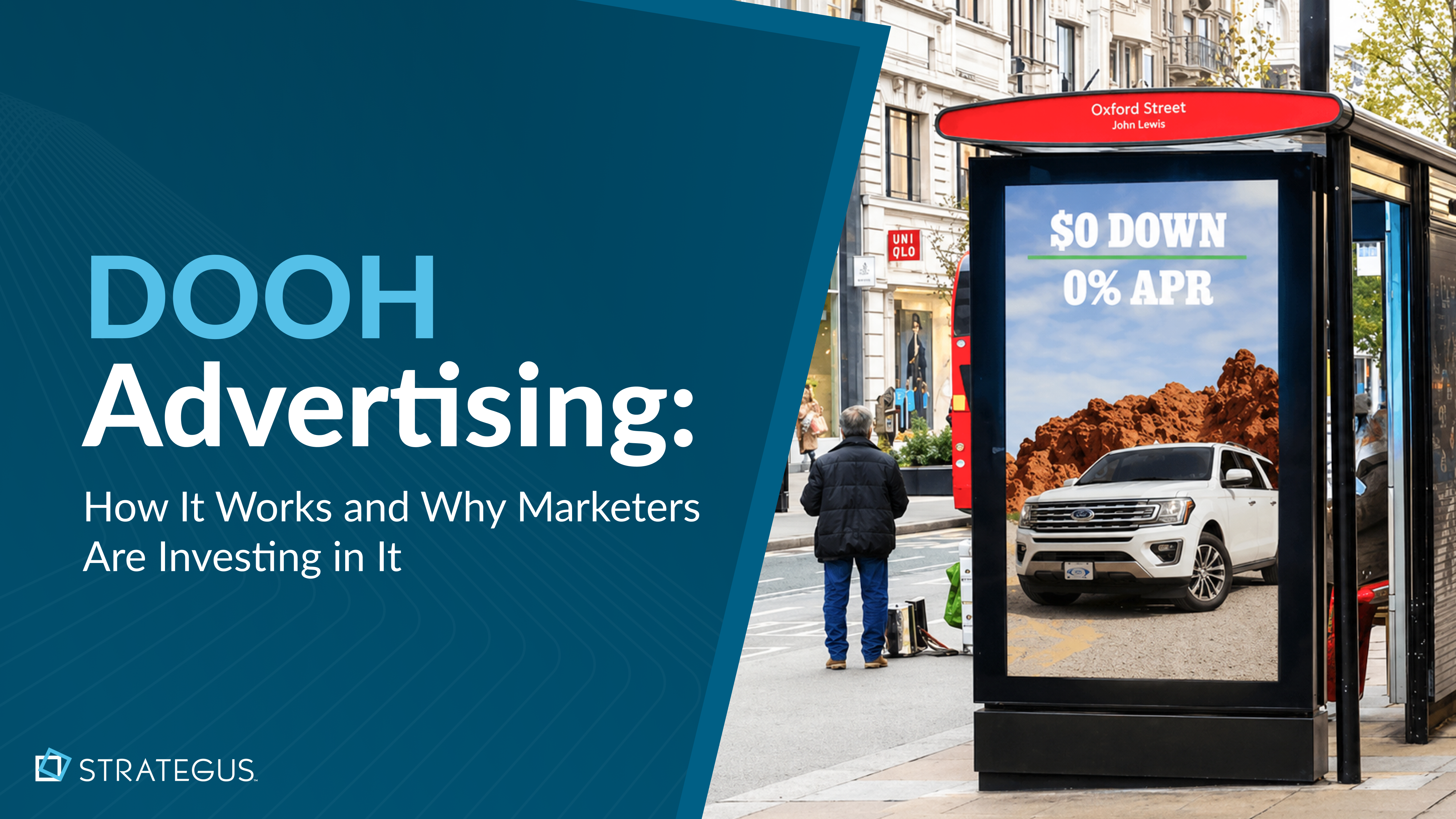
DOOH has existed for two decades, but the way it's bought, targeted, and measured has changed significantly in the last few years. It now operates much more like a digital channel than a traditional outdoor one, which is why it's showing up in more programmatic media plans.
But the channel has its own rules, buying mechanics, and measurement logic that don't map cleanly onto what most digital marketers already know.
This guide covers how to get DOOH advertising right. It covers what DOOH is, how it works, how to buy and measure it, and how it fits alongside CTV, OTT, online video, and display in a modern omnichannel strategy.
What Is DOOH Advertising?
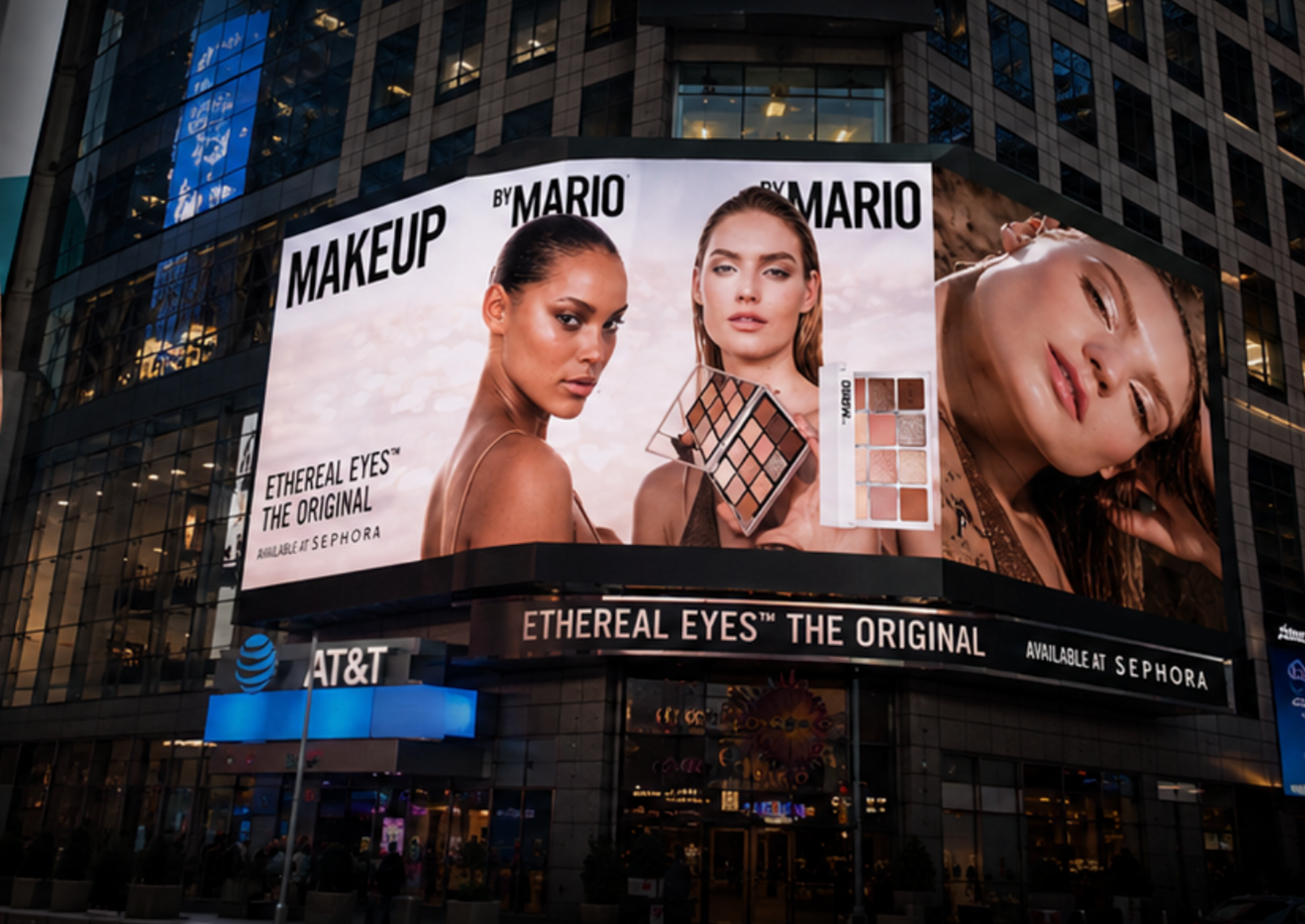
DOOH (digital out-of-home advertising) is any ad delivered on a digital screen in a public or shared environment outside the home. That covers everything from a digital highway billboard to a screen in a gym, a pharmacy, or an airport terminal.
DOOH is the modern evolution of traditional out-of-home (OOH) advertising, which includes the likes of non-digital billboards and bus stop ads.
It’s not just the screen that’s different, though. The entire ad buying process changes.
In traditional OOH, a vinyl billboard is bought weeks in advance, installed physically, and runs unchanged for the duration of the contract. A DOOH placement on the same structure can be updated instantly, scheduled by daypart, or triggered by external data like weather or live sports scores.
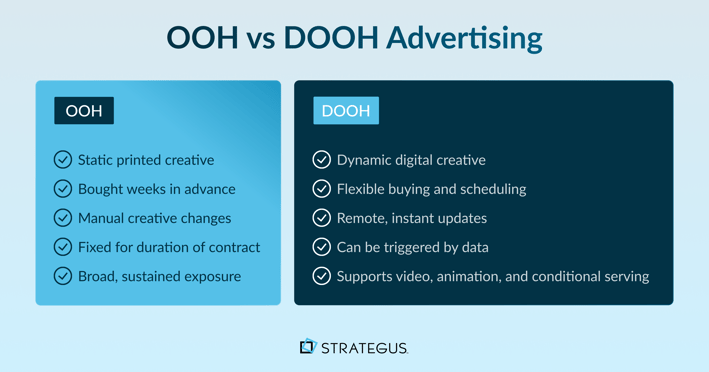
That changes the game entirely for advertisers, with DOOH supporting functions like:
- Video and animation
- Conditional creative serving
- Real-time data triggers
- Remote updates across an entire screen network simultaneously
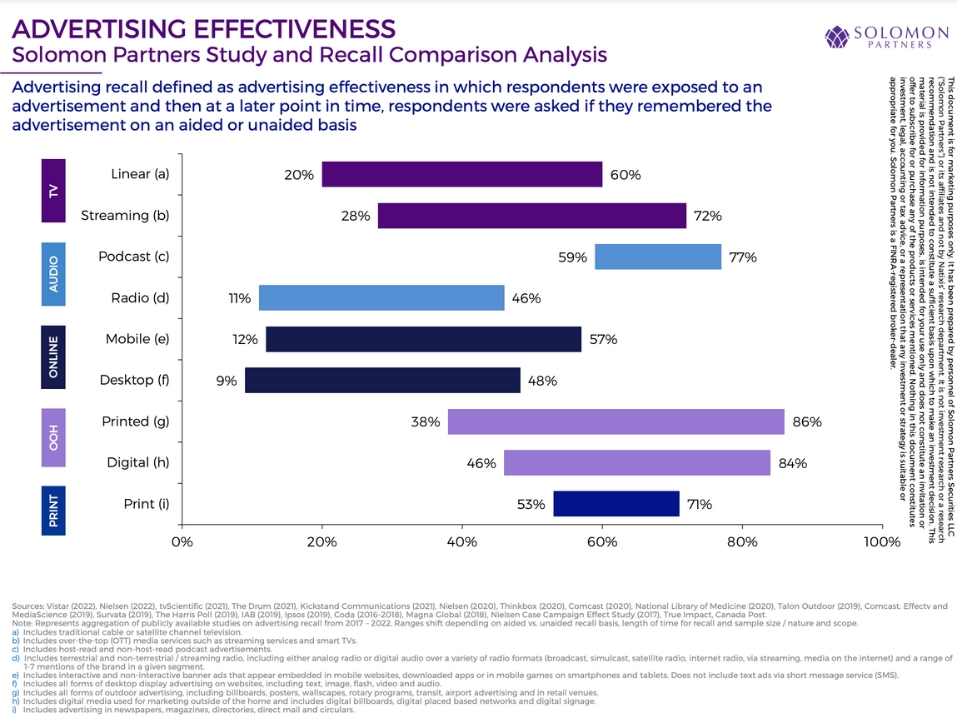
Those capabilities have a meaningful impact on how viewers perceive and interact with ads. DOOH's unaided recall rate sits at 47%, above mobile at 35% and TV at 22%.
Where DOOH Appears: Format Types
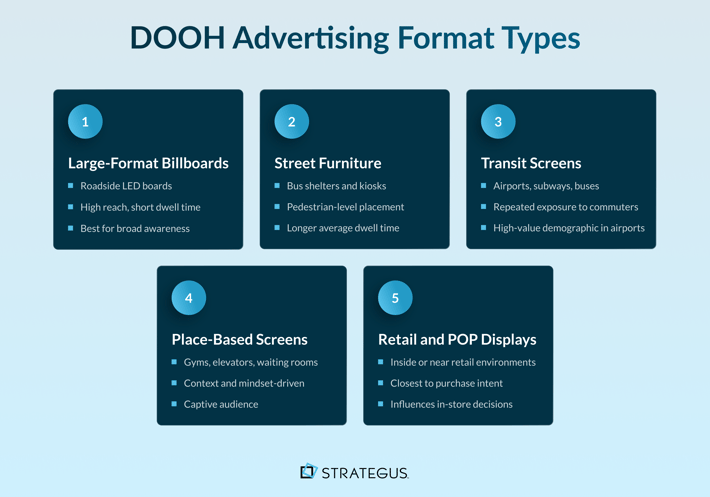
DOOH inventory spans several distinct environment types, each with its own reach profile, dwell time, and audience mindset.
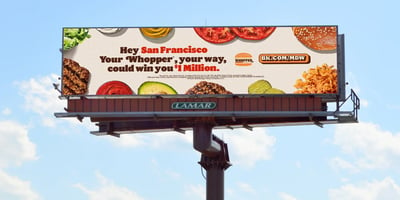
Large-format digital billboards on highways and in city centers deliver high reach
with short dwell time, making them best suited to broad awareness plays.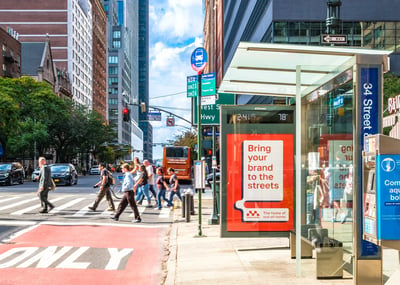
Street furniture like bus shelters and kiosks puts the screen closer to
the viewer, with longer dwell time and neighborhood-level placement.
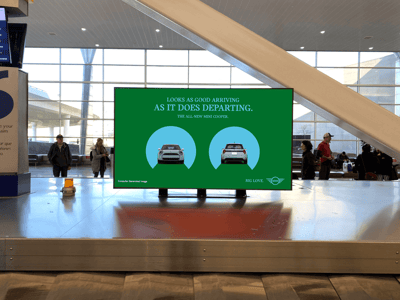
Transit screens in airports, subway stations, and buses reach commuter audiences
on predictable daily schedules, which is a natural advantage for frequency building.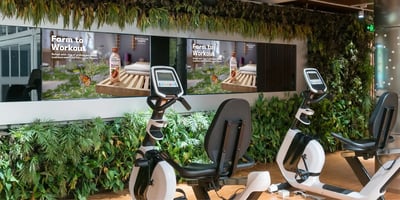
Place-based screens in gyms, elevators, and healthcare waiting rooms are about context and mindset as much as location. A protein bar ad in a gym hits differently than the same ad on a highway billboard.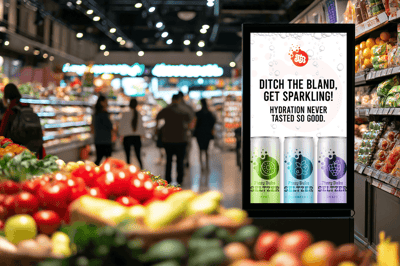
Retail and point-of-purchase displays are where DOOH intersects most directly with purchase intent. A screen promoting a product at the end of the aisle where that product sits can influence a decision that is seconds away from being made.
How DOOH Advertising Works
To launch a DOOH campaign, the creative is uploaded to a content management system, and the ad server delivers it to screens based on the campaign parameters set, such as location, daypart, audience segment, and flight dates.
Most DOOH placements are shared inventory. Multiple advertisers cycle through the same screen in a loop, and a standard billboard spot might be one of six or eight rotating through at any given time.
Advertisers who want to dominate a specific location can purchase additional spots in the same rotation to increase share of voice, or negotiate a roadblock through a direct buy, which locks in 100% share of voice for a defined time window.
Spot length varies by environment. Billboards typically run 8 to 15 seconds, while transit and place-based screens, where audiences are stationary for longer, can support spots up to 30 seconds.
Unlike digital video, there is no skip button, so the ad plays whether someone is watching or not.
Programmatic DOOH: Targeting, Buying, and Optimization
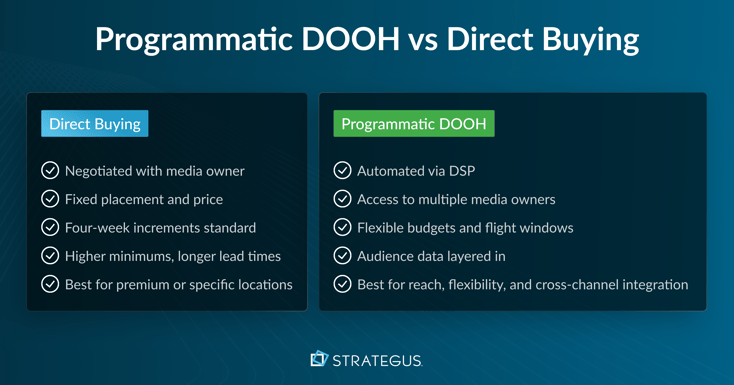
Programmatic DOOH uses a demand-side platform (DSP) to purchase inventory in real time or near-real time based on targeting parameters and bid rules set by the advertiser.
The ad buyer sets campaign parameters, and the DSP finds and purchases matching inventory automatically across multiple media owners through a single platform.
A direct buy looks very different. Placement, price, and flight dates are negotiated with the media owner upfront, typically in weekly or four-week increments. Direct buys offer more control over specific screens and locations, but come with higher minimums and longer lead times.
Neither approach is universally better.
Direct buys make sense when specific screen locations matter or the campaign requires premium placement or share-of-voice guarantees. Programmatic tends to be a better fit when flexibility and in-flight optimization matter or when DOOH is being integrated into a cross-channel programmatic strategy managed through a single DSP.
Many sophisticated campaigns use both. Advertisers might use direct buys to secure hero placements in key markets and programmatic to extend reach efficiently across a broader footprint.
pDOOH Targeting Capabilities
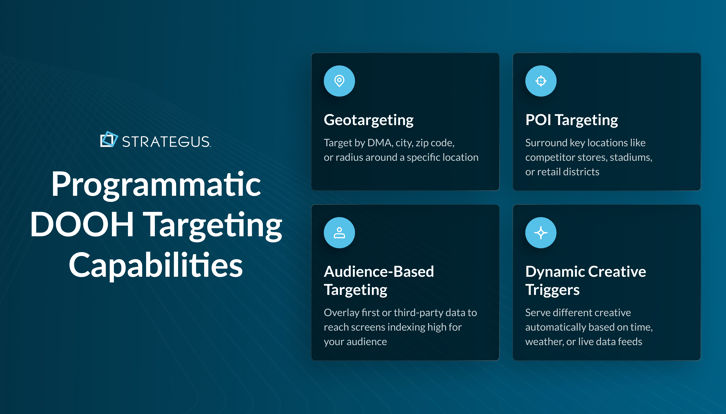
pDOOH or Programmatic DOOH offers several targeting capabilities that go well beyond picking a screen location on a map.
 Geotargeting
Geotargeting lets buyers target by DMA, city, zip code, or radius around a specific point of interest. A regional retailer, for example, might only deliver ads on screens within a defined drive radius of its store locations rather than blanketing an entire market.

Point of interest (POI) targeting
POI targeting takes that a step further by surrounding specific locations with DOOH inventory.
For example, a competitor conquest strategy might concentrate spending on screens near a rival's retail locations, or a sports brand might cluster inventory around stadiums and fitness districts.

Audience-based targeting
Audience-based targeting overlays third-party or first-party data to reach screens that index high for a specific demographic or behavioral segment. That’s not individual-level targeting, however. The system identifies screens where the right audience is likely to be present, not specific people.
 Dynamic creative and triggers
Targeting controls where ads run. Dynamic creative controls layer on top of that to determine which creative runs and when.
- Daypart triggers serve different creative at different times of day automatically. For example, a QSR brand can run breakfast creative in the morning and dinner creative in the evening on the same screens without any manual intervention.
- Data triggers change creative based on external inputs. Weather feeds, live sports scores, stock prices, pollen counts, and flight arrival data have all been used to trigger DOOH creative variants. An advertiser sets the rules in the ad server, a data feed supplies the condition, and the matching creative is served automatically.
- Inventory and promotional triggers let a retailer pause or swap creative the moment a promoted product sells out or a price changes.
Together, these capabilities give buyers a level of creative flexibility and responsiveness that was not possible before programmatic infrastructure was brought over to DOOH.
pDOOH Optimization Capabilities
Unlike a direct buy, where campaign parameters are locked in at signing, programmatic DOOH can be adjusted while it is live based on real performance data.
Typical programming optimization capabilities include:
- Budget reallocation toward higher-performing screens or markets as performance data comes in
- Creative rotation based on signals from the campaign
- Daypart and geographic adjustments in-flight if early results point to a stronger opportunity in a particular time window or location
- Frequency management to avoid overexposure in high-density screen environments, where the same audience might encounter the same ad multiple times in a short period
That combination of targeting precision and in-flight flexibility is what makes programmatic the dominant buying method for DOOH campaigns.
Managing that complexity across targeting, creative triggers, and in-flight optimization is why many brands work with a managed service provider rather than running programmatic DOOH in-house.
Measuring DOOH Campaign Performance
Measuring DOOH requires a different mental model than most digital channels, because there is no click, no cookie, and no direct one-to-one relationship between an ad exposure and a user action.
The available measurement options are audience-level, not individual-level, which is a meaningful shift for marketers used to the attribution logic of search or social.
Core DOOH metrics and what they actually mean in practice
DOOH offers three core metrics for reporting on campaign performance:
- Impressions: The estimated number of people who had an opportunity to see the ad, calculated using foot traffic data, screen location, and panel dwell time. This is not the same as digital display impressions, which are precise rather than estimated.
- Reach and frequency: The estimated number of unique individuals who were exposed to the campaign and how many times on average.
- Viewability and dwell time: How long people actually looked at a screen, rather than simply passing by it. Some networks use sensors or camera-based technology to capture this.
DOOH attribution methods and how to match
the right one to your campaign objective
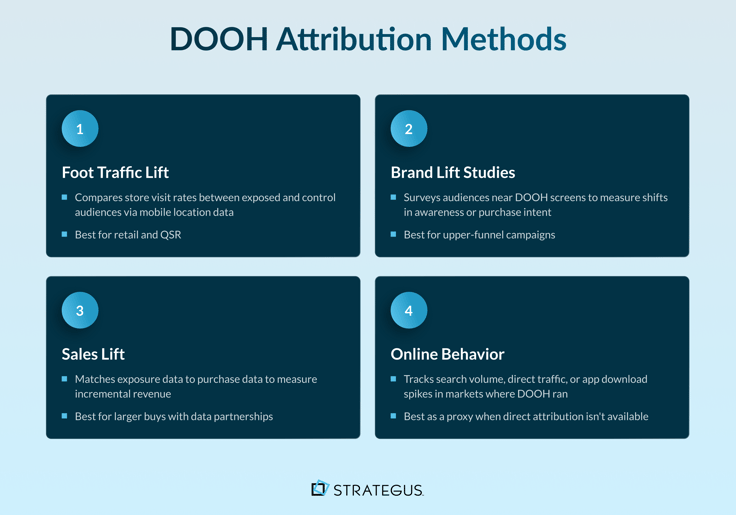
The right attribution method for your DOOH advertising campaign depends on your primary objective. The four main approaches each measure a different downstream effect of DOOH exposure.
Foot Traffic Lift
Foot traffic lift uses mobile location data to compare store visit rates between audiences exposed to the DOOH campaign and a matched control group.
Brand Lift Studies
Brand lift studies deliver surveys via mobile to audiences near DOOH screens, measuring shifts in awareness, favorability, or purchase intent versus a control group. These are best suited to upper-funnel brand campaigns where driving a store visit or purchase is not the immediate goal.
Sales Lift
Sales lift matches DOOH exposure data to purchase data to measure incremental revenue impact. It requires a third-party data partnership and is typically only available on larger buys.
Online Behavior Attribution
Online behavior attribution tracks search volume increases, direct traffic lifts, or app download spikes in markets where DOOH ran versus markets where it did not.
How DOOH Fits Into a Modern Omnichannel Media Mix
The strongest case for investing in DOOH is not the standalone reach numbers but how it amplifies and connects with the rest of a media plan.
The role DOOH plays at each stage of the funnel
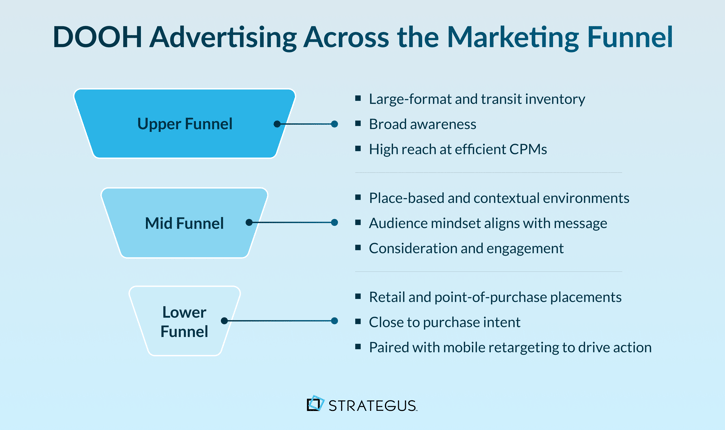
DOOH works across the full funnel, but the right inventory type depends on where the audience is in the buying journey:
- Upper funnel: Large-format and transit inventory delivers broad awareness at efficient CPMs. The priority here is reach, getting the brand in front of as many relevant people as possible across high-traffic environments.
- Mid funnel: Place-based and contextual environments, where the audience mindset aligns with the message, are well-suited to consideration-stage campaigns. A financial services brand running in an airport lounge is reaching a different audience in a different frame of mind than the same brand on a highway billboard.
- Lower funnel: Retail and point-of-purchase placements close to the point of sale are best suited to driving action. Pairing them with a mobile or digital retargeting layer gives the campaign a direct response mechanism that DOOH alone cannot provide.
How DOOH and CTV work together to extend reach
CTV and DOOH are a natural pairing. Both channels reach audiences in non-skippable environments without relying on cookies or individual-level tracking, which makes them well-suited to privacy-safe reach strategies.
A brand running CTV to reach a defined household demographic can layer DOOH into the same markets to extend that message into the physical spaces the same audience moves through during the day. Within the DSP, the same audience segments, geographic parameters, and flight windows used to activate CTV can be applied to DOOH inventory through the same platform.
A viewer who sees the brand's CTV ad at home in the evening and encounters it again on a transit screen during their morning commute is getting reinforced exposure across two distinct contexts. Because the environments are different, the frequency builds without feeling repetitive.
Building that kind of connected strategy across CTV and DOOH is a core part of how Strategus approaches omnichannel campaign planning.

Using mobile retargeting to follow up on DOOH exposure
Mobile devices near a DOOH screen during an ad exposure can be identified via location data. Those device IDs can then be added to a retargeting pool and served follow-up ads on mobile, keeping the brand in front of the same audience after they have moved away from the screen.
For example, someone sees a DOOH ad at a transit station during their morning commute. Two hours later, while browsing on their phone, they see a mobile display ad for the same product with a direct response CTA. The DOOH exposure primes the audience, and the mobile ad drives the action.
That sequence also solves one of DOOH's core measurement challenges.
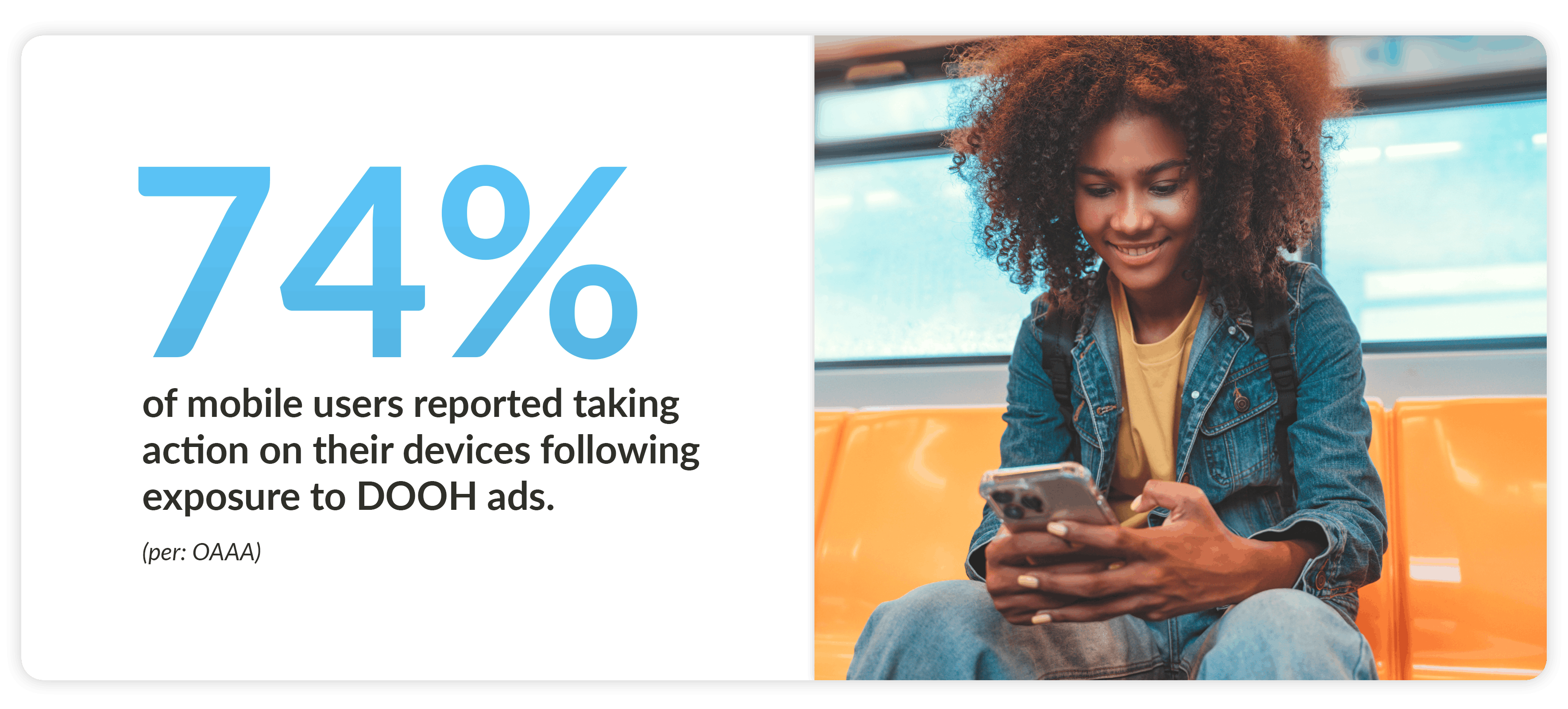
Click-through and conversion data from the mobile layer create a measurable downstream signal that can be used as a proxy for DOOH campaign effectiveness. It’s also incredibly effective: 74% of mobile users reported taking action on their devices following exposure to DOOH ads.
Coordinating DOOH with online video and social for sequential messaging
DOOH and online video share creative formats. A 15-second video asset built for YouTube or CTV pre-roll can often run on DOOH with minimal adaptation, which reduces production overhead for advertisers running cross-channel campaigns.
That creative compatibility also enables sequential messaging.
For example, a beverage brand could run a 15-second awareness spot across transit screens in a major market. As those same audiences move online, the brand serves a 30-second version of the same ad on YouTube that expands on the product story and ends with a direct purchase CTA.
DOOH advertising does the heavy lifting on reach, while the online video converts awareness into intent.
DOOH Buying: Budgets, Inventory, and Measurement Setup
DOOH rewards buyers who do the groundwork before the campaign launches.
Budget considerations
Direct buys typically require higher minimums and longer lead times, with four-week increments being standard, and costs vary significantly by market, format, and location. A premium large-format placement in a top-five DMA will carry a very different price tag than a place-based network buy in a mid-size market.
Programmatic DOOH has meaningfully lowered the entry point. Campaigns can be launched with shorter flight windows, smaller budgets, and more flexible geographic scope than traditional direct buys allow.
Be careful not to compare DOOH CPMs with digital display or CTV CPMs. A single DOOH impression represents a modeled audience estimate, not a served impression to an identified individual.
Set up measurement before campaign launch
Define the KPIs you’ll use to track performance and choose the attribution method that maps to them before buying. For example, a campaign optimizing for store visits needs a foot traffic study set up in advance, while a brand awareness campaign needs a brand lift study deployed before launch.
Before committing spend, confirm who is responsible for the measurement study, whether that is the media owner, the DSP, or a third-party measurement partner, and verify that data is available for the target screens and markets.
Evaluating inventory quality
Screen size, resolution, location, traffic volume, dwell time, and the quality of the surrounding environment all affect whether an ad actually gets seen and remembered.
When buying programmatically, you typically don’t have a lot of control over which specific screens their ads run on. Look for impression verification, screen-level reporting, viewability data where available, and proof-of-play logs from the SSP or media owner.
Brand safety is an important consideration as well.
DOOH inventory exists in the physical world, meaning adjacency to low-quality locations, poorly maintained screens, or inappropriate surrounding content carries reputational risk in the same way that online inventory does.
Adding DOOH to Your Media Mix
DOOH is no longer a static, manually bought medium. It now operates like a digital channel, with programmatic buying, audience-level targeting, and cross-channel measurement.
That shift opens up real opportunity, but it also brings operational complexity that most brands are still working through. Getting it right means coordinating targeting and creative triggers, choosing the right attribution method before launch, managing frequency across dense screen networks, and verifying inventory quality and brand safety in physical environments you can't always see for yourself.
The bigger payoff comes when DOOH stops running as a standalone line item and starts reinforcing the rest of your plan. Layered with CTV, mobile retargeting, and online video, it extends your message into the physical spaces your audience already moves through and gives every other channel more chances to land.
Strategus manages DOOH as part of a full programmatic strategy, handling buying, optimization, attribution, and cross-device retargeting end-to-end, so you can capture the channel's reach without the overhead.
Talk to a Strategus expert →



Strategus is a managed services connected TV(CTV) advertising agency with over 60,000+ campaigns delivered. Find out how our experts can extend your team and drive the result that matter most.
What to read next