AVOD Advertising Explained: Growth, Benefits & Strategy

.webp)
Table of Contents
Across the eight largest streaming platforms, ad-supported tiers now account for the majority (57%) of subscribers. At services like Peacock and Hulu, more than six in ten new sign-ups are actively choosing the ad-supported option over ad-free.
For advertisers, that's a meaningful signal. Viewers aren't tolerating ads because they have to; they're choosing plans that include them, on premium content, on the biggest screen in the house.
The targeting capabilities, completion rates, and measurement infrastructure have also matured significantly since AVOD's early days, but what many brands are still working out is how to run campaigns that actually take advantage of all that.
AVOD sits at the intersection of TV-quality inventory, programmatic buying, and cross-device attribution, and getting all three right across a fragmented landscape of platforms and data sources takes more than a budget and a DSP ( demand-side platform) login.
This guide breaks down what AVOD is, how it compares to other streaming models, and what it actually takes to navigate the landscape and run campaigns that deliver real, measurable results.
What is AVOD?
AVOD (advertising-based video on demand) is a streaming model in which viewers can watch content for free or at a reduced cost in exchange for watching ads.
Instead of charging a monthly subscription, AVOD platforms monetize their content through ad revenue. That content is delivered just like paid video-on-demand services, over the internet to any connected device, including smart TVs, streaming sticks, tablets, phones, and laptops.
For advertisers, AVOD occupies a particularly important position in the streaming ecosystem: it combines the premium, lean-back viewing environment of traditional TV with the targeting precision and measurement capabilities of digital.
AVOD vs. SVOD
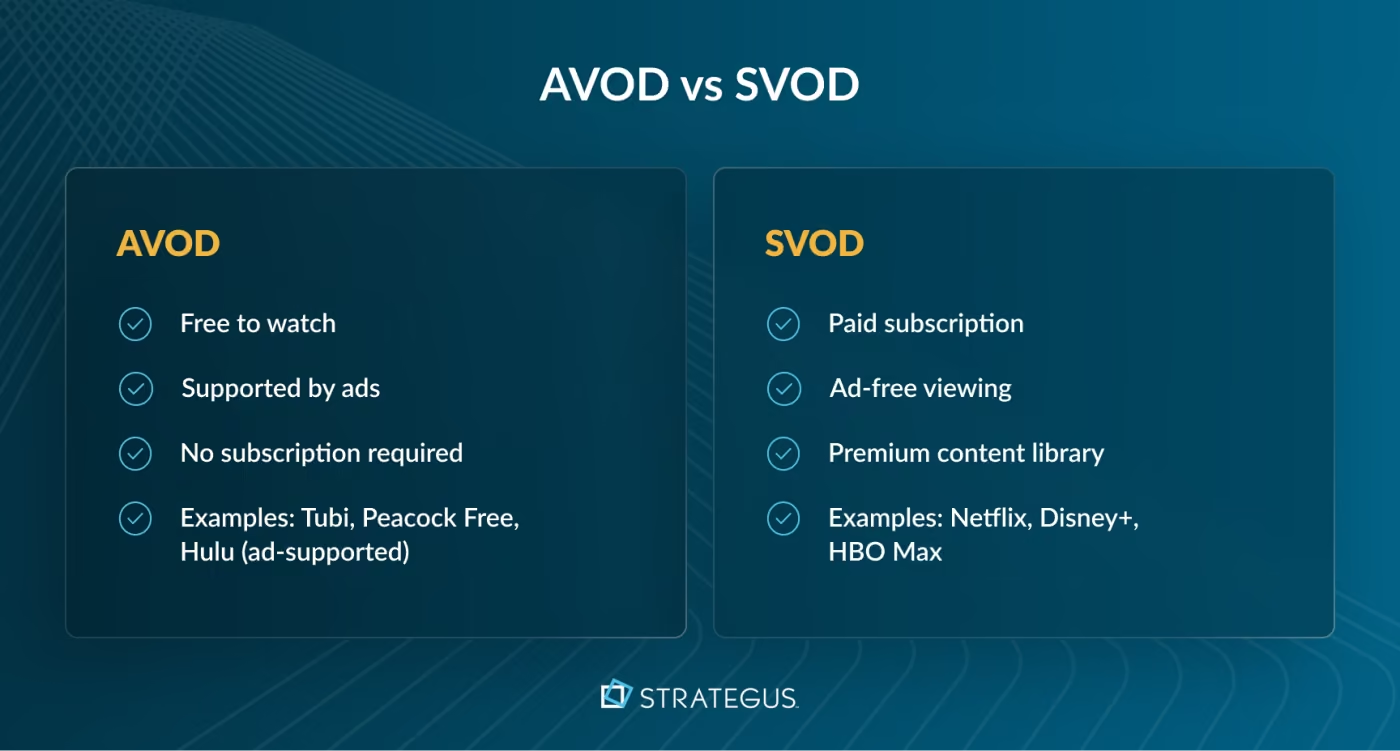
SVOD (subscription video on demand) is the model most people associate with streaming, where viewers pay a monthly fee for ad-free access to content.
Where SVOD charges viewers directly, AVOD charges advertisers instead. Viewers get free or cheaper access, platforms get ad revenue, and advertisers get access to a large, engaged audience.
What’s important to note here is that the line between the models is blurring, and many platforms are now doing both AVOD and SVOD. In recent years, Netflix, Disney+, and HBO Max (three major subscription-based platforms) have all launched ad-supported tiers, driven by the incremental subscriber growth and additional revenue stream that AVOD enables.
For advertisers, tracking which platforms offer what and where audiences are shifting across all of them has become a campaign consideration in itself, which is where a partner like Strategus makes a tangible difference.
AVOD vs. FAST
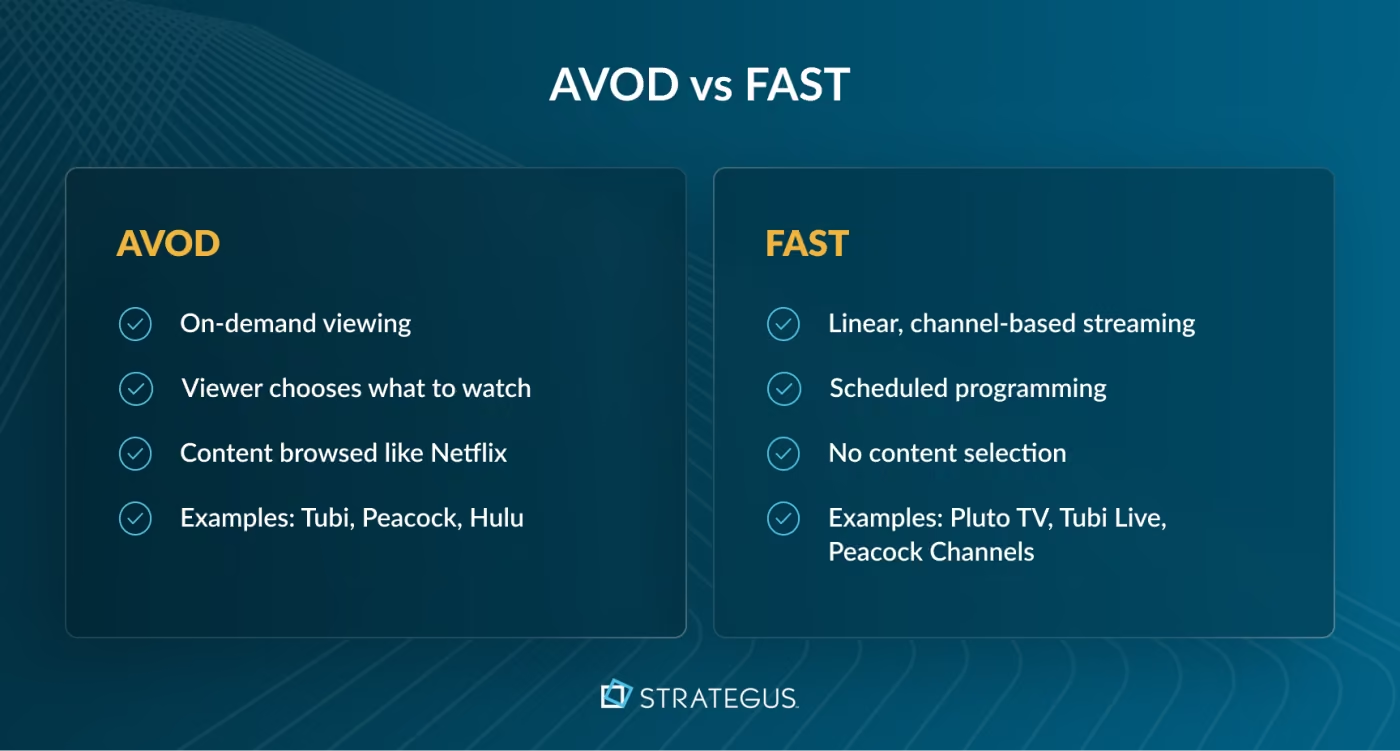
FAST (free ad-supported streaming TV) is also free for viewers and ad-supported, but the difference is that content is not available on demand.
Where AVOD viewers can choose what to watch and when, FAST operates more like linear TV, with pre-programmed channels that viewers tune into at scheduled times. Many AVOD platforms, like Tubi and Pluto TV, also offer FAST channels.
For advertisers, the two models complement each other well.
AVOD delivers precision targeting and on-demand inventory across premium content. FAST extends that reach into a linear-style environment, capturing viewers who prefer a lean-back, channel-surfing experience. Running both together covers more of the streaming landscape than either can alone.
Popular AVOD platforms
There are dozens of AVOD platforms available today, but the major ones advertisers should know about are:
- Tubi (also offers FAST)
- Pluto TV (also offers FAST)
- Peacock
- Paramount+
- HBO Max
- Hulu
- Amazon Freevee
- YouTube
- Netflix
Why AVOD Matters For Advertisers Today
The cultural shift driving AVOD's growth isn't subtle.
Cable and satellite TV providers have lost over 20 million subscribers in the US since 2014, and those viewers didn’t just cut the cord and stop consuming content; they moved to streaming.
The AVOD audience is large, engaged, and growing across all demographics, already making up a greater share of streaming than subscription-based viewers. Naturally, ad dollars follow where the audience goes, meaning AVOD has moved from a supplementary channel to a core part of the media mix for modern brands.
It’s not just AVOD’s reach across premium content that makes it an attractive channel, though; it's what it offers compared to linear TV:
- Deeper, more detailed targeting parameters, with the ability to layer in first-party and third-party data
- Greater ability to optimize on-the-fly and A/B test different ad creative
- Stronger measurement and attribution capabilities, connecting ad exposure to real-world actions
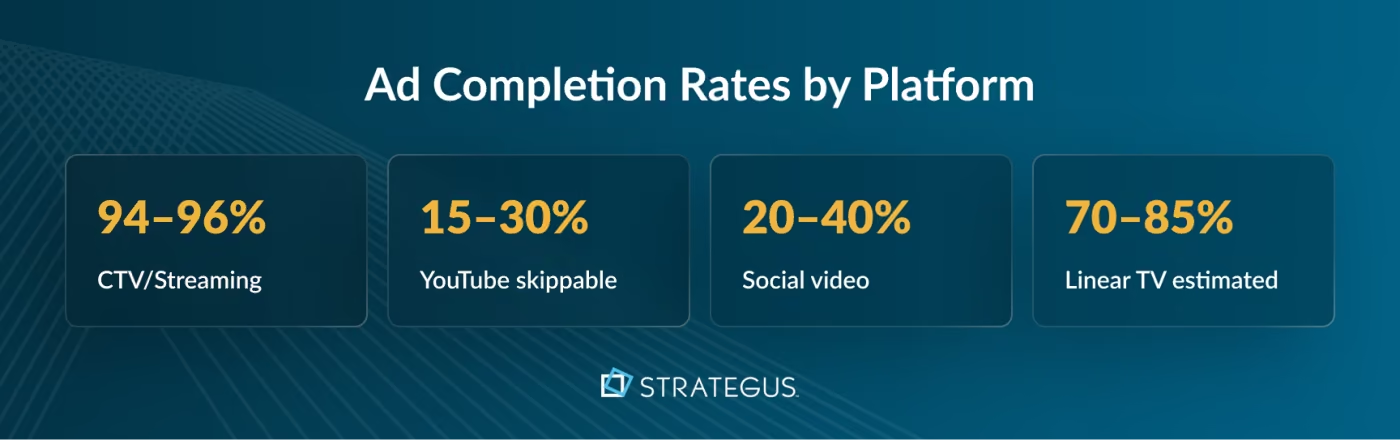
- High completion rates as a result of non-skippable ads, especially when delivered via CTV
But those capabilities come with complexity behind the scenes, with more platforms, inventory sources, and data to manage, and more buying decisions to make along the way. Getting meaningful results requires knowing where to buy, how to target, and how to connect the dots across an increasingly fragmented ecosystem.
How to Run an Effective AVOD Campaign
Running AVOD effectively comes down to a few core decisions across targeting, platform selection, creative, and attribution.
1. Define your audience
There are a lot of ways you can set up audience targeting for an AVOD campaign, and the best options depend on your campaign goals and the data you have available. These are your main targeting approaches:
- Demographic targeting by age, income, location, or household composition is good for campaigns with a clearly defined customer profile
- Behavioral targeting based on viewing habits and content preferences, useful for reaching viewers already engaged with relevant content categories
- First-party CRM audiences uploaded directly into your DSP, letting you target known customers or suppress existing ones
- Third-party audience segments from data partners are useful when your own first-party data is limited
- Retargeting viewers who have already visited your site or engaged with your brand, keeping you in front of high-intent audiences
From there, lookalike audiences let you expand reach by modeling new viewers against your best-performing segments. You feed in a seed audience, and the platform identifies users who share similar characteristics.
2. Choose the right platforms and inventory
Identifying which AVOD platforms your target audience actually uses is an important starting point, and this may vary depending on your buyers' demographic makeup and content preferences.
Inventory quality matters just as much as platform selection, though.
Premium platforms tend to offer stronger brand safety controls, higher-quality content to appear alongside, better viewability standards, and more transparent reporting, so you have more confidence that the impression you paid for was actually seen by a real person in a quality environment.
With hundreds of AVOD platforms and inventory sources available, knowing where to buy and where not to is one of the most consequential decisions in a campaign. That's where the fragmentation in streaming advertising becomes a real operational challenge.
Evaluating where to buy, vetting inventory quality, and managing relationships across dozens of platforms is a lot to take on, and it's typically where brands working with an experienced managed-service partner like Strategus see the biggest difference.
3. Build creative for the big screen
While AVOD reaches viewers across devices, the majority of viewing happens on connected TVs, and your ad creative should be built with that in mind.
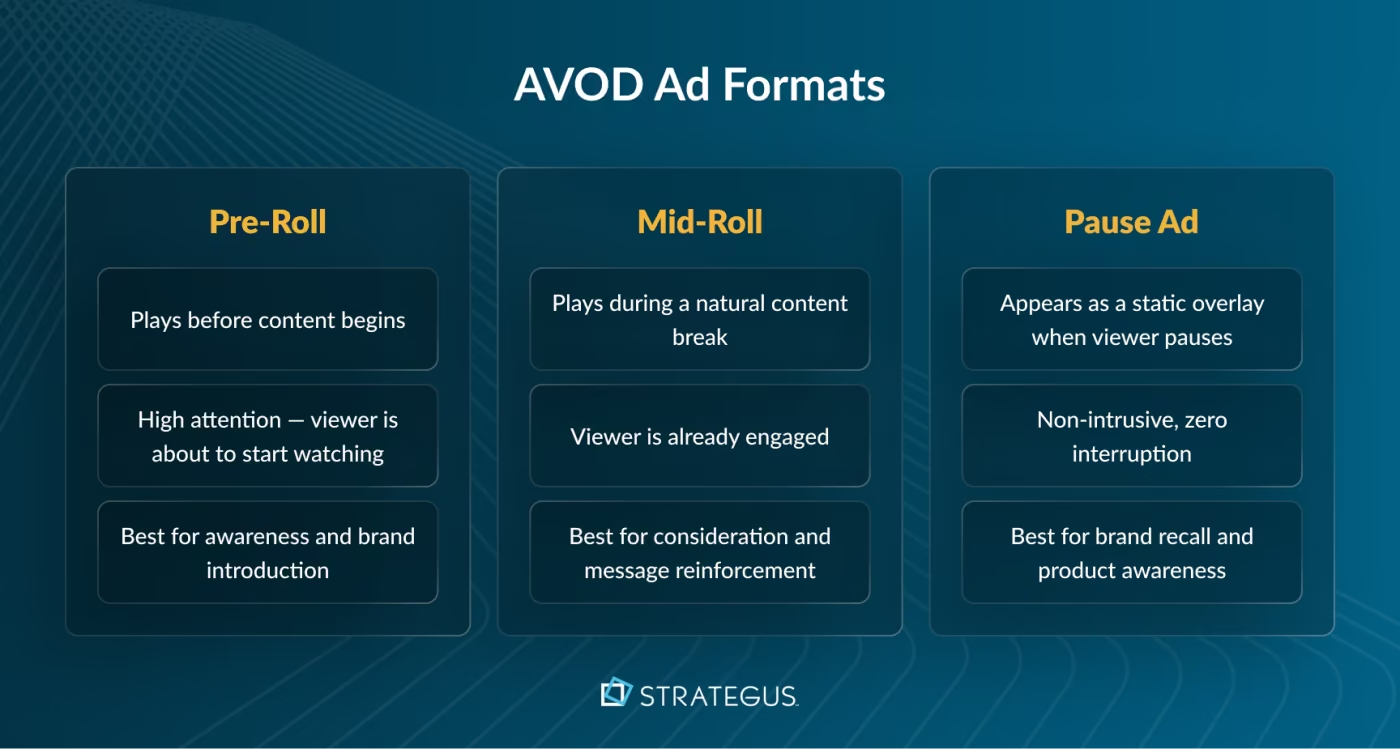
There are three main ad formats available:
A few creative principles apply regardless of format:
- Lead with your branding in the first five seconds. Viewers are likely to pick up their phone during an ad break, so if you haven't established who you are early, you may lose that window entirely.
- Treat audio as a primary creative element, not an afterthought. Unlike mobile, where content is often watched on mute, CTV viewers are in a lean-back setting with the sound on, and a strong audio hook can hold attention even when eyes drift.
- Keep messaging focused on a single idea. You don't need to cover every value proposition in one spot; you can reinforce additional points through follow-up touchpoints like social retargeting or display.
- Build creative specifically for CTV. Don’t repurpose assets from social or display campaigns, as the format, pacing, and viewing context are different enough that what performs well in a mobile feed often falls flat on a large screen.
4. Set up attribution from the start
Attribution should be built into your campaign before it launches, not bolted on afterward. Without a framework in place from day one, you lose the ability to connect impressions to outcomes and optimize accordingly.
The main attribution approaches available in AVOD are:
- Pixel-based attribution tracks site visits and conversions that follow ad exposure, giving you a direct line between impressions and on-site actions. Best suited for e-commerce and lead generation.
- Foot traffic attribution connects CTV impressions to in-store visits. Most useful for brands with a physical retail presence.
- Incrementality testing isolates AVOD's actual contribution by measuring the difference in outcomes between exposed and unexposed audiences. Useful when you want to validate the channel's overall contribution rather than track individual conversions.
Most brands use a combination of these depending on their campaign goals.
5. Integrate AVOD into your broader CTV strategy
AVOD works best when it's connected to the rest of your media mix rather than running in isolation.
AVOD across the funnel
For brand awareness, AVOD is a strong tool for reaching large, targeted audiences with broad messaging designed to build familiarity.
As buyers move down the funnel, the approach shifts. Viewers who have already been exposed to your brand or visited your site can be retargeted with more direct, conversion-focused creative, moving them closer to a decision rather than introducing them to it.
Connecting AVOD and FAST
Layering in FAST inventory alongside AVOD helps close coverage gaps across the streaming landscape.
FAST tends to attract a different viewer segment, people who prefer passive, lean-back viewing over actively browsing an on-demand library, and running both reduces the risk of missing that audience entirely.
Cross-device retargeting
Cross-device retargeting should be part of your strategy from the start. CTV viewers don't click on ads from their TV screen, so the conversion path has to continue elsewhere.
When someone sees your ad on CTV, that exposure should trigger follow-up ads on their mobile or desktop, where they're far more likely to take action. Those ads should be relevant to the creative they’ve already seen, sharing similar messaging, but can be more conversion-focused.
Running AVOD Campaigns with Strategus
AVOD's growth has come with a corresponding increase in complexity.
Audiences are fragmented across dozens of platforms, inventory quality varies widely, attribution requires coordination across devices and data sources, and the platform mix itself keeps shifting as more services launch, merge, or add ad-supported tiers.
For brands trying to manage all of that independently, the operational overhead alone can undermine campaign performance before a single ad runs.
Strategus handles the full picture: audience strategy, platform selection, inventory vetting, attribution setup, creative guidance, and cross-device execution, all under one roof. Rather than piecing together a campaign across multiple partners and data sources, you get a single team that knows the landscape and knows how to get results in it.
Talk to a Strategus expert today.
Frequently Asked Questions
Is Netflix AVOD or SVOD?
Betflix is both AVOD and SVOD. It started as a pure SVOD platform but launched an ad-supported tier in 2022. Today, Netflix operates both models depending on which subscription plan a viewer chooses.
Is YouTube considered AVOD?
Yes, YouTube is considered AVOD. Its free tier is ad-supported, making it one of the largest AVOD platforms in the world. YouTube Premium and YouTube TV operate differently, but the core platform is AVOD.
Is Hulu AVOD or SVOD?
Hulu is both AVOD and SVOD. Hulu's ad-supported plan puts it in the AVOD category, while its ad-free tier is SVOD, though the ad-supported option is also the more popular of the two.
Is Amazon Prime AVOD or SVOD?
Amazon Prime is primarily SVOD, but it did introduce ads on Prime Video in early 2024. Subscribers can pay an additional fee to remove them, effectively layering an AVOD model on top of the existing subscription.
Is Tubi FAST or AVOD?
Tubi is both FAST and AVOD. It offers on-demand content (AVOD) alongside linear-style channels (FAST), making it one of the few platforms that genuinely spans both models.
Frequently Asked Questions
Is Netflix AVOD or SVOD?
Layer interests, purchase behavior, and viewing habits on top of age and location — so every impression reaches someone who actually matters to your business.
What is AVOD Advertising Explained?
For advertisers, that's a meaningful signal. Viewers aren't tolerating ads because they have to; they're choosing plans that include them, on premium content, on the biggest screen in the house.
What is AVOD?
AVOD (advertising-based video on demand) is a streaming model in which viewers can watch content for free or at a reduced cost in exchange for watching ads. Instead of charging a monthly subscription, AVOD platforms monetize their content through ad revenue.
What is popular AVOD platforms?
There are dozens of AVOD platforms available today, but the major ones advertisers should know about are: Pluto TV (also offers FAST)
Why AVOD Matters For Advertisers Today?
The cultural shift driving AVOD's growth isn't subtle. The AVOD audience is large, engaged, and growing across all demographics, already making up a greater share of streaming than subscription-based viewers.
How to Run an Effective AVOD Campaign?
Running AVOD effectively comes down to a few core decisions across targeting, platform selection, creative, and attribution.
get in touch
Subscribe to our
newsletter
Stay ahead with strategies and insights from streaming advertising experts.
Learn from the field
.webp)
.webp)
.webp)
.webp)
.webp)
.webp)
Book a demo
Talk to an expert
Tell us what you want to achieve and we'll map the media strategy to get you there — no self-serve dashboards, just a partner who does the work.