Where Streaming Audio Fits into Your Media Plan

Table of Contents
Programmatic audio has been steadily growing, but the way most advertisers are using it (or ignoring it) hasn’t caught up to reality.
Consumers are spending hours a day with it. During commutes, workouts, time at home, or while working, audio has become a constant.
But investment hasn’t kept pace.
It’s measurable. It’s scalable. And it fits naturally alongside everything else in your media plan. The gap between consumption and spend hasn’t closed—and that’s what makes it valuable right now.
In our latest fireside chat, we sat down with SiriusXM Media’s Ari Stein, a longtime leader in programmatic audio who has spent over a decade helping brands scale and measure the channel. We unpacked what programmatic audio actually includes, where it fits alongside CTV, and why the brands leaning in now are starting to see results others are missing.
Watch the full fireside chat below:
Learn More About Streaming Audio Ads →
Why Audio Is Still Being Overlooked
Audio used to be a staple in every media plan. Radio earned its place because it consistently reached people during parts of the day that were otherwise hard to access. That behavior never went away.
Instead of whatever happened to be on the dial, people now choose exactly what they want to listen to. The playlist, the podcast, the station, all of it is intentional. That control has made audio a more personal, more engaging experience than it’s ever been.
The time spent with audios grown. But ad investment hasn’t followed at the same pace.
Today, consumers spend over 20% of their time with audio, yet only a small percentage of media budgets go there. That gap has created a real opportunity, especially in a channel that often comes at a more efficient cost than the ones everyone is fighting over.
Audio isn’t competing with channels like CTV or display. It shows up in the moments those channels can’t reach, when people are moving through their day, not sitting in front of a screen.
And those moments add up quickly.

What “Programmatic Audio” Actually Means
When most people hear “audio,” they think streaming music, but that’s only part of it.
Programmatic audio today spans multiple environments where people are already listening throughout the day. Streaming music, digital radio, live sports, podcasts, all of it now sits within the same ecosystem.
As Ari Stein explained, nearly everything outside of traditional sponsorships is now accessible programmatically, meaning advertisers aren’t limited to one-off deals or single shows. They can reach listeners across thousands of environments at scale.
“Anything that we offer now outside of sponsorships… can be accessed via DSP.”
That shift matters less because of inventory and more because of control.
Audio can now be planned, targeted, and optimized in the same way as CTV, display, or online video. Frequency, audience data, testing, and scale are all part of the equation.
The Biggest Misconceptions Holding Brands Back
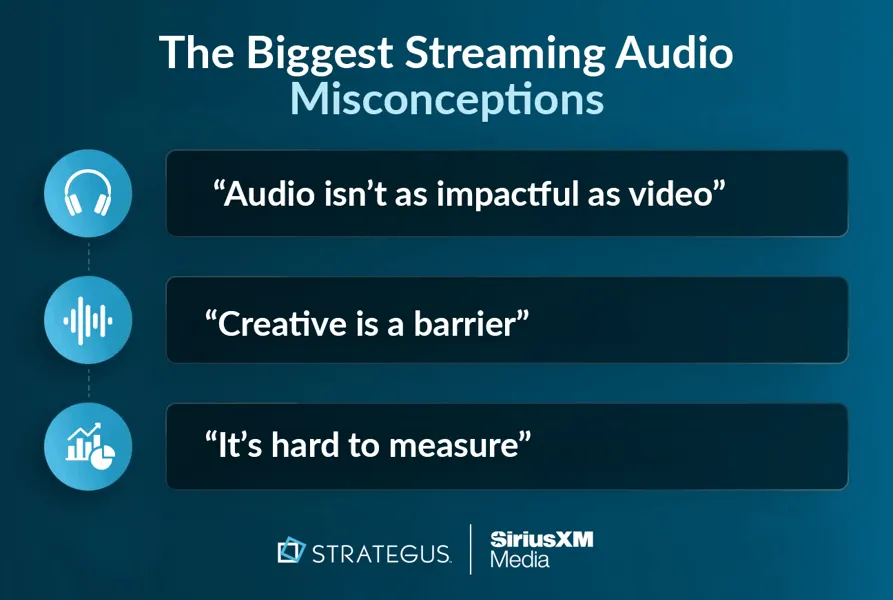
Most of the hesitation around audio comes from assumptions that haven’t been updated.
Ari called out a few that come up consistently when talking to advertisers, and they’re the same ones that tend to keep audio on the edge of the plan.
1. “Audio isn’t as impactful as video”
There’s still a belief that without a screen, the message loses something. In practice, the opposite can happen. When someone is listening, there’s no competing visual feed, no scrolling, no second screen.
Nearly 80% of audio consumption happens when people aren’t looking at a screen. That’s a different kind of attention.
2. “Creative is a barrier”
A lot of brands assume they need to build something from scratch or invest heavily to get started. In reality, audio is one of the more flexible formats to test. Production can move quickly, and in many cases, support is built in.
As Ari mentioned, “we can turn something around as quickly as 48 hours… we never want it to be the reason why somebody doesn't run a campaign.”
3. “It’s hard to measure”
This used to be true. It isn’t anymore. Audio now supports full-funnel measurement, from awareness through lower-funnel actions.
There are now ways to measure performance across the funnel, and in some cases, more clearly than other channels.
The Screenless Advantage
Channels like CTV, online video, and display are doing exactly what they’re supposed to do. They create impact, deliver visuals, and give people a clear way to engage when they’re in front of a screen.
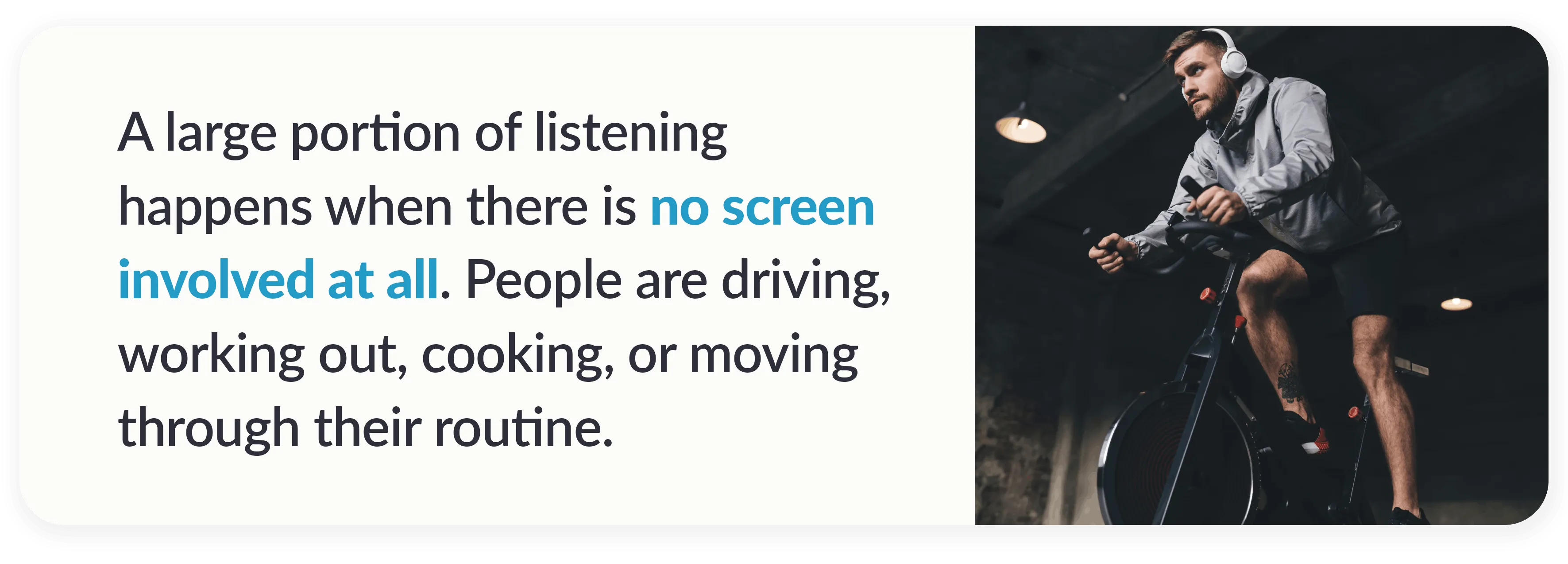
Audio operates in a different context. A large portion of listening happens when there is no screen involved at all. People are driving, working out, cooking, or moving through their routine. These are environments where visual formats don’t apply, not because they’re ineffective, but because the moment doesn’t support them.
As Ari pointed out, “over five hours a day is spent with audio… whether commuting or exercising… that audio is there, and it's present with me, and it's what I'm paying attention to.”
From a planning perspective, this isn’t about replacing other channels. It’s about continuity. Video and display introduce and reinforce the message when someone is watching. Audio keeps that message present throughout the rest of the day.
If your plan is built entirely around screens, you’re only capturing part of how your audience moves through it.
The New Era of Programmatic Audio
Programmatic audio wasn’t always this flexible. There were real limitations early on around targeting, creative, and measurement. And for a while, those gaps made it harder for advertisers to fully commit budget to the channel.
What used to feel like a niche add-on now operates much closer to the rest of the programmatic ecosystem. The tools are more advanced, the signals are stronger, and the ability to plan audio alongside other channels is far more practical.
Targeting Has Come a Long Way
Targeting used to be one of the bigger question marks in audio. Today, it looks much more like what advertisers expect from other programmatic channels. First-party data can be applied, platform-level behavioral signals are available, and cross-device graphs help extend reach beyond a single environment.
As Ari pointed out, “the opportunities are really limitless” when it comes to applying audience data within programmatic audio.
Context still plays a role, especially in podcasts, but it’s no longer the only lever. Relying on it alone can limit scale. The more effective approach is using it alongside audience data to balance relevance and reach.
Audio Creative Considerations
Audio creative tends to get overcomplicated. In reality, it’s one of the more flexible formats to work with. Messaging can be adapted across environments without requiring a full rebuild.
Audio creative doesn’t need to be overthought either, but it does need to be intentional. Make sure it fits the way people are listening and complements the broader campaign.
A few principles to think about:
- Tailor messaging to the environment:
A podcast listener is typically more engaged and willing to sit with a longer message. Streaming environments are shorter and more passive, so the message needs to land quickly. Same channel, different expectations. - Lead with the point and keep it tight:
You don’t have much time, and there’s no visual to rely on. Get to the message early, focus on one idea, and make sure it’s easy to follow without overexplaining. - Use audio to reinforce, not repeat, your other channels:
If someone has already seen your CTV or display creative, audio should build on that message, not restate it word-for-word. Think consistency in message, not duplication in execution.
Measurement Has Finally Caught Up
Measurement used to be one of the biggest hurdles for audio. That’s no longer the case. As more advertisers move toward multi-touch attribution, audio is easier to evaluate as part of the full mix. It contributes across the funnel and can be measured alongside other channels.
As Ari put it, “everyone assumes audio is not measurable… and the reality is that we’ve built a pretty powerful measurement engine.”
Learn More About Measurement and Attribution →
The Role of Audio in a Modern Media Plan
The biggest mistake brands make with audio is treating it like something to layer in at the end of a plan. When it’s added that way, it tends to stay disconnected. The messaging isn’t aligned, the timing is off, and it ends up feeling like a separate tactic rather than part of a cohesive strategy.
Most media plans already have a structure. CTV and online video are doing the heavy lifting upfront, introducing the brand and setting the tone. Display and other lower-funnel channels, like search and social, help move people toward action. That framework works, but it’s largely built around the moments when someone is in front of a screen.
Audio helps carry that same strategy into the rest of the day.
It reinforces the message after someone has seen a video ad and keeps the brand present while they’re commuting, working, or moving through their routine. Instead of a series of isolated touchpoints, it starts to feel like a more continuous experience.
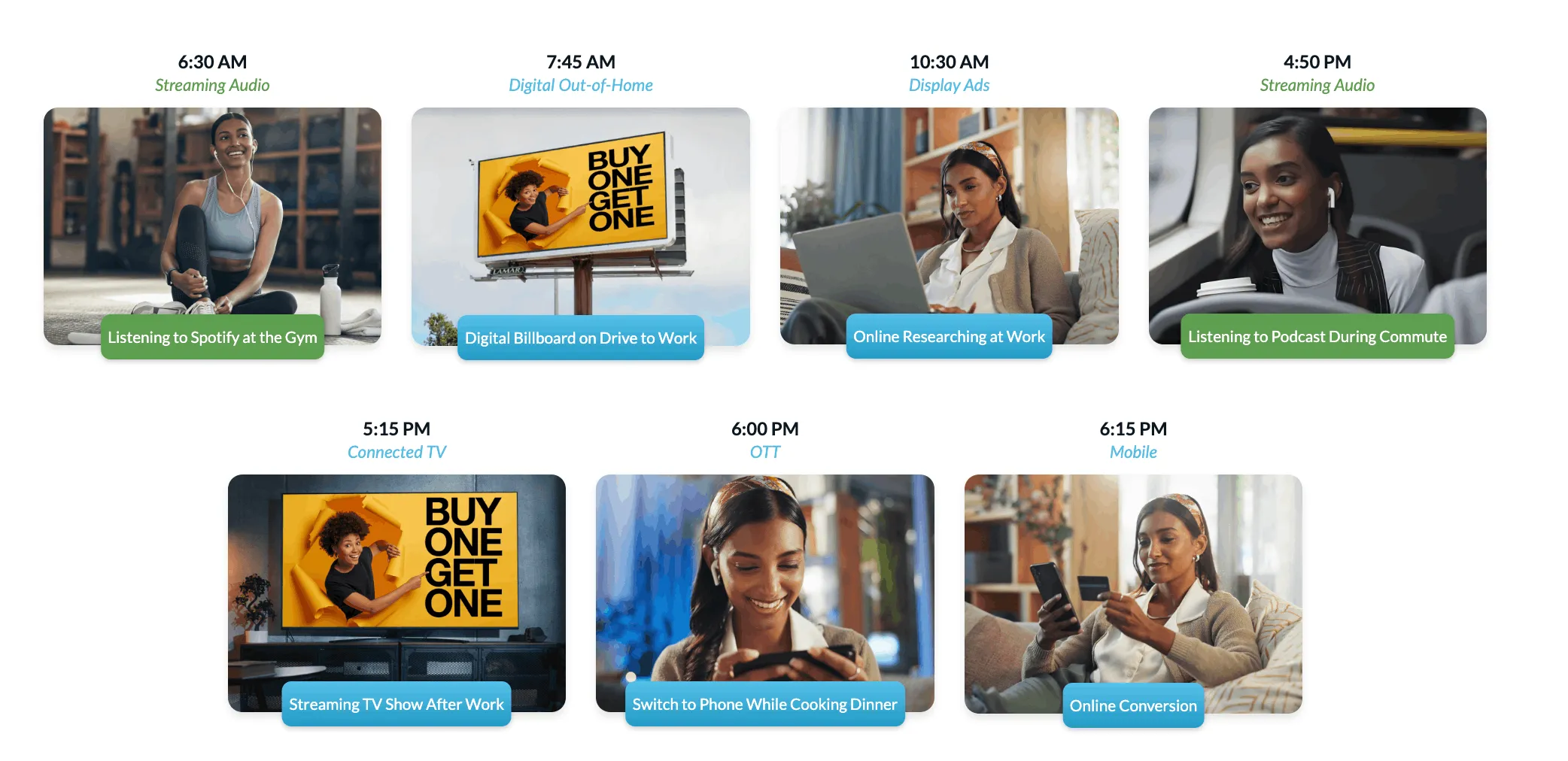
As Ari put it, combining channels like CTV and audio leads to stronger results because they “enhance each other and help drive someone down to the bottom of the funnel.”
That kind of coordination is difficult when channels are managed separately. When CTV, audio, display, and other tactics are split across partners, each is optimized in isolation. Bringing them together creates alignment. The strategy is consistent, the goals are shared, and it becomes easier to understand how each piece contributes.
Where Audio Fits Moving Forward
Audio isn’t new, but the way it’s bought, measured, and integrated into a media plan has changed in a meaningful way. What used to feel like a separate channel now has a clear role alongside CTV, video, and display.
There’s still a gap between how much time people spend with audio and how much advertisers invest in it. That gap hasn’t closed and the brands already thinking about it are building more complete plans because of it.
If you’re already running a programmatic strategy, audio doesn’t need to be treated as something separate. It works best when it’s part of the same system, supporting and strengthening what’s already in place.
If you’re looking at how to incorporate audio into your current media plan, or just want a clearer picture of what it could look like alongside your existing channels, we’re happy to talk through it.
Frequently Asked Questions
Is Netflix AVOD or SVOD?
Layer interests, purchase behavior, and viewing habits on top of age and location — so every impression reaches someone who actually matters to your business.
Where does streaming audio fit in a media plan?
Programmatic audio has been steadily growing, but the way most advertisers are using it (or ignoring it) hasn’t caught up to reality. Consumers are spending hours a day with it.
Why audio is still being overlooked?
Audio used to be a staple in every media plan. Radio earned its place because it consistently reached people during parts of the day that were otherwise hard to access.
What “programmatic audio” actually means?
When most people hear “audio,” they think streaming music, but that’s only part of it. Programmatic audio today spans multiple environments where people are already listening throughout the day.
What is the screenless advantage?
Channels like CTV , online video , and display are doing exactly what they’re supposed to do. They create impact, deliver visuals, and give people a clear way to engage when they’re in front of a screen.
How has targeting come a long way?
Targeting used to be one of the bigger question marks in audio. Today, it looks much more like what advertisers expect from other programmatic channels.
get in touch
Subscribe to our
newsletter
Stay ahead with strategies and insights from streaming advertising experts.
Learn from the field
.webp)
.webp)
.webp)

Book a demo
Talk to an expert
Tell us what you want to achieve and we'll map the media strategy to get you there — no self-serve dashboards, just a partner who does the work.