The New Reality of Live Sports and Reach in 2026

Table of Contents
For years, sports were treated as the last stronghold of linear television. In 2026, that idea doesn’t hold up.
Sports is one of the primary forces expanding streaming audiences and reshaping how advertisers approach reach, access, and outcomes.
The numbers reflect that shift. In Q4 2025, sports drove nearly 30% of all ad-supported TV viewing among adults 25–54. Streaming accounted for 66.7% of ad-supported TV time among adults 18–49, while ad-supported TV still made up 74.2% of total viewing.

Sports continues to anchor ad-supported TV, even as the audience moves further into streaming environments.
2026: A Defining Year for Live Sports and Streaming Access
This year is making the shift visible in a way past years haven’t.
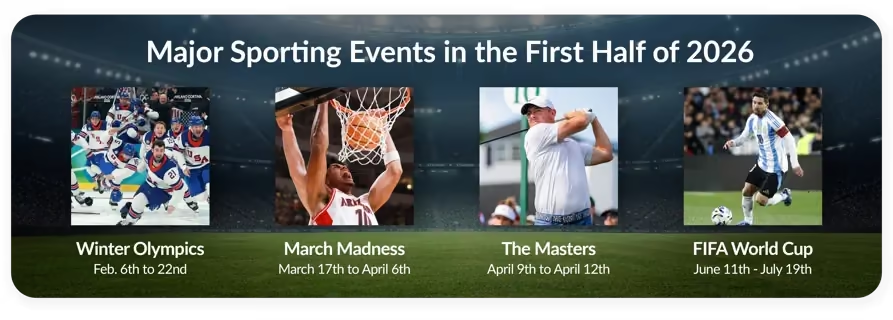
Over the past few weeks alone, March Madness has unfolded across CBS, TBS, TNT, truTV, and streaming platforms like Paramount+ and Max. As the tournament moves into the Final Four, the audience isn’t concentrated in one place. It’s spread across platforms that all contribute to the same moment.
That pattern continues across the calendar.
The Masters will once again pair its traditional broadcast with expanded digital access. The Olympics leaned heavily into Peacock, reinforcing streaming as a primary entry point. And the FIFA World Cup is set to reach global audiences across broadcast, streaming, and digital platforms, with distribution extending even further through environments like YouTube.
What stands out is how fluid the experience has become.
Watching a game is no longer tied to a single screen. People move between platforms depending on where they are, how they prefer to watch, and what’s available in that moment. A live game might start on a TV, continue on a phone, and extend into highlights or commentary elsewhere.
That behavior is redefining how reach actually works.

What used to feel fragmented now reflects a broader expansion of access. For advertisers, that shift opens up more ways to connect with audiences across the full experience, not just within a single broadcast window.
Why Sports Continues to Command a Premium
Sports CPMs remain high, and that’s unlikely to change. What’s become clearer is why.
Sports delivers something that’s increasingly difficult to find elsewhere. Large audiences show up at the same time. Attention is high. The stakes feel real. And the moment still matters as it happens.
That combination creates a different kind of viewing environment. It’s live, it’s engaging, and it holds attention in a way most content doesn’t. It also carries a level of cultural relevance that extends beyond the screen, especially during major events.

There are fewer and fewer places in the media landscape where all of that exists at once.
At the same time, distribution has expanded. Nielsen planning guidance continues to show that sports represents a meaningful share of ad-supported viewing, with multi-platform access contributing to incremental reach rather than simple duplication.
That shift changes how value is evaluated.
As advertisers focus more on outcomes, not just delivery, the conversation around cost becomes more grounded. Higher CPMs are easier to justify when campaigns are reaching new audiences and driving measurable impact.
Access Has Fundamentally Changed
The biggest shift in sports viewership is around access.
Over the past year:
- ESPN launched its direct-to-consumer service, providing access to its full network ecosystem within its app
- Major league rights (NBA, NFL, Olympics) are now distributed across multiple streaming and broadcast partners
- Platforms like Peacock, Amazon, and FOX are investing heavily in exclusive or enhanced streaming experiences
- Sports programming on streaming platforms has grown significantly, with catalog expansion up over 50% year over year
The amount of available sports content has grown with it, with streaming catalogs expanding significantly year over year.
That expansion has changed the viewing experience.
What used to be a single live moment now stretches across a series of touchpoints. A game still anchors the experience, but it doesn’t end there. Viewers move into alternate feeds, highlights, replays, and analysis, often across different platforms and devices.
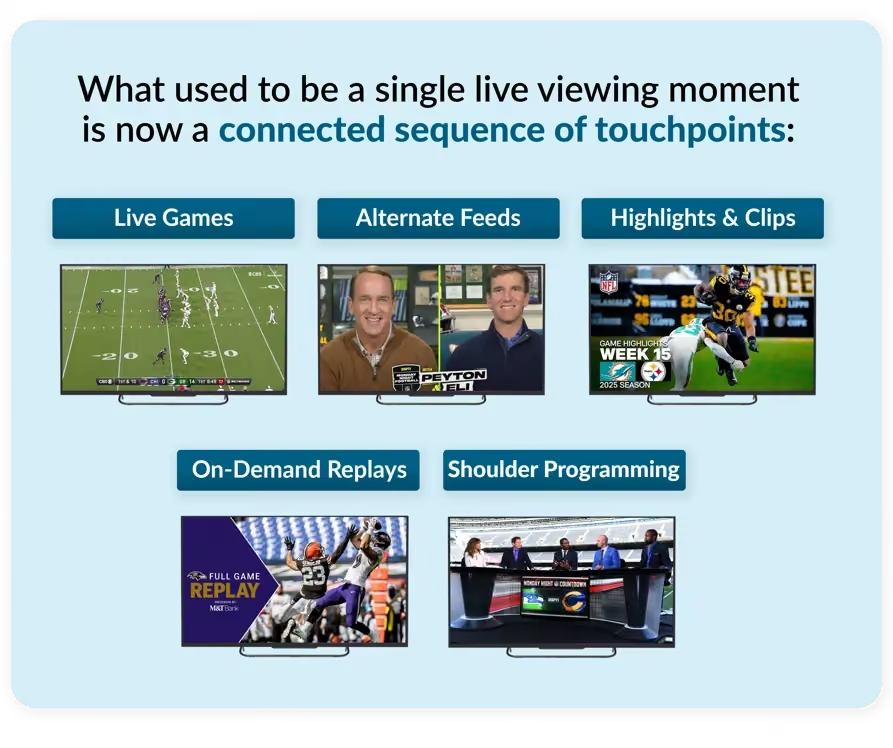
The way people engage with sports now feels less like tuning in and more like staying connected.
For advertisers, that shift changes how campaigns need to be planned.
Sports no longer lives in a single moment. It operates as an ecosystem that extends before, during, and after the game.
The Halo Effect: Where Strategies Become More Effective
One of the more meaningful shifts is how publishers are positioning sports.
It’s no longer treated as a standalone block of inventory. It’s being used to drive engagement across broader platforms and content ecosystems.
NBCUniversal leaned into this with the Olympics, positioning it as a driver of engagement across its full portfolio. The result was record sell-through for 2026 inventory, supported by the idea that live sports can influence performance well beyond the event itself.
That thinking is starting to shape how advertisers approach strategy.

The value of sports doesn’t stop when the game ends. The initial moment captures attention, but the impact carries forward into everything that surrounds it.
The most effective strategies:
- Use live sports to capture attention at scale
- Continue the conversation across broader CTV and online video environments to drive frequency more efficiently
- Leverage audience signals to continue engagement beyond a single exposure
In practice, this is where performance and brand begin to converge.
Linear and Streaming Are Now One System
The industry still tends to frame linear and streaming as competing channels. That view is starting to fall behind how people actually watch.
Major sports moments continue to drive spikes in linear viewership, even as streaming grows its overall share. Both are happening at the same time, often around the same event.
What’s taking shape is a multi-platform system:
- Linear TV still delivers scale during key moments
- Connected TV (CTV) or streaming TV builds on that reach with more flexibility and audience precision
- Digital environments extend the experience further, from sports news sites and highlights to social platforms, where display, online video, and streaming audio create additional opportunities for frequency and engagement
Together, these environments create a more complete way to reach audiences, following how people actually consume sports today.
For advertisers, the advantage comes from connecting these pieces into a single strategy. It allows budgets to work harder, with the ability to test and optimize across channels instead of committing everything to one environment.
What This Means for Advertisers
As sports continues to evolve across streaming and linear, a few principles stand out:
1. Plan Sports as a Portfolio
Live events should anchor the strategy, but they shouldn’t carry it alone.
2. Prioritize Incremental Reach
The value lies in how platforms work together to expand the audience, not duplicate it.
3. Extend Beyond the Live Moment
Pregame, postgame, highlights, and on-demand content all play a role in maintaining presence and building frequency.
4. Align Measurement to Outcomes
Impressions only tell part of the story. Measurement should connect to business impact, whether that’s site activity, search behavior, conversions, or sales.
5. Embrace the Complexity of Access Audiences move across platforms. Effective strategies should follow that behavior.
How To Plan For Live Sports Advertising Moving Forward
The way people watch sports has already changed.
It’s no longer tied to a single screen, a single platform, or even a single moment. The experience now stretches across environments, and the campaigns that perform best tend to follow that same pattern.
With access expanding faster than ever, the real challenge for advertisers is making sense of it all.
Those who treat sports as a connected system, not a one-time placement, are in a better position to understand what’s working, where audiences are moving, and how to stay in front of them as they do.
If you’re thinking through how to apply that to your own strategy, our team at Strategus works closely with brands to plan and execute live sports campaigns across CTV and beyond. You can get in touch with one of our team members to start the conversation.
Frequently Asked Questions
Is Netflix AVOD or SVOD?
Layer interests, purchase behavior, and viewing habits on top of age and location — so every impression reaches someone who actually matters to your business.
What is The New Reality of Live Sports and Reach in 2026?
For years, sports were treated as the last stronghold of linear television. In 2026, that idea doesn’t hold up.
Why Sports Continues to Command a Premium?
Sports CPMs remain high, and that’s unlikely to change. What’s become clearer is why.
What This Means for Advertisers?
As sports continues to evolve across streaming and linear, a few principles stand out: 1.
How To Plan For Live Sports Advertising Moving Forward?
The way people watch sports has already changed. It’s no longer tied to a single screen, a single platform, or even a single moment.
What is 2026: A Defining Year for Live Sports and Streaming Access?
This year is making the shift visible in a way past years haven’t. Over the past few weeks alone, March Madness has unfolded across CBS, TBS, TNT, truTV, and streaming platforms like Paramount+ and Max.
get in touch
Subscribe to our
newsletter
Stay ahead with strategies and insights from streaming advertising experts.
Learn from the field
.webp)
.webp)
.webp)
.webp)
.webp)
.webp)
.webp)
Book a demo
Talk to an expert
Tell us what you want to achieve and we'll map the media strategy to get you there — no self-serve dashboards, just a partner who does the work.