





.svg)










 Chrystal Rinkle
8 minutes read
The programmatic fee conversation has gotten loud. Audits, lawsuits, platform drama — every few months, something drops, and everyone scrambles to figure out who's taking a cut and where. But underneath the noise, something genuinely useful is happening: the industry is being pushed toward a higher standard for fee clarity, auditability, and supply-chain accountability.
Advertisers and agencies should not respond by chasing the loudest headline or jumping from one black box to another. They should respond by asking better questions, tightening standards, and building a more disciplined framework for how media is bought and billed across every platform, partner, and supply path.
The Real Issue: Optimization Theater vs. Real Optimization
The programmatic industry has become very good at optimizing what is easiest to see and sell. It has been far less consistent at helping buyers understand what every layer costs, what every tool does, and whether each fee is actually improving outcomes.
That is why this moment matters. The question is no longer, “Which platform should I trust?”
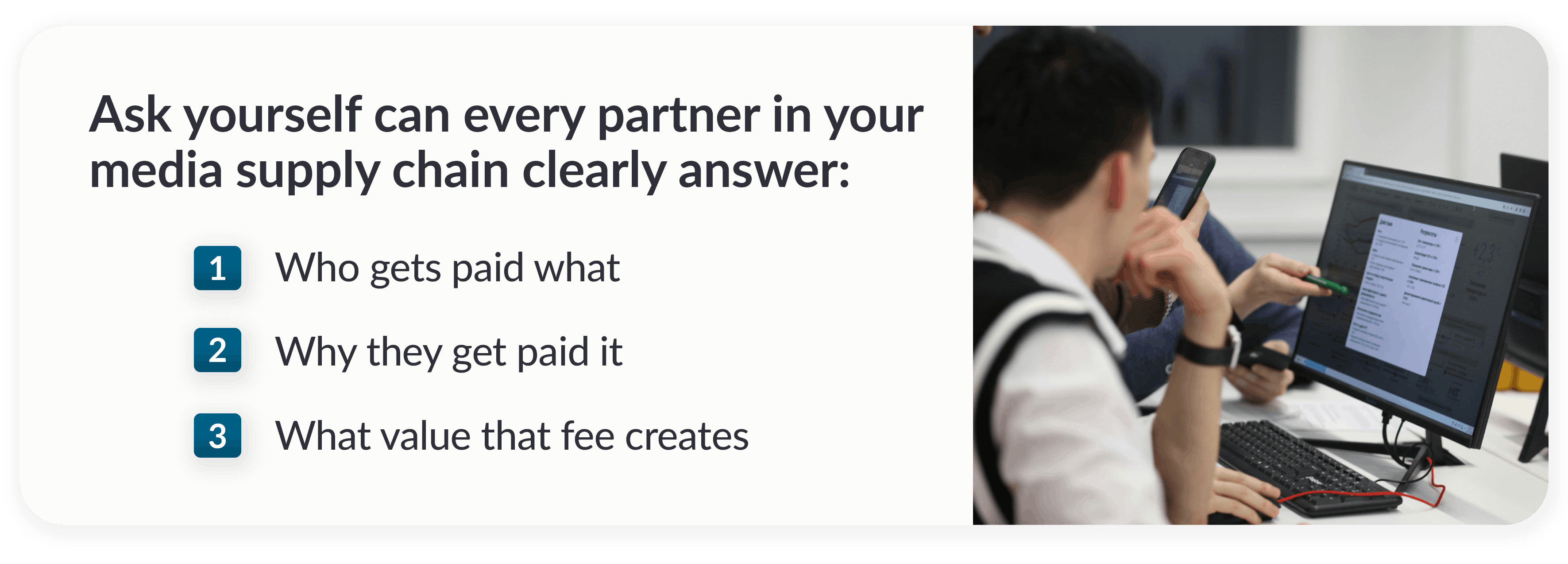
The better question is: Can every partner in my media supply chain give me a clear, auditable, and defensible explanation of who gets paid what, why they get paid it, and what value that fee creates?
That standard should apply across the board: DSPs, SSPs, data providers, measurement vendors, agencies, managed service partners, curated marketplace, and deal-based supply arrangements.
What Are All the Fees?
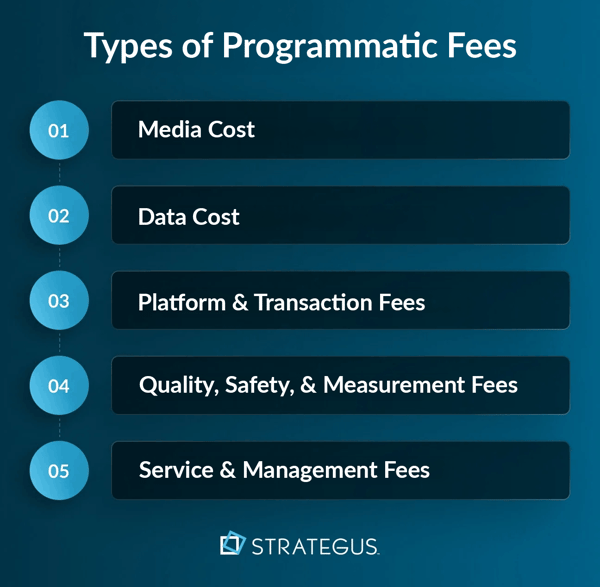
Most conversations about programmatic fees collapse everything into one number, which is exactly why so many advertisers are confused about where their money actually goes. There are five distinct cost layers in any programmatic buy, and understanding each one is a prerequisite for managing them:
-
Media cost: This is the cost of the actual inventory being purchased from publishers, exchanges, or supply partners.
-
Data cost: These are fees tied to audience targeting, identity, retail media, or third-party data, contextual layers, and other audience enrichment inputs.
-
Platform and transaction fee: These include DSP fees, SSP transaction costs, ad serving costs, and other technology-layer charges associated with bidding, routing, delivery, and execution.
-
Quality, safety, and measurement fees: These are costs tied to verification, fraud protection, brand safety, attribution, reporting, and measurement infrastructure.
-
Service and management fees: These cover planning, campaign management, trafficking, optimization, QA, reporting, and the human expertise required to make the media actually perform.
None of these categories is inherently bad. The issue is not that fees exist. Fees that are transparent, appropriately priced, and tied to real value are fine. The problem is when they’re unclear, duplicated, auto-applied without consent, or completely untethered from outcomes.
How to Keep Fees Low
Keeping fees low is not about demanding that every line item disappear. It is about reducing waste, redundancy, and unnecessary intermediaries.
There are four practical ways to do that:
-
Eliminate auto-opt-in economics: Any tool, data package, optimization layer, or add-on should be explicitly selected, not silently activated in the background.
-
Consolidate spend where it makes sense: Fragmented spend weakens negotiating leverage. Consolidated spend creates leverage for better pricing, better access, and better commercial terms.
-
Reduce unnecessary hops in the supply chain: Every additional intermediary can add cost, reduce visibility, and weaken working media. Cleaner paths tend to improve both economics and accountability.
-
Evaluate fees by outcome, not by optics: A lower visible fee is not automatically a lower total cost. Direct buying can appear cheaper on paper while creating hidden costs in staffing, trafficking, fragmentation, weaker optimization, and inconsistent reporting. In many cases, a well-run programmatic path with disciplined SPO can lower total cost per outcome even after platform and service fees are included.
How to Actually Negotiate This
Too many advertisers negotiate media as if the only lever is CPM. That is incomplete.
A stronger negotiation framework should include:
-
Define the Fee Standard Up Front: Require every partner to define platform fees, data fees, media costs, and any optional add-ons in contract language or commercial exhibits. No vague “technology costs” bucket. No open-ended uplift language.
-
Require Explicit Opt-In for Additional Tools: If a partner wants to activate a data layer, optimization product, curated package, or measurement add-on, that should require approval.
-
Negotiate for Audit Rights and Reporting Access: Partners should support reasonable third-party auditability and provide enough transparency to validate billing and economics within confidentiality guardrails.
-
Negotiate the Whole Commercial Model: Do not negotiate only rate. Negotiate pricing tiers, minimums and commitments, package structure, rebate or incentive opportunities, reporting depth, level of fee disclosure, make-good flexibility, and access to premium or prioritized supply.
-
Treat Sophisticated Transparency as a Commercial Decision: Some advertisers want an all-in CPM. Others, especially procurement-heavy organizations, may require more itemization. The right answer is not one-size-fits-all. The key is to set policy deliberately instead of improvising under pressure.
One thing worth being intentional about: different organizations need different things from these negotiations. A procurement-driven organization may need full line-item disclosure. A lean in-house team may genuinely prefer a clean all-in CPM. Neither is wrong. The mistake is defaulting to whatever the platform proposes rather than defining your standard first.

Why SPO Needs to Be at the Center of This Conversation
Supply path optimization gets talked about mostly as a cost-cutting play. It’s more than that. A serious SPO practice is how transparency becomes operational — a live, ongoing discipline for choosing supply partners based on fee visibility, auction integrity, inventory quality, and performance consistency.
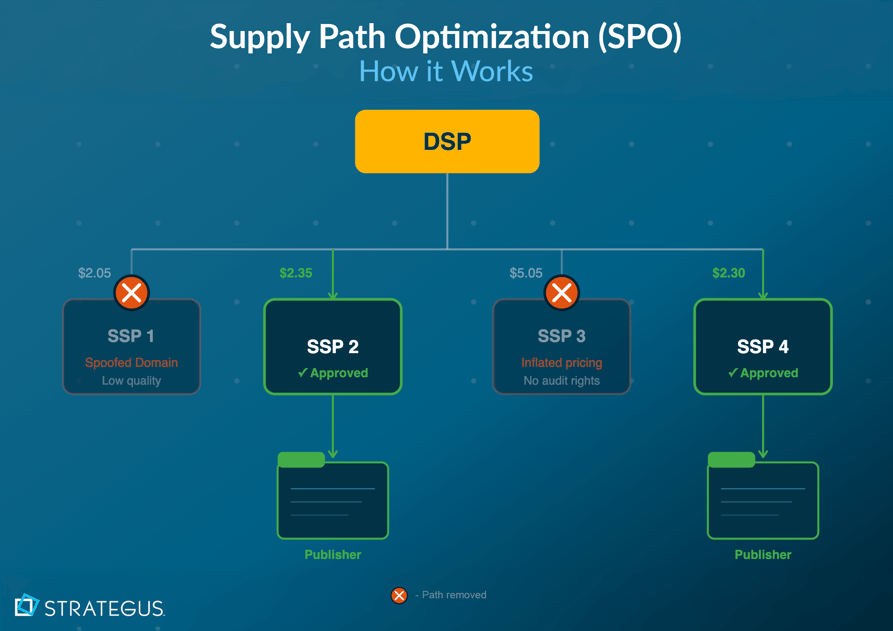
The questions a mature SPO framework asks look simple but most buyers can’t answer them:
- How many paths exist to the same impression?
- Which partners provide the clearest visibility into fees and auctions?
- Which routes add value, and which simply add cost?
- Where can spend be consolidated for leverage?
- Which partners support stronger reporting, cleaner deal structures, and better commercial terms?
This is why the future belongs to buyers and agencies that can act as translators and stewards, not just buyers of impressions. The value is no longer in accessing media alone. The value is in governing complexity well.
A Better Industry Lens
Here’s the practical version of everything above. Before your next RFP or renewal, stop asking, “Who is cheapest?”
These are the questions worth getting answered in writing:
☐ What audit and transparency rights do I actually have? Are they in the contract?
That's the right lens.
The programmatic industry has spent years optimizing what’s easy to measure and slow-walking everything else. The current moment — with regulators, auditors, and clients all paying closer attention — is pushing that to change. Buyers who build real standards now won’t be caught flat-footed when the next audit cycle hits.
The next era of programmatic buying will not be won by the loudest transparency claim. It will be won by the organizations that build clear standards, disciplined negotiation practices, and rigorous SPO across every partner in the chain.
Transparency has always been the right operating standard. It’s just finally becoming unavoidable. And in a market full of noise, that is what actually creates trust.
If you’re working through this right now, we’re always open to comparing notes. Whether it’s pressure-testing your current setup or helping you think through a cleaner approach, we’re here to help.



Strategus is a managed services connected TV(CTV) advertising agency with over 60,000+ campaigns delivered. Find out how our experts can extend your team and drive the result that matter most.
What to read next