Linear TV Extension (LTVE): When to Use It With CTV

Table of Contents
Linear TV still delivers scale. It still anchors major brand moments. And for many advertisers, it still represents one of the largest line items in the media budget.
But audience behavior has fractured. The same household that watches live sports or news on linear TV may spend the rest of the week streaming. Others never tune into linear at all. When campaigns rely on linear TV alone, reach becomes inconsistent and frequency becomes inefficient.
Streaming isn’t the alternative anymore. It’s where much of the viewing already happens. The challenge for marketers isn’t choosing between linear TV and Connected TV. It’s avoiding inefficiency between the two.
Linear TV Extension exists to solve that problem.
By using Connected TV as an extension layer, advertisers can ensure their linear TV message reaches the entire intended audience, not just the portion still watching traditional television.
What Is Linear TV Extension?
Linear TV Extension is a targeting strategy that uses Connected TV to fill the reach gaps left by linear TV while maintaining control over frequency and spend.
Rather than treating linear TV and Connected TV as separate buys, Linear TV Extension links the two through exposure-based targeting. Linear TV establishes scale. CTV is used to complete coverage and manage frequency based on who was actually reached.
In practical terms, Linear TV Extension answers one question every TV buyer should be asking:
Which households did my linear TV campaign reach, which ones did it miss, and what should I do about it?
From there, the strategy supports three distinct use cases:
- Extending reach to households that never saw your linear ad
- Reinforcing messaging to households that were already exposed
- Reducing waste by preventing redundant impressions across screens
The outcome is not more impressions for the sake of scale. It’s more complete coverage, better frequency control, and a TV investment that works harder across how audiences actually watch.
How Linear TV Extension Works
The foundation of Linear TV Extension is exposure-based decision-making rather than assumptions tied to ratings or schedules.
First, household-level data is used to identify where linear TV ads actually ran and which households were exposed. This data can come from set-top box sources, Automatic Content Recognition (ACR), or other verified TV measurement partnerships.
Once exposure is established, households are segmented based on whether they saw the linear ad. From there, Connected TV is used as the delivery mechanism to complete the reach.
Instead of layering CTV broadly across the market, it is activated with intent. Every impression serves a defined purpose, whether that is extending reach, reinforcing messaging, or eliminating duplication.
How Linear TV Extension Works with CTV Campaigns
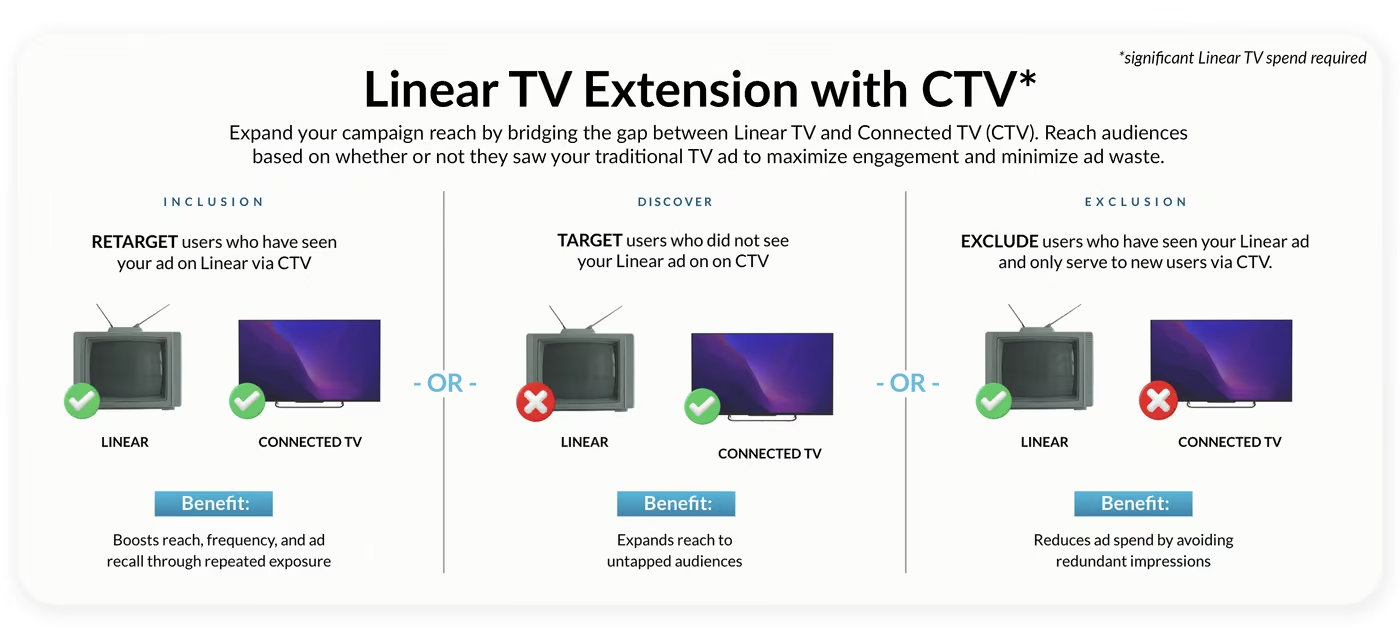
Linear TV Extension isn’t a one-size-fits-all tactic. It’s applied based on what you’re trying to accomplish with your TV investment.
Connected TV makes this possible because it allows ads to be delivered at the household level inside streaming environments. When that delivery is informed by linear TV exposure data, CTV shifts from a broad reach channel to a precision tool.
In practice, Linear TV Extension is typically used in one of three ways.
1. Extending Reach Beyond Linear TV
Households that did not see a linear TV ad can be reached through CTV. This is the most common and most impactful use of Linear TV Extension. It ensures that streaming-first and cord-cutting audiences receive the same message as linear viewers, closing the reach gap created by fragmented viewing behavior.
2. Reinforcing Linear TV Exposure
For categories that benefit from repetition, CTV can be used to reinforce a linear TV message. Households that already saw the ad on linear can be served follow-up CTV impressions to improve recall and engagement, without overexposing the rest of the market.
3. Eliminating Redundant Impressions
In efficiency-focused scenarios, CTV can be used to exclude households already reached by linear TV. This prevents budget from being spent on duplicate impressions and keeps frequency under control.
This approach allows reinforcement where it adds value, not everywhere by default.
Key Benefits of Using Linear TV Extension with CTV Campaigns
Linear TV Extension improves TV performance by making reach intentional.
Instead of buying more impressions in hopes of reaching new viewers, advertisers can directly target households that were missed. This leads to broader market coverage without inflating spend.
Frequency becomes more controlled. Budgets are not wasted over-serving the same households simply because they watch more linear TV.
Measurement improves as well. While linear TV alone is limited to reach and frequency estimates, Linear TV Extension introduces CTV-level reporting and attribution, allowing advertisers to understand how exposure connects to site visits, store traffic, and conversions.
Most importantly, Linear TV Extension modernizes TV buying without forcing advertisers to abandon linear altogether. It complements what already works while addressing what linear TV cannot do on its own.
How Strategus Executes Linear TV Extension
Strategus does not manage or place linear TV buys. Instead, we use your existing linear TV investment as an input to make your Connected TV strategy smarter and more efficient.
By analyzing linear TV exposure data, we identify where reach gaps exist and use CTV to extend, reinforce, or refine delivery based on what actually happened in your linear campaign. This allows your CTV budget to work with your linear TV plan, not in parallel or in competition with it.
CTV activation, optimization, and measurement are fully managed by Strategus, with reporting that connects exposure to meaningful outcomes. The result is a more complete TV strategy that accounts for how audiences really watch, without requiring you to change how or where you buy linear TV.
If you’re investing in linear TV and want your CTV dollars to work harder around it, Linear TV Extension provides a practical way to close the gaps.
Connect with Strategus to see how Linear TV Extension can strengthen your CTV strategy and improve overall TV efficiency.
Frequently Asked Questions
Is Netflix AVOD or SVOD?
Layer interests, purchase behavior, and viewing habits on top of age and location — so every impression reaches someone who actually matters to your business.
What is Linear TV Extension?
Linear TV still delivers scale. It still anchors major brand moments.
How Linear TV Extension Works?
The foundation of Linear TV Extension is exposure-based decision-making rather than assumptions tied to ratings or schedules. First, household-level data is used to identify where linear TV ads actually ran and which households were exposed.
How Linear TV Extension Works with CTV Campaigns?
Linear TV Extension isn’t a one-size-fits-all tactic. It’s applied based on what you’re trying to accomplish with your TV investment.
What is key Benefits of Using Linear TV Extension with CTV Campaigns?
Linear TV Extension improves TV performance by making reach intentional. Instead of buying more impressions in hopes of reaching new viewers, advertisers can directly target households that were missed.
How Strategus Executes Linear TV Extension?
Strategus does not manage or place linear TV buys. Instead, we use your existing linear TV investment as an input to make your Connected TV strategy smarter and more efficient.
get in touch
Subscribe to our
newsletter
Stay ahead with strategies and insights from streaming advertising experts.
Learn from the field
.webp)
.webp)
.webp)
.webp)
.webp)
.webp)
.webp)
Book a demo
Talk to an expert
Tell us what you want to achieve and we'll map the media strategy to get you there — no self-serve dashboards, just a partner who does the work.