What Is an Ad Exchange? How Programmatic CTV Buying Works


Table of Contents
Ad exchanges power most of the ads you see on connected TV, but understanding how they work can feel like deciphering a secret code. SSPs, DSPs, data signals, and real-time bidding. It’s a lot to wrap your head around.
But if you’re buying CTV ads, they’re one of the most critical parts of the supply chain to understand. After all, it’s where real-time bidding decides which ad gets in front of which viewer.
In this guide, we break everything down: how ad exchanges actually work, why they matter for CTV, and how the different buying paths impact performance.
Key takeaways
- An ad exchange is a digital marketplace where advertisers and publishers buy and sell ad inventory in real time, especially across CTV.
- Advertisers benefit from broader reach, better targeting, automation, transparent reporting, and fair market pricing.
- Publishers benefit from higher competition, more buyers, revenue control, and reduced manual effort.
- Risks for advertisers include ad fraud, brand safety concerns, high complexity, and unpredictable costs.
- Risks for publishers include revenue swings, low-quality ads, compliance issues, and loss of some control.
- Most CTV inventory is now bought programmatically, with private marketplaces offering safer, premium options compared to open exchanges.
- Strategus simplifies CTV buying with premium access, strong data integrations, and full campaign management. Speak to a Strategus expert to learn more today.
What is an ad exchange?
An ad exchange is a digital marketplace where advertisers and publishers buy and sell ad space automatically in real time. Instead of relying on manual negotiations or fixed placements, ad exchanges use programmatic technology and RTB (real-time bidding) to match the right ad to the right viewer within milliseconds.
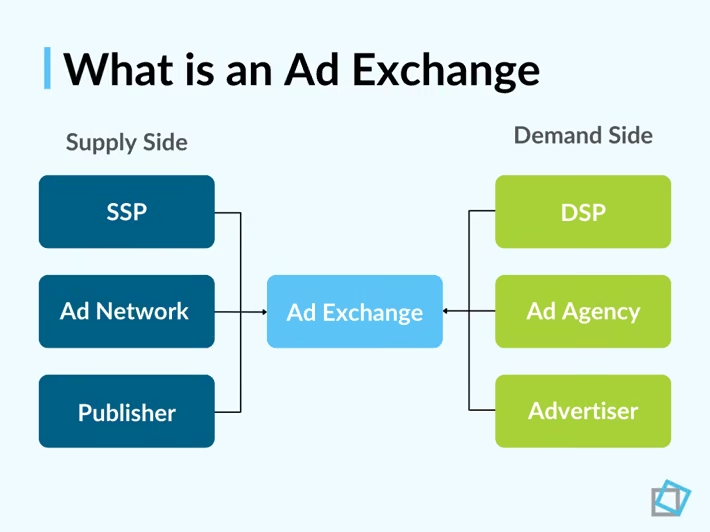
For marketers, an ad exchange acts as the connection point between DSPs (where advertisers buy inventory) and SSPs (where publishers make their inventory available). This creates a more efficient, transparent, and scalable way to run campaigns across today’s fragmented CTV landscape.
Before the programmatic approach, buying CTV or video ads was a slow, manual process.
Advertisers typically:
- Purchased inventory directly from individual publishers
- Negotiated contracts one by one
- Had limited audience targeting
- Estimated impressions with little visibility or precision
This made it difficult to scale campaigns or optimise performance, especially as streaming viewership grew across hundreds of apps and platforms.
Ad exchanges changed that by:
- Bringing large amounts of inventory into a single marketplace
- Automating the buying and selling process
- Enabling real-time audience targeting and bidding
- Providing more transparency into where ads run and how they perform
Today, more than 90% of CTV advertising is bought programmatically, mainly because ad exchanges make the process faster, more accurate, and much more measurable.
Leading ad exchanges in the CTV ecosystem
Some of the top ad exchanges marketers work with include:
- Google AdX (Google Ad Manager Exchange)
- Xandr (Microsoft)
- Index Exchange
- PubMatic
- Yahoo Exchange
- OpenX
- Magnite
The programmatic supply chain
Let’s understand in detail how different components work together across programmatic CTV.
Supply-side platforms (SSPs)
SSPs serve publishers and content owners. They enable the selling of ad inventory by acting as the middleman between publishers with ad exchanges. SSPs send bid requests to the ad exchanges when specific ad formats and placements become available, providing detailed information about the audience.
Ad exchanges
Serving as the central hub, ad exchanges connect SSPs and DSPs, facilitating the real-time auction of ad impressions. The instantaneous nature of these auctions allows for efficient and competitive ad buying, ensuring that the highest bidder secures the ad space.
Demand-side platforms (DSPs)
On the flip side of SSPs, DSPs represent advertisers. They evaluate bid requests from SSPs and use algorithms to decide which ad impressions to bid on and at what price. DSPs are selective and ensure that advertisers' messages reach the intended audiences.
Data providers
Data is the backbone of programmatic advertising. Data providers supply valuable information about user behavior, demographics, and preferences. Advertisers use this data to make informed decisions and effectively target specific audience segments.
How do ad exchanges work?
Machine learning, also known as AI, is the driving force behind ad exchanges. It allows video ads and other formats to be bought on a per-viewer basis without any human intervention during the bidding process.
Here’s how the programmatic ad-buying process works:
- A user settles in for their favorite show on a streaming app like Hulu, Tubi, or YouTube TV.
- The app sends a bid request to an SSP looking for advertisers to compete for the ad spot. The request includes information about the user’s digital footprint, such as their viewing habits, demographics, location, and more.
- An ad exchange connects the SSP with DSPs to centralize and automate media buying across multiple sources.
- A DSP or an ad network connects advertisers to the exchange, allowing them to set parameters for how they target ads, and then make purchases via real-time bidding.
- In a split second, the highest bidder wins the ad slot, and the viewer is served a relevant commercial without any noticeable lag.
What occurs behind the scenes is painstakingly complex. But for the viewer, it’s seamless.
Ad exchange vs ad networks
An ad exchange is a digital marketplace where ad space is bought and sold in real time. An ad network bundles inventory from many publishers and sells it in bulk, often with less transparency. A DSP (demand-side platform) is the tool advertisers use to automatically bid on and buy inventory from ad exchanges.
Ad networks may also participate in the bidding process as resellers. These aggregate inventory from multiple sources and offer it to advertisers, providing additional options for reaching their target audience. Many ad networks buy inventory from ad exchanges and then mark it up. This only further complicates the CTV supply chain.
Types of ad exchanges
Open ad exchanges
Open ad exchanges can be accessed by any advertisers looking to buy inventory, as well as third-party ad networks looking to resell ad space. Think of these as the eBay of digital inventory.
Private marketplaces (PMPs)
Private marketplaces (PMPs) are more exclusive, as they control which media buyers can participate. These restricted environments provide access to premium inventory, which helps prevent ad fraud and improve brand safety. PMPs are more like invite-only shopping events at luxury stores (to extend the metaphor from the last bullet).
Because PMPs combine the premium content that media buyers demand with the efficiency of programmatic buying, they’re often the best option.
However, to gain access to a PMP, advertisers must establish relationships with publishers or collaborate with a CTV provider like Strategus, which has a network of inventory partners.

Strategus provides advertisers with access to PMP inventory, eliminating the need for their own publisher relationships. It uses vetted, premium CTV supply to enhance brand safety and ensure ads run only in high-quality environments across the Strategus exchange network.
Preferred deal
A preferred deal gives a buyer first look at a publisher’s inventory before it hits the broader auction. The CPM is pre-negotiated, so both sides lock in predictable pricing.
For marketers, preferred deals offer a good balance: early access to substantial inventory without the competitive pressure of an open exchange.
Why ad exchanges matter for marketing performance
Ad exchanges play a central role in how modern CTV campaigns achieve reach, efficiency, and measurable results. For marketers, they remove much of the friction that previously slowed down media buying and replace it with technology that helps campaigns scale and perform better. Here’s how they make a difference.
Reach more publishers instantly
Instead of negotiating with individual apps, channels, or streaming platforms, ad exchanges consolidate thousands of publishers and their ad inventory into a single marketplace. This gives marketers instant access to far more inventory than any direct-buy approach could offer.
Fair, market-driven pricing
Real-time bidding ensures that advertisers pay the actual value of each impression. You’re not locked into high fixed rates or outdated rate cards—your bid competes fairly in the market, helping control CPMs and avoid overspending.
Stronger audience targeting
Ad exchanges use data to help you reach viewers based on interests, behaviours, location, and more. This makes targeting more precise and reduces wasted impressions.
No manual buying or negotiations
Automation handles bidding, placement, and delivery. Marketers no longer need to manage slow email chains, negotiate contracts, or manually request access to inventory. Everything happens in milliseconds.
Greater placement transparency
Ad exchanges provide clearer insight into where your ads run, how often they appear, and how each placement performs. This level of transparency is crucial in CTV, where high-quality environments are essential.
Faster testing and optimization
Because campaigns run through automated systems, marketers can quickly adjust targeting, creative, frequency, and bids. This makes iterative testing easier and helps performance improve in real time.
Cost optimization
When pricing is fair, targeting is precise, and optimization is continuous, budgets work much more effectively. Ad exchanges help concentrate spend on impressions that actually drive outcomes, improving ROAS across the board.
Benefits for publishers
Ad exchanges create meaningful ad revenue and operational advantages for publishers. By automating auctions and opening ad inventory to a broader buyer base, publishers gain more control, stronger pricing, and better long-term yield management.
Here are some benefits for publishers.
Higher revenue through competition
When more advertisers can bid on each impression, demand naturally increases. This competitive environment helps drive stronger CPMs compared to relying on a small number of direct deals.
Access to more buyers
Ad exchanges expose inventory to a broader pool of qualified advertisers. This improves fill rates and reduces the risk of unsold impressions, while also protecting publishers from being overly dependent on a few large buyers.
Full control of ad inventory
Publishers maintain control over ad formats, placements, floor prices, and brand-safety filters. They can block categories or creative types that don’t align with their standards, ensuring a better experience for their audience.
More stable pricing
Floor prices prevent impressions from being undervalued and help maintain predictable revenue. This creates a healthier long-term pricing strategy across all inventory.
Less manual workload
Automation manages bidding, delivery, pacing, and reporting. This reduces manual effort and frees publisher teams to focus on content, user experience, and audience growth rather than operational tasks.
The difficulties of ad exchanges
While ad exchanges offer scale and efficiency, they also come with challenges. Many of these issues stem from the open nature of programmatic buying, where not all inventory, publishers, or environments are equal.
- Ad fraud risk: Fake sites, spoofed apps, or bot traffic can quietly waste budget on impressions that never reach real viewers. Strategus mitigates this risk by utilizing only premium, verified CTV inventory from over 200 top publishers and professionally produced content.
- Brand safety concerns: Without the proper safeguards, ads can appear next to content that doesn’t align with your brand, putting trust and reputation at risk.
- Limited control over placements: In open exchanges, you may not always know exactly where your ads are running. Strategus uses private marketplaces (PMPs) and curated supply lists to ensure ads appear only in brand-safe, high-quality CTV environments.
- High complexity: Managing targeting, bidding strategies, pacing, and optimization across exchanges takes real expertise. Small mistakes can get expensive fast. Strategus handles the technical complexity so marketers don’t have to.
- Unpredictable costs: Real-time bidding means prices can rise rapidly as competition intensifies, making budgets more challenging to manage without active oversight.
- Viewability problems: Ads may technically serve but still go unnoticed in low-quality or low-attention environments. Strategus focuses on premium CTV inventory where ads are fully viewable and seen by engaged viewers.
Simplify CTV media buying with Strategus
Strategus doesn’t just plug into ad exchanges. It manages the entire buying path on your behalf, making sure every impression runs in a safe, verified, high-value environment. Instead of leaving your campaigns to chance inside open exchanges, we offer:
- Seamless access to premium CTV inventory across top publishers and platforms
- Direct integrations with ad exchanges, SSPs, DSPs, and data partners
- Hands-on campaign execution from setup to optimization
- Vendor-agnostic flexibility that ensures the best mix of partners for your goals
- Access to our proven expertise to simplify CTV advertising and drive measurable results
Strategus turns the chaos of ad exchanges into a controlled, high-performing media engine. Speak to a Strategus expert to see how we can turn your CTV ad spend into measurable performance.
Frequently asked questions
1. Who uses ad exchanges?
Ad exchanges are used by advertisers, agencies, publishers, and ad tech platforms. Advertisers and agencies use them to quickly reach specific audiences. Publishers use them to sell ad space to the highest bidder. Ad tech partners like DSPs and SSPs connect both sides, making transactions faster and more efficient.
2. Why is an ad exchange important for digital campaigns?
An ad exchange matters because it helps advertisers buy ad space at fair market prices while reaching the right audience. It gives publishers more chances to sell inventory at a higher value. The process is transparent, real-time, and automated, which saves time and maximizes campaign efficiency.
3. How can I identify the ad exchanges used by leading brands?
You can check industry reports, case studies, and ad tech reviews to see which ad exchanges brands prefer. Tools that track ad placements also reveal this data. Many leading brands often choose trusted platforms like OpenX, Magnite, or Google AdX for scale, safety, and premium inventory access.
4. What challenges do publishers face in the open ad exchange?
Publishers face risks such as lower-quality ads that hurt user experience, unpredictable income from fluctuating bids, and reduced control over which ads appear. They also deal with fraud attempts and compliance pressures. Managing these issues requires strong monitoring, floor pricing, and partnerships with reliable ad tech providers.
4. How do ad networks facilitate retargeting across multiple channels?
Ad networks collect audience data and use it to deliver ads across websites, apps, and streaming platforms. This allows brands to reach users after they visit a site or app. Retargeting ensures that ads follow potential customers across channels, increasing chances of conversion and brand recall over time.
5. How do I set up programmatic advertising for video on demand or CTV?
To set up programmatic ads for VOD or CTV, you need a DSP or managed service provider. Start by defining your target audience, budget, and creative assets. Then, connect with exchanges or private marketplaces that offer CTV inventory. Tracking performance helps optimize campaigns and improve return on spend.
6. What is the difference between open exchange ads and private marketplaces?
Open exchanges allow anyone to buy ad space, offering a wide reach but less control. Private marketplaces limit access to selected advertisers and provide premium inventory. PMPs usually deliver better brand safety, transparency, and content quality. Marketers often choose PMPs when they want both efficiency and higher-quality placements.
7. Is advertising on an ad exchange safe?
Ad exchanges provide access to vast inventory, but safety depends on safeguards. Risks like ad fraud and harmful placements exist. Choosing exchanges with strong verification, fraud detection, and brand safety controls reduces exposure. Private marketplaces also offer safer environments because they limit who can buy and sell inventory.
8. What does PMP stand for in advertising?
PMP stands for Private Marketplace. It is an invitation-only digital marketplace where publishers offer premium ad inventory to selected advertisers. PMPs combine the automation of programmatic buying with controlled access. This setup reduces fraud, ensures higher-quality placements, and enables advertisers to align more easily with trusted publishers.
9. How to monitor your ad inventory effectively?
Publishers can monitor inventory by using SSP dashboards, analytics tools, and fraud-detection systems. Setting floor prices, blocking low-quality ads, and tracking performance metrics protect revenue and user experience. Regular audits and partnerships with verified ad tech vendors help maintain transparency, optimize pricing, and ensure better brand alignment.
Frequently Asked Questions
Is Netflix AVOD or SVOD?
Layer interests, purchase behavior, and viewing habits on top of age and location — so every impression reaches someone who actually matters to your business.
What Is an Ad Exchange? How Programmatic CTV Buying Works?
Ad exchanges power most of the ads you see on connected TV, but understanding how they work can feel like deciphering a secret code. SSPs, DSPs, data signals, and real-time bidding.
What is an ad exchange?
An ad exchange is a digital marketplace where advertisers and publishers buy and sell ad space automatically in real time. Instead of relying on manual negotiations or fixed placements, ad exchanges use programmatic technology and RTB (real-time bidding) to match the right ad to the right viewer within milliseconds.
What is supply-side platforms (SSPs)?
SSPs serve publishers and content owners. They enable the selling of ad inventory by acting as the middleman between publishers with ad exchanges.
What is demand-side platforms (DSPs)?
On the flip side of SSPs, DSPs represent advertisers. They evaluate bid requests from SSPs and use algorithms to decide which ad impressions to bid on and at what price.
What is data providers?
Data is the backbone of programmatic advertising . Data providers supply valuable information about user behavior, demographics, and preferences.
get in touch
Subscribe to our
newsletter
Stay ahead with strategies and insights from streaming advertising experts.
Learn from the field
.webp)
.webp)
.webp)
.webp)
.webp)
.webp)
.webp)
Book a demo
Talk to an expert
Tell us what you want to achieve and we'll map the media strategy to get you there — no self-serve dashboards, just a partner who does the work.