Turning CTV Reporting Into a Strategic Advantage for Advertisers

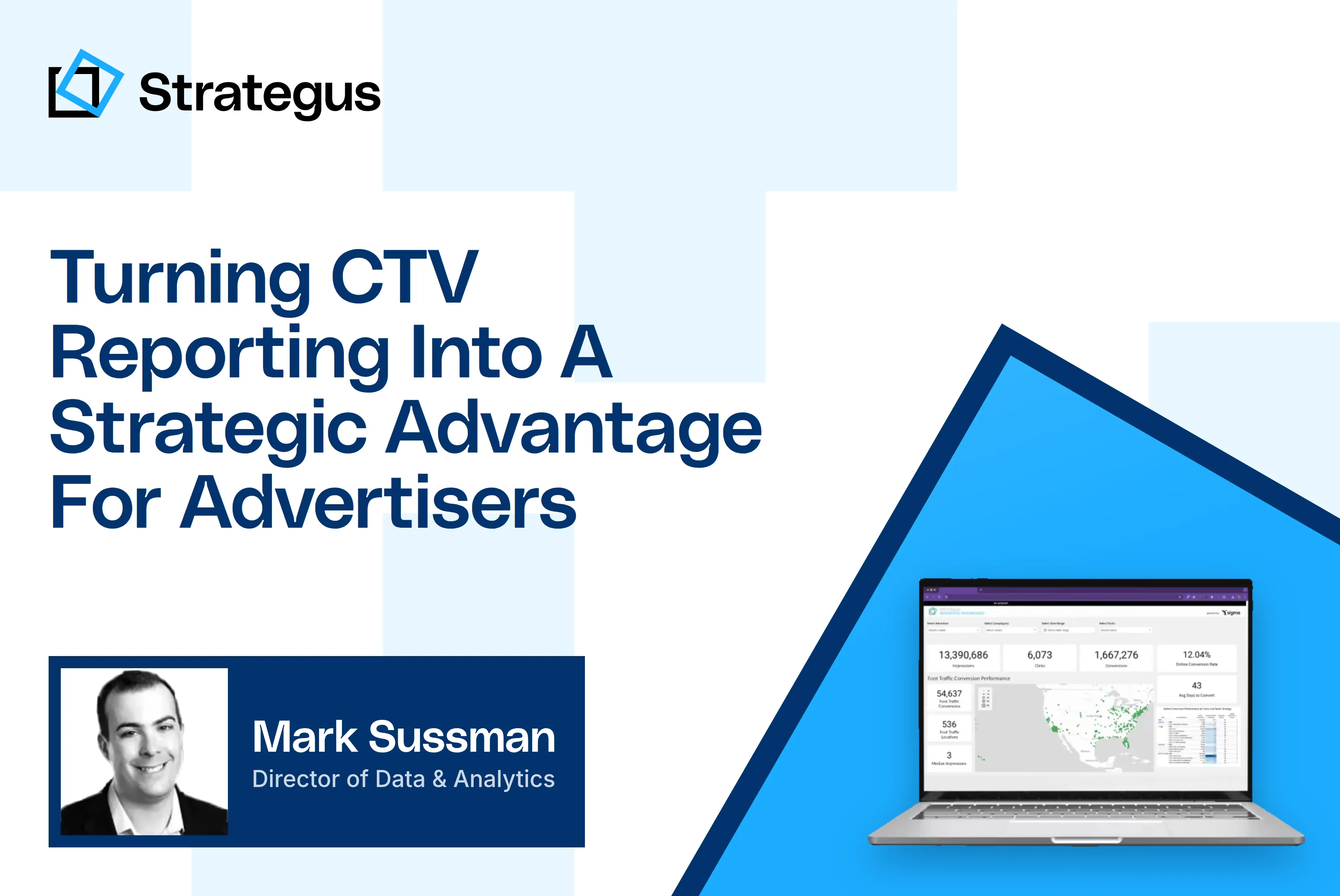
Table of Contents
As part of our thought leadership series, we’re sharing perspectives from leaders across Strategus who shape how the company operates and grows.
This installment comes from Mark Sussman, our Director of Data & Analytics. He leads the development of our reporting and analytics systems, helping turn complex campaign data into clear insights and actionable decisions.
Connected TV has matured into one of the most important channels in modern advertising. But while the media side of CTV has evolved quickly, the way many campaigns are measured and reported hasn’t always kept pace.
For years, reporting in CTV looked something like this: spreadsheets, static dashboards, and end-of-month summaries sent to clients after campaigns finished running.
That model no longer works.
Today’s advertisers expect something very different. They want to understand performance as campaigns run. They want to explore the data themselves. And most importantly, they want partners who can help translate that information into smarter decisions.
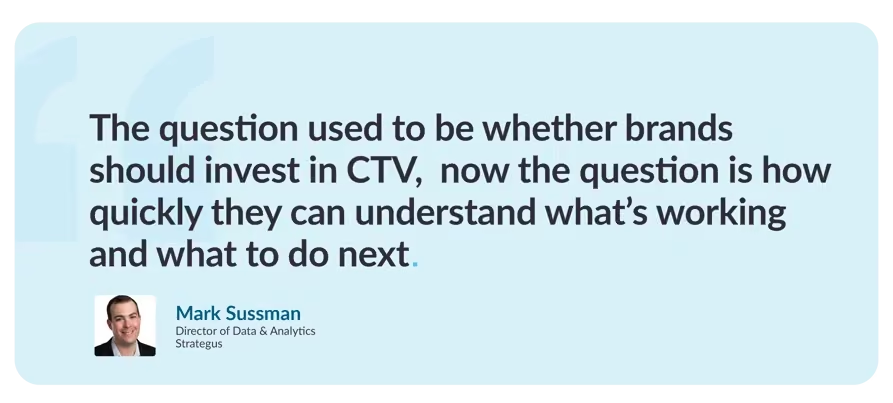
According to our Director of Data & Analytics, Mark Sussman, the way agencies approach reporting is quickly becoming one of the biggest differentiators in the CTV space:
Why CTV Reporting Is Becoming a Strategic Decision
CTV campaigns generate enormous amounts of data.
Every ad impression, viewer interaction, device signal, and conversion event creates a new data point. Multiply that across billions of impressions and hundreds of campaigns, and you quickly move beyond simple reporting into a full-scale data challenge.
But clients don’t see that complexity.
What they see is much simpler: whether they can clearly understand how their campaigns are performing.
That’s why reporting has quietly become one of the most important parts of the client experience. Agencies that can provide clear, accessible performance insights tend to build stronger client relationships and win larger budgets over time.
Those who can’t risk becoming interchangeable media vendors.
The Hidden Complexity Behind CTV Data
One of the challenges in CTV reporting is that the ecosystem itself is fragmented.
Campaign data often comes from multiple partners and platforms, including DSPs, measurement providers, attribution partners, and internal systems. Each source reports slightly different metrics, formats, and definitions.
Behind the scenes, teams are responsible for:
- Ingesting large volumes of campaign data
- Normalizing metrics across partners
- Reconciling attribution models
- Translating raw data into something clients can understand
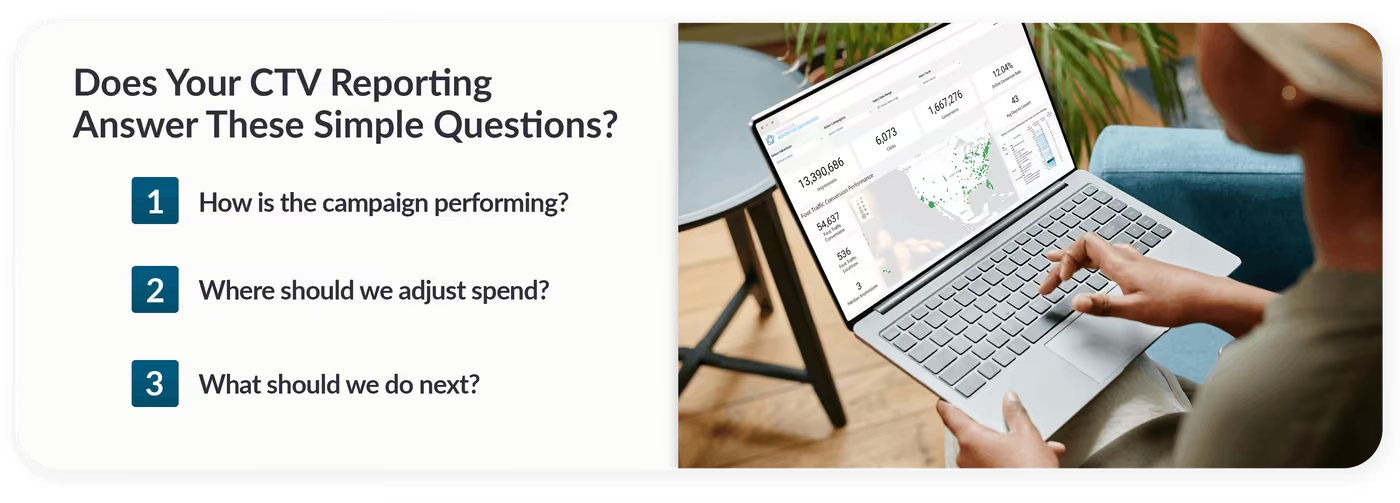
For brands andagencies, the goal isn’t to see all that complexity. It’s to have answers to simple questions:
- How is the campaign performing?
- Where should we adjust spend?
- What should we do next?
Providing those answers consistently requires more than just dashboards. It requires a reporting experience designed around the client.
Moving From Dashboards to a Client Experience
Like many companies operating in CTV, we didn’t start with a perfect reporting system.
Early on, most reporting was built on individual dashboards created for specific campaigns or clients. Over time, this led to a fragmented environment with hundreds of separate reporting views.
Maintaining those dashboards became difficult. Updating them was slow. Scaling them across new clients was even harder. Instead of continuing to create new dashboards for every client request, we shifted toward building one unified reporting experience.
The goal was simple: create a client portal that made it easy for agencies and brands to explore campaign performance without waiting for a report at the end of every month.
What Clients Actually Want From CTV Reporting
Through that process, a few priorities became clear.
First, clients want constant visibility into campaign performance. Waiting for a report or presentation is no longer acceptable when campaigns are running in real time.
Sussman notes that many agencies underestimate how quickly reporting expectations have changed:

Second, different stakeholders within an organization need different perspectives. A marketing director may want a high-level performance view, while a regional team may want to see results specific to their market.
Third, reporting should support both branding and performance narratives. Some campaigns focus on awareness, others on direct response, and many operate somewhere in between.
When reporting systems can adapt to those different needs, they become more than dashboards. They become decision-making tools.
Building the Foundation for Scalable Reporting
To support that type of experience, we rebuilt the way campaign data flows through our analytics systems.
Instead of relying on legacy all-in-one tools, the team moved toward a modern data stack designed to handle large-scale campaign reporting.
More importantly, they focused on creating one core reporting environment that could support many different clients and campaign structures through segmentation and secure access controls.
Today, that approach supports thousands of users across the agencies and brands we work with.

In some cases, dozens of users from a single client organization log in regularly to monitor campaign performance across markets and teams. That level of visibility simply wasn’t possible with traditional reporting models. The shift toward embedded reporting has implications beyond analytics.
When clients can see and understand campaign performance in real time, the conversation changes. Instead of asking what happened last month, they start asking what to do next.
That shift turns reporting from a reactive process into a strategic advantage.
Agencies and partners who can deliver that experience position themselves as advisors rather than vendors. And in a market where CTV continues to grow rapidly, that distinction matters.
The Future of the CTV Client Experience
Looking ahead, reporting will likely evolve even further.
As data infrastructure improves, embedded reporting environments will increasingly support:
- Automated insights and optimization suggestions
- AI-assisted analysis of campaign performance
- More advanced attribution models
- Deeper collaboration between agencies and brand teams
But those innovations will only be possible if the foundation is built correctly.
As Sussman puts it:

The Direction CTV Is Moving
Connected TV continues to grow, but the agencies and platforms that will succeed in the space will be defined by the experience they create for clients, not just how they buy media.
That experience increasingly includes transparent reporting, real-time performance insights, and the ability to turn complex data into clear next steps.
For agencies and brands investing heavily in CTV, that shift is already underway. If you’re curious what modern CTV reporting can look like in practice, reach out for a quick demo on how we approach it.

Frequently Asked Questions
Is Netflix AVOD or SVOD?
Layer interests, purchase behavior, and viewing habits on top of age and location — so every impression reaches someone who actually matters to your business.
What is Turning CTV Reporting Into a Strategic Advantage for Advertisers?
Connected TV has matured into one of the most important channels in modern advertising. But while the media side of CTV has evolved quickly, the way many campaigns are measured and reported hasn’t always kept pace.
Why CTV Reporting Is Becoming a Strategic Decision?
CTV campaigns generate enormous amounts of data. Every ad impression, viewer interaction, device signal, and conversion event creates a new data point.
What is the Hidden Complexity Behind CTV Data?
One of the challenges in CTV reporting is that the ecosystem itself is fragmented. Campaign data often comes from multiple partners and platforms, including DSPs , measurement providers, attribution partners, and internal systems.
What Clients Actually Want From CTV Reporting?
Through that process, a few priorities became clear. First, clients want constant visibility into campaign performance.
What is the Future of the CTV Client Experience?
Looking ahead, reporting will likely evolve even further. As data infrastructure improves, embedded reporting environments will increasingly support:
get in touch
Subscribe to our
newsletter
Stay ahead with strategies and insights from streaming advertising experts.
Learn from the field
.webp)
.webp)
.webp)
.webp)
.webp)
.webp)
.webp)
Book a demo
Talk to an expert
Tell us what you want to achieve and we'll map the media strategy to get you there — no self-serve dashboards, just a partner who does the work.