OLV Advertising Explained: Formats, Strategy, Measurement, and More

.webp)
Table of Contents
What separates an OLV advertising campaign that creates new revenue from one that just burns through budget?
It’s not how much you spend, nor is it how great your creative looks, though these things do matter. It’s about buying the right inventory, reaching the right people, and measuring the right things.
This guide covers how to get all three right, from formats and buying mechanics to targeting, creative, measurement, and how to connect OLV to the rest of your media plan.
What Is OLV Advertising?
OLV (online video) advertising refers to ads that run alongside video content on social media and open web platforms, like YouTube. It plays before or during a video a user is actively watching on a browser or app.
OLV is now a foundational channel for advertisers, often forming a large chunk of a brand’s media mix, alongside CTV.
OLV vs OTT vs CTV: Core Differences
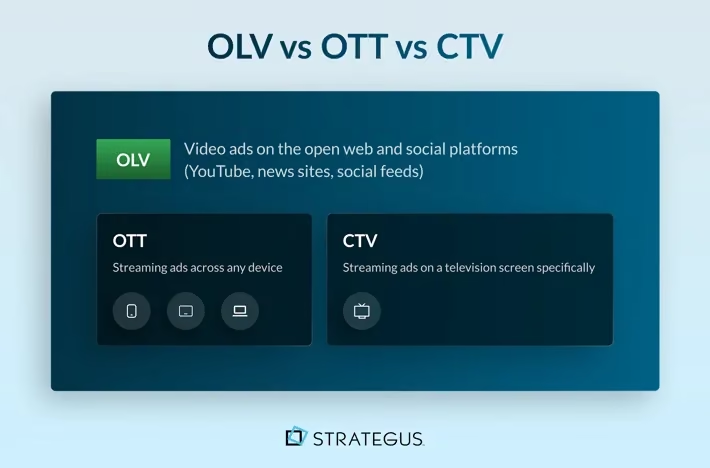
OLV ads are the pre-, mid-, or post-roll ads that run alongside video content on the open web and social platforms. Think YouTube, news sites, sports sites, and entertainment publishers.
CTV (Connected TV) is advertising that runs on an actual television screen while someone is streaming. That could be live TV or on-demand content through platforms like Hulu, Peacock, or a smart TV app. The defining factor is the device: it's a TV
OTT (over-the-top) is the same streaming ad experience as CTV, but not limited to the television screen. The same Hulu ad that runs on a smart TV is OTT when it runs on a phone, tablet, or laptop.
CTV is technically a subset of OTT, but in practice, the industry often uses them interchangeably when referring to the TV screen specifically.
The short version: OLV lives on the web and social alongside video content. CTV is the TV screen. OTT is the streaming ecosystem across all devices.
OLV Ad Formats
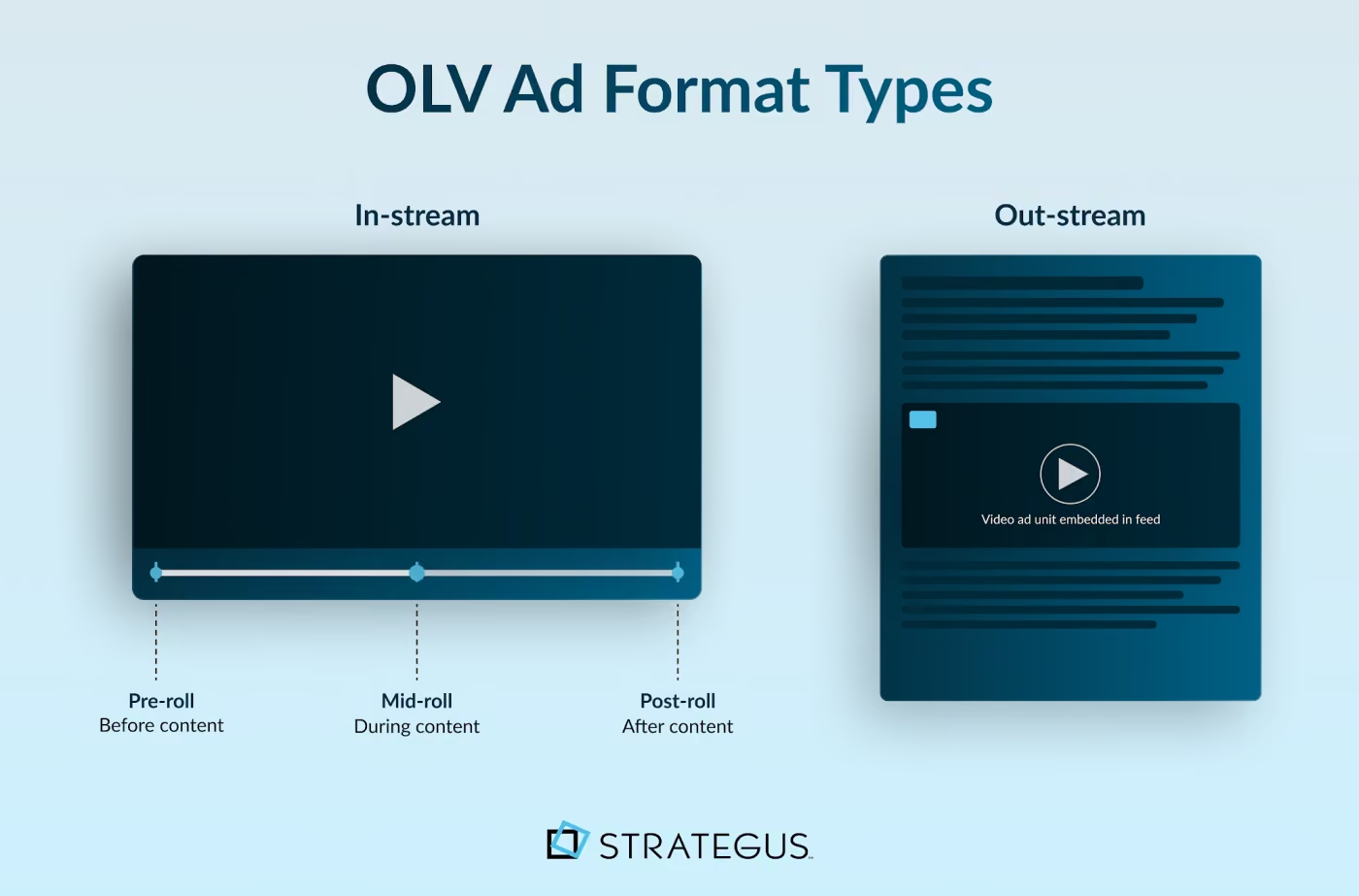
The format you choose for an OLV campaign directly shapes how viewers engage with your ad. Advertisers have two main options: in-stream and out-stream.
In-stream advertising formats
In-stream ads are those that run within video content, like the ad you see before a YouTube video starts.
There are a few different in-stream formats, with different implications for advertisers:
- Pre-roll: Plays before the main content, offers high visibility but is often first to be skipped (where applicable).
- Mid-roll: Inserted during content where the viewer is already engaged, which tends to produce stronger completion rates in longer-form content.
- Post-roll: Plays after content ends, reaching only viewers who watched through to completion.
Ads can also be skippable or non-skippable.
Skippable formats naturally have lower completion rates, but impressions tend to reach genuinely interested viewers. If they had the option to skip the ad but chose not to, there is likely a good reason why.
Out-stream advertising formats
Out-stream ads run outside of video content environments, such as a video embedded in a news article.
There are three main formats here:
- In-feed: Appears within social or editorial feeds, autoplays as the user scrolls.
- In-article: Embedded within written content, plays as the reader moves through the page.
- Interstitial: Full-screen placements between content pages or app screens.
Interactive ads
Interactive video is expanding what's possible for advertisers looking to drive deeper engagement beyond the standard view. Unlike passive formats where viewers simply watch, interactive video invites direct participation, giving audiences a way to engage with the ad itself rather than just receiving it.
For example, a viewer watching a clothing ad can click directly on a product to purchase without leaving the video, turning a passive viewing moment into a direct path to purchase.
Practical advice for advertisers
The ad formats you choose should follow the objective of your campaign.
For example, pre-roll and non-skippable formats are a good choice for brand awareness-focused campaigns. For performance campaigns where reaching a self-selecting audience matters more than guaranteed exposure, outstream and skippable formats may offer greater cost efficiency and retargeting accuracy.
OLV Advertising Platforms and Inventory
OLV inventory is not the same across all platforms and formats.
Where an OLV ad runs affects audience quality, ad experience, pricing, and measurability.
- Social media platforms: YouTube, Instagram, Facebook, and TikTok are among the largest sources of OLV inventory. Ads are bought directly through each platform's self-serve interface or programmatically via DSP.
- Open web video inventory: Video ads served across publisher websites and apps outside streaming environments. Broad reach and flexible audience targeting, but brand safety and viewability require active management via inclusion lists or verified inventory packages.
- In-app video: Video ads served within mobile apps outside of streaming environments, including games, utilities, and news apps. Reaches audiences during high-frequency mobile sessions and can be bought programmatically alongside open web inventory.
How OLV Advertising Is Bought
Programmatic is the default buying method for most OLV campaigns because of the speed, scale, and targeting precision it enables.
It involves using specialized software (a demand-side platform or DSP) to automatically buy and place digital ads, using audience data to target the right viewers across thousands of publishers in real time. Most OLV inventory is bought through one of two DSPs:
- Google DV360 for YouTube
- TradeDesk for essentially everything else
Programmatic buying happens through open auction, where ad inventory is bought and sold in real time.
When a user loads a page or opens an app, an automated auction takes place in milliseconds, with advertisers bidding against each other for the available impression. The winning bid determines whose ad appears, and the whole process completes before the page finishes loading.
Self-serve vs managed service
Whether negotiated direct buys with publishers or accessing inventory programmatically, advertisers can either choose to DIY or work with an expert partner.
With a self-serve approach, the advertiser manages buying, optimization, and reporting directly through a DSP. This option gives the brand full visibility and control over the advertising process, but it requires the right in-house expertise and a significant ongoing time investment to manage effectively.
When a brand engages a managed service like Strategus, the partner handles strategy, buying, optimization, and reporting on their behalf.
The complexity of inventory selection, bid management, and cross-channel coordination requires consistent expert attention, which is why this approach often provides better results, especially for brands without a dedicated in-house programmatic team with OLV experience.
Strategus operates as a managed service CTV and OLV partner, handling the full buying and optimization process so brands can access premium inventory and sophisticated targeting without the operational overhead of running it in-house.
OLV Targeting Capabilities
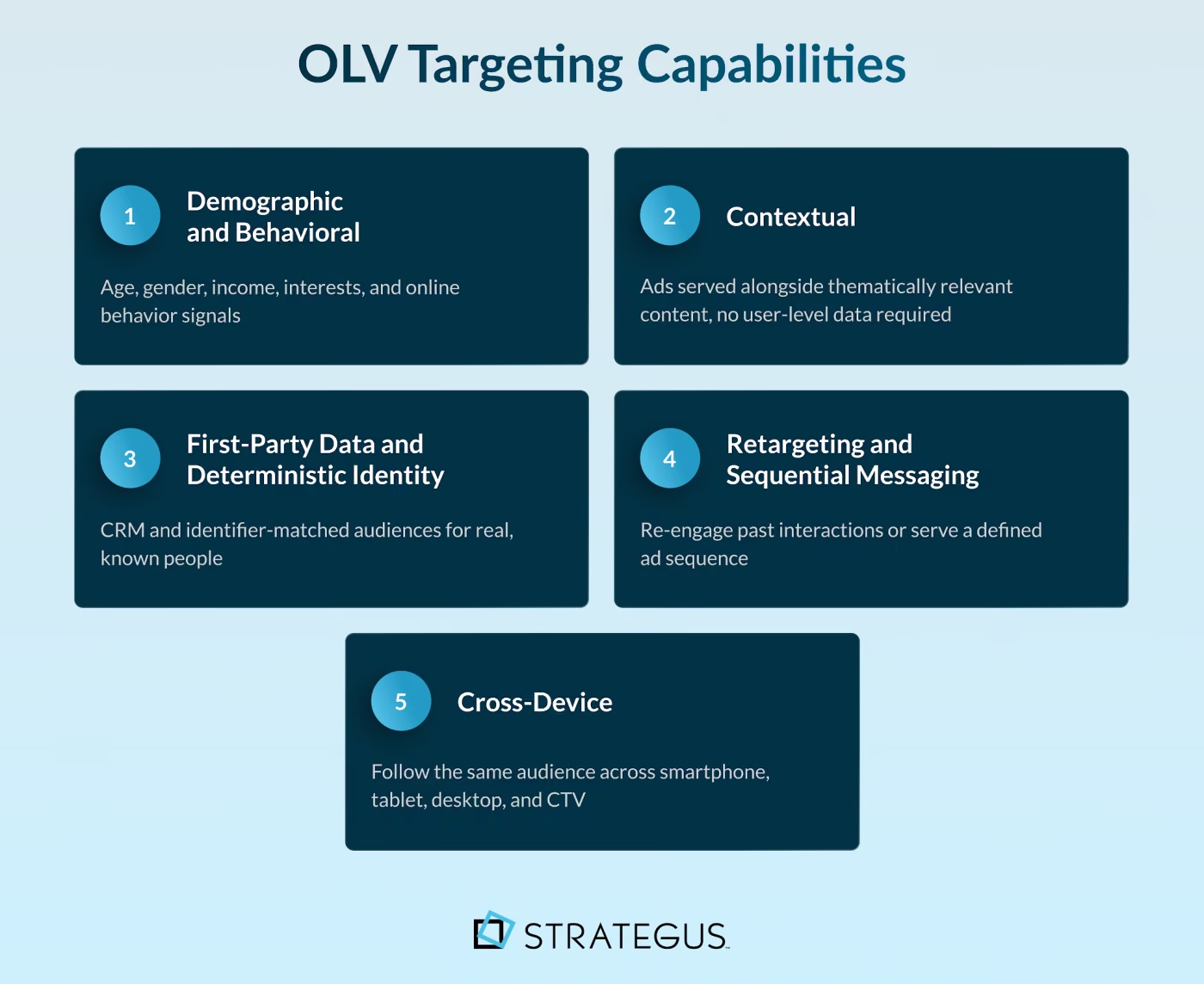
One of OLV's main advantages is the ability to define and reach specific audiences rather than buying broadly based on demographic estimates. These are the targeting capabilities you’ll typically have access to when running OLV ads.
- Demographic and behavioral targeting: Build audiences based on age, gender, income, interests, and online behavior signals.
- Contextual targeting: Serve ads alongside thematically relevant content without relying on user-level data. Increasingly important as cookie-based targeting becomes less reliable.
- First-party data and deterministic identity: Upload CRM data or match identifiers like email addresses to device graphs to reach real, known audiences. First-party data targeting is the most accurate and durable targeting approach as third-party cookies phase out.
- Retargeting and sequential messaging: Reach users who've already interacted with your brand, or serve a defined ad sequence to move audiences through the funnel. Particularly effective when OLV runs alongside CTV or display.
- Cross-device targeting : Follow the same audience across smartphones, tablets, desktops, and CTVs, maintaining frequency and message consistency across every screen they use.
7 OLV Creative Best Practices
1. Match creative to format
A pre-roll ad and an in-feed vertical video require fundamentally different creative approaches.
A pre-roll can open with a slower brand build because the viewer is in a content-consumption mindset, but an in-feed vertical video needs to capture attention within the first frame because the viewer is actively scrolling and has no reason to stop.
Build separate cuts for each format rather than repurposing the same asset across both.
2. Design for mobile first
OLV runs across both mobile and desktop, meaning ad creative should be designed for the small screen first, then scaled up
It's easier to add or expand elements than to try to compress a large design onto a small screen. Text overlays, branding, and key visual elements need to be legible at small sizes without relying on audio.
CTV represents the fastest-growing segment of video advertising and requires its own considerations around screen size, viewing distance, and the absence of a click-based interaction. When adapting for CTV, revisit sizing and layout to account for the larger screen and the fact that viewers are typically sitting farther away.
3. Front-load your message
Front-load the key message in the first three to five seconds, regardless of total video length. The idea is to get your key idea across as quickly as possible.
This is especially important when ads are skippable. A viewer who skips at five seconds should still have received the core brand impression.
4. Lead with a strong open
The first frame is the most important creative decision in OLV.
Lead with motion, contrast, a recognizable face, or an unexpected visual rather than a logo card or a slow establishing shot.
5. Make your CTA specific
Viewers should walk away with a clear idea of what to do next. Your CTA defines that step, and it should be specific. “See how it works” or “Get a free quote” are more specific and more compelling than “Learn more.”
The CTA should also match where the viewer is in the funnel.
A viewer seeing your ad for the first time might respond to “See how [Brand] works,” while someone further down the funnel who's already familiar with your product is a better candidate for “Get a free quote” or “Start your free trial.”
6. Keep branding consistent across channels
Maintain visual and messaging alignment across all OLV formats and the channels running alongside them, particularly when OLV is running alongside a CTV or display campaign.
Viewers who encounter your ad across multiple touchpoints should receive a consistent experience, as inconsistent branding breaks the association between exposures and dilutes the cumulative impact that makes upper-funnel video work.
7. Get your technical specs right
Requirements vary by platform and inventory type, so be sure to confirm the specs before finalizing production.
Typical standards to be aware of include:
- Aspect ratios (16:9 for horizontal, 9:16 for vertical)
- H.264 file format
- Minimum 4mbps bitrate
- Standardized lengths of 6, 15, 30, or 60 seconds
How to Measure OLV Advertising Performance
The KPIs you choose to measure OLV advertising performance should be matched to your campaign objective.
A brand awareness campaign measured purely on CTR will always look like it underperformed, even if it reached the right audiences at the right frequency.
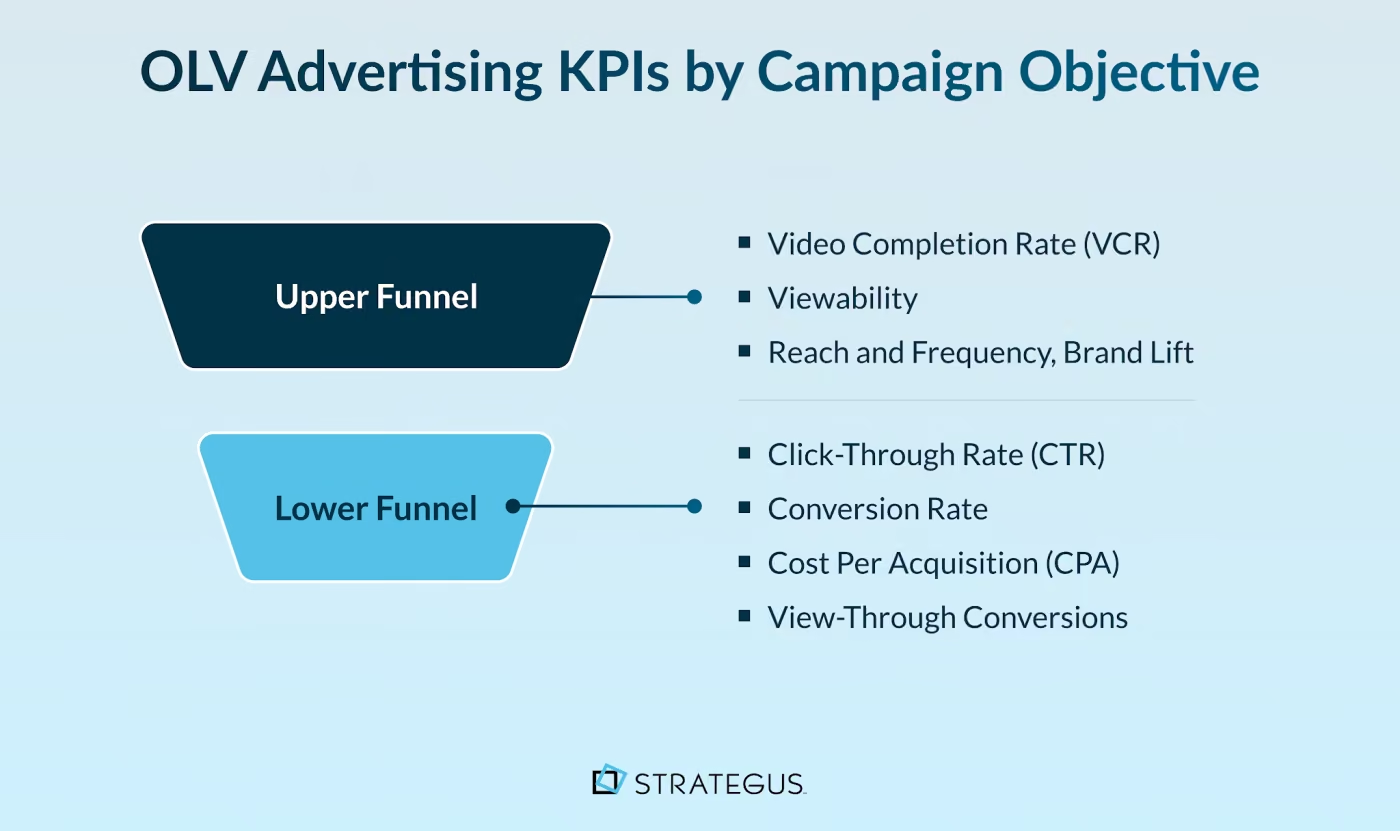
These are the main KPIs advertisers use to assess OLV performance:
- Video completion rate (VCR): The percentage of ad views that reached the end of the video. This is the primary indicator of creative effectiveness and audience relevance.
- Viewability: Whether the ad was actually in view when it played, not just technically served. The IAB standard is at least 50% of pixels in view for at least two continuous seconds, but aim higher. 70%+ viewability is achievable with quality inventory.
- Reach and frequency: How many unique users were exposed, and how many times on average. Frequency management is particularly important in OLV, as overexposure leads to diminishing returns and can create negative brand associations.
- Click-through rate (CTR): The percentage of ad impressions where the viewer clicked the CTA button. It is useful for performance campaigns but a poor proxy for brand campaign effectiveness.
The KPIs you choose to track should map to your campaign goals.
Upper funnel campaigns are generally measured using reach, frequency, and brand lift studies. Brand lift measures shifts in awareness, favorability, or purchase intent among exposed audiences versus a control group
For lower funnel campaigns, CTR, conversion rate, cost per acquisition, and return on ad spend are common to track. OLV exposure can still contribute to downstream conversion even when viewers don’t click. Relying only on CTR as a performance metric misses this reality.
View-through attribution windows of 24 to 72 hours are standard for OLV and capture the delayed action that click-only measurement misses. This works by dropping a pixel on the advertiser's site and matching it against a list of users who were served the ad within the attribution window, crediting the conversion to the OLV exposure even without a direct click.
OLV as Part of a Full-Funnel Strategy
OLV works best when it is connected to the rest of the media plan rather than planned and measured in isolation. Here’s how to run OLV ads alongside other digital advertising channels.
OLV and CTV
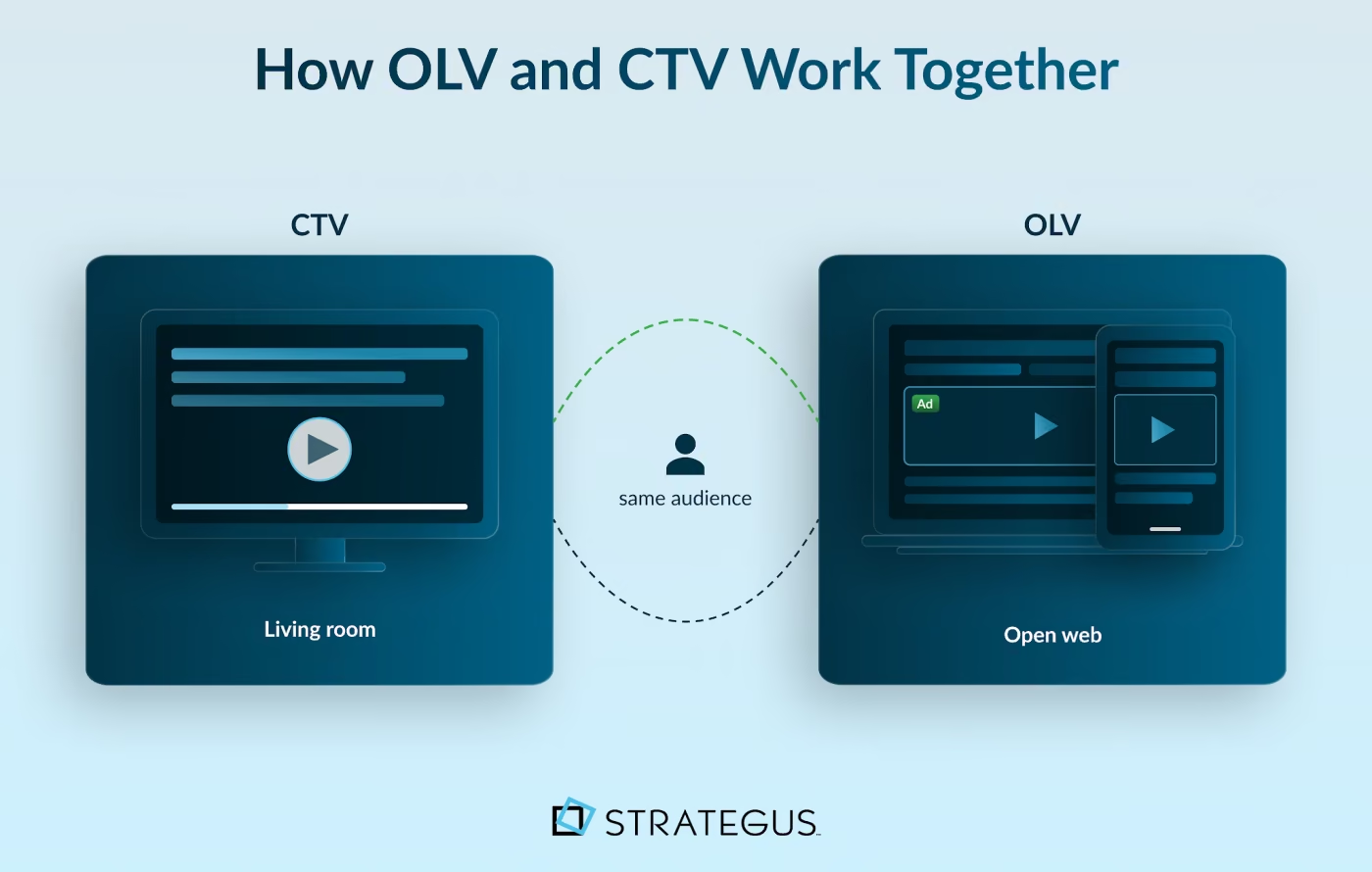
CTV reaches audiences in a lean-back, premium environment on the largest screen in the home. OLV extends that reach across the open web and mobile throughout the rest of the day.
Running both together produces a stronger frequency and recall than either channel alone. A retail brand, for example, might serve a 30-second CTV ad to a household during primetime, then follow that same audience with a shorter OLV unit on mobile the next morning as they scroll through news or social content.
When measuring across both, track household reach and frequency separately from individual reach to avoid misleading frequency numbers.
OLV and display retargeting
Viewers who watched an OLV ad but did not convert can be added to a retargeting pool and served a display creative that reinforces the message and drives a direct response action. The OLV exposure does the brand-building work; the display retargeting closes the loop.
A home services brand, for example, might serve an awareness-focused OLV ad explaining their offering, then retarget non-converters with a display ad featuring a specific offer and a direct call to book.
Sequential messaging
Sequential messaging is the practice of serving different creatives to the same audience in a defined order, moving them through the funnel rather than repeating the same ad on a loop.
Rather than running the same spot until frequency caps out, each exposure builds on the last.
A software brand, for example, might open with a 30-second pre-roll explaining their product, then serve a 15-second outstream unit to the same audience three days later, focused purely on a free trial offer.
Making OLV Advertising Perform
Getting OLV right requires making good decisions across format selection, inventory quality, buying approach, targeting, creative, and measurement, all at the same time.
As a fully managed programmatic video partner, Strategus handles OLV and CTV strategy, buying, optimization, and measurement end-to-end, giving brands enterprise-level execution without the operational overhead of managing it in-house.
Frequently Asked Questions
Is Netflix AVOD or SVOD?
Layer interests, purchase behavior, and viewing habits on top of age and location — so every impression reaches someone who actually matters to your business.
What is OLV Advertising Explained?
What separates an OLV advertising campaign that creates new revenue from one that just burns through budget? It’s not how much you spend, nor is it how great your creative looks, though these things do matter.
What Is OLV Advertising?
OLV (online video) advertising refers to ads that run alongside video content on social media and open web platforms, like YouTube. It plays before or during a video a user is actively watching on a browser or app.
What is the difference between oLV vs OTT vs CTV: Core Differences?
OLV ads are the pre-, mid-, or post-roll ads that run alongside video content on the open web and social platforms. Think YouTube, news sites, sports sites, and entertainment publishers.
What is oLV Ad Formats?
The format you choose for an OLV campaign directly shapes how viewers engage with your ad. Advertisers have two main options: in-stream and out-stream.
What is in-stream advertising formats?
In-stream ads are those that run within video content, like the ad you see before a YouTube video starts. There are a few different in-stream formats, with different implications for advertisers:
get in touch
Subscribe to our
newsletter
Stay ahead with strategies and insights from streaming advertising experts.
Learn from the field
.webp)
.webp)
.webp)
.webp)
.webp)
.webp)
Book a demo
Talk to an expert
Tell us what you want to achieve and we'll map the media strategy to get you there — no self-serve dashboards, just a partner who does the work.