20+ OTT Targeting Tips Every Advertiser Must Know in 2026

Table of Contents
Still relying on broad targeting that wastes budget? OTT ads can do better.
With CTV and streaming platforms, you get powerful tools to reach exact audiences, by behavior, device, or even household.
This guide breaks down 20+ tips to optimize your OTT ads targeting strategy to help you cut waste and boost results.
How Does OTT Ad Targeting Work?
OTT ads, including those served on connected TV (CTV) devices, are often purchased programmatically. This means they're bought on a per-viewer basis rather than being tied to specific content.
Programmatic ad placement also allows advertisers to target specific audiences across various publishers. When done right, this ensures a balance of precision and scale, thereby improving return on ad spend (ROAS).
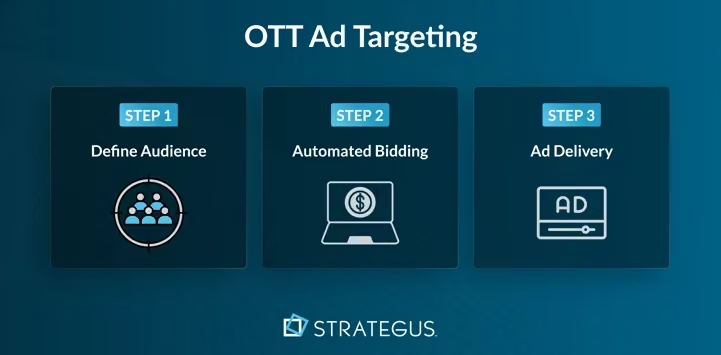
Here's a gist of how OTT ad targeting works:
- Audience Definition: Media buyers identify a target audience based on their ideal customer profile, campaign goals, and available data.
- Automated Bidding: Demand-side platforms (DSPs) use algorithms to bid on ad impressions that match these audience parameters. This factors in budget, audience value, and competitor bids.
- Targeted Ad Delivery: The highest bidder wins the impression, and the ad is served only to viewers who fit your defined audience. Throughout the process, data is collected to provide valuable insights for optimization and retargeting.
As OTT becomes more complex, requiring multiple integrations, vendors, and moving parts, many advertisers use managed services for OTT/CTV advertising. Not only do managed services help simplify the process, but partners like Strategus offer more sophisticated audience targeting capabilities across fragmented OTT platforms.
23 Pro Tips to Locate Your OTT Ads Audience
OTT targeting spans a wide range of options and data sources. We recommend layering different targeting tactics to create highly customized audiences to maximize campaign impact.
Here's a breakdown of OTT targeting capabilities, from basic to advanced:
Third-Party Data Targeting
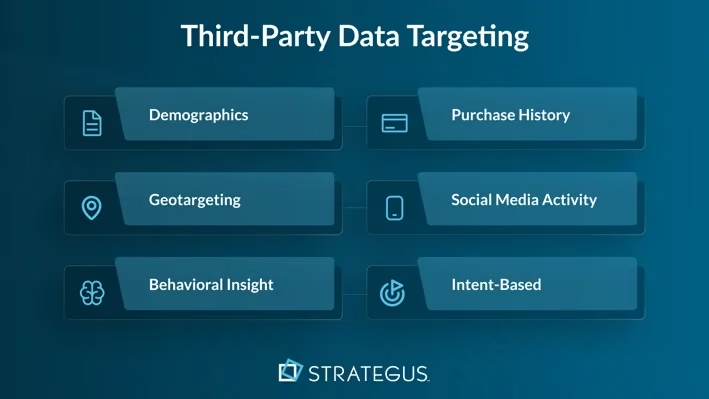
Third-party data is information acquired from external providers that offers a broad market view. It's helpful for identifying new audience segments and enhancing existing strategies.
Some of the OTT targeting tactics that we offer at Strategus, using insight from data management platforms (DMPs), include:
1. Demographic targeting
Basic demographic data like age, gender, and income form the foundation of most targeting strategies. While this approach may seem broad compared to more sophisticated methods, it remains incredibly valuable when layered with additional signals like behavioral patterns or geographic location.
The combination of demographic baseline data with these refinements creates a more complete picture of your ideal customer, improving both accuracy and campaign relevance without overcomplicating your targeting approach.
2. Geotargeting
Location-based targeting allows you to reach users within specific zip codes, DMAs, or custom radii around your business locations. This precision makes geotargeting ideal for driving local store visits, promoting regional offers, or customizing your messaging to reflect local culture and preferences.
Beyond improving relevance, geographic boundaries also boost campaign efficiency by eliminating wasted impressions outside your service areas, ensuring every dollar spent reaches customers who can actually engage with your business.
For a regional home services company, this could mean drawing a geofence around the specific zip codes they actually service, rather than the broader metro area.
That boundary decision improves spend efficiency, as impressions served outside the service area are wasted by definition, and tighter parameters ensure that the budget is concentrated where conversions are actually possible.
Creative can then be tailored to reflect local neighborhoods, seasonal conditions, or region-specific offers.
Similarly, a national retail brand noticing underperformance in a specific DMA can use geo boundaries to increase spend concentration in that region, running location-specific messaging designed to drive regional sales lift.
In both cases, the logic is the same: match your budget allocation to the geography where your business outcomes actually happen.
3. Behavioral insights
Online behavior data reveals what truly interests your audience by tracking their browsing history, content consumption patterns, and digital engagement habits.
When you serve ads that align with these demonstrated interests, you create a natural connection between your message and what viewers already care about. This approach works especially well for lifestyle brands, hobby-related products, or services that map to specific online behaviors, as the targeting feels organic rather than intrusive.
For a fitness brand, that segment might be built from users who have been browsing workout equipment, consuming fitness content across video platforms, and visiting supplement or activewear sites.
No single signal is definitive on its own, but layered together, they indicate genuine purchase intent rather than passing interest. When the ad lands, it doesn't feel like an interruption because it's relevant to what the viewer has shown interest in.
The same logic applies in higher-consideration categories.
An auto brand can build a behavioral segment from users who have been comparing vehicles, reading ownership reviews, and visiting dealership sites.
Those signals don't just indicate interest in cars generally, but where they are in their buying journey. Reaching that audience at that moment, rather than earlier in the awareness phase, means the ad arrives when the viewer is already primed to act.
4. Purchase history
Transaction data enables you to segment users based on their actual buying behavior, whether that information comes from your own CRM or trusted external partners. This powerful targeting method allows you to retarget your most loyal buyers with complementary products, identify and nurture high-value customer segments, or strategically suppress recent purchasers to avoid message fatigue.
The result is more intelligent frequency management and better alignment between your ad message and where customers are in their purchase journey.
5. Social media activity
Social engagement data reveals not just what users say, but who they interact with and which brands, posts, or influencers capture their attention across platforms.
A home services brand, for example, could effectively reach users who regularly engage with home renovation content, DIY tutorials, or interior design influencers. This creates natural alignment between your ad and the viewer's demonstrated interests, making your message feel like a logical extension of content they already seek out rather than an interruption.
6. Intent-based targeting
Real-time buying signals help you focus on users who are actively researching products, comparing options, or reading reviews in your category. These high-intent prospects represent the warmest leads in your funnel, as they've already moved past awareness and are evaluating their options.
When you combine intent data with retargeting capabilities, you can deliver the right message at the exact moment when prospects are most ready to convert, dramatically improving your campaign's efficiency and return on investment.
Second-Party and Retail Data Targeting
Second-party data comes next. Information that’s gathered internally by one organization and shared with another closely related company falls within this category. Often, this is sourced from publishers, partners within the same supply chain, or through mergers and acquisitions.
For instance, data from publishers like Hulu about their viewers' preferences and engagement can be considered second-party data.
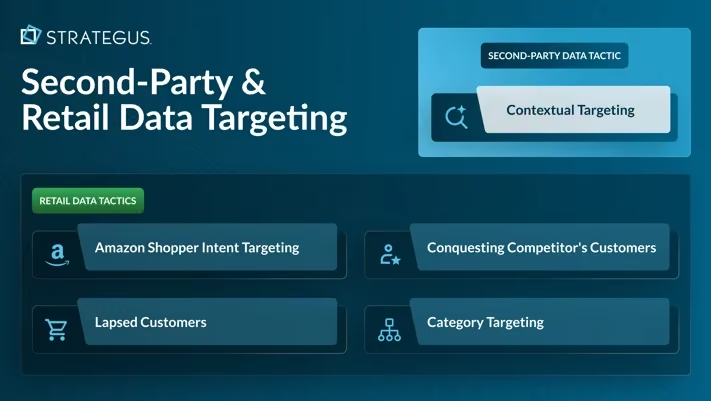
Another common type of second-party data is retail media, which is customer information gathered by major retailers like Amazon and Walmart. This data is highly valuable due to its accuracy and direct connection to consumer behavior.
Here’s a look at the audience targeting tactics we offer at Strategus using this type of insight.
7. Contextual targeting
Contextual targeting delivers ads alongside streaming content that aligns with the genre, topic, or theme of what viewers are currently watching. This strategy creates a natural, non-disruptive advertising experience because your message appears in an environment where it makes intuitive sense.
For example, fitness equipment ads during workout shows or cooking products during culinary content. The alignment between content and creative not only improves viewer receptivity but also allows you to match your ad's tone and messaging to the viewer's current mindset, making the commercial feel like a logical extension of their viewing experience rather than an interruption.
8. Amazon shopper intent targeting
Amazon's ecosystem generates incredibly rich shopper data across multiple touchpoints, including Amazon.com, Whole Foods, Kindle, and Prime Video, creating one of the most detailed views of consumer purchasing behavior available today.
Through our direct access to Amazon DSP, Strategus allows access to this data that provides real-world buying signals at scale. This means you can reach consumers based on their actual purchase history, browsing patterns, and product research across Amazon's properties, delivering precision that goes far beyond traditional demographic or interest-based targeting.
9. Lapsed customer targeting
Every business has customers who once engaged regularly but have since gone quiet, representing untapped revenue potential that's often easier to recapture than acquiring new customers. CTV advertising provides the perfect medium to reconnect with these lapsed buyers through personalized messaging that acknowledges their history with your brand while providing compelling reasons to return.
A CPG brand, for example, could remind past customers of their favorite product they haven't purchased in months, perhaps sweetening the deal with an exclusive "we miss you" offer that reignites the relationship.
10. Conquering competitors' customers
Strategic conquesting involves reaching consumers who've recently purchased from competing brands, positioning your product as a superior alternative at the moment when they're most familiar with the category.
This tactic works particularly well when you can identify clear differentiators, whether that's price, quality, features, or brand values, and present them through compelling creative that highlights what makes you better.
The timing is important here: targeting competitors' customers during their post-purchase evaluation window or as they approach repurchase cycles gives you the best chance to steal market share and convert them before brand loyalty solidifies.
11. Category targeting
Category targeting keeps your brand visible to users who are actively browsing or purchasing within your specific product category, ensuring you stay top-of-mind throughout their research and comparison phase.
This approach recognizes that modern consumers rarely make impulse purchases, especially for considered products, instead conducting extensive research across multiple sessions before committing.
A travel brand, for instance, could strategically target users exploring outdoor gear, camping equipment, or hiking boots, understanding that these purchases often signal upcoming adventure plans where travel services would be highly relevant and timely.
First-Party Data Targeting
Finally, we have first-party data, which is sourced directly from a company’s own customers and prospects. This is highly valuable for personalized targeting, and can be combined with third- and second-party sources to create custom audiences.
First-party data is becoming increasingly important to modern advertising campaigns. With third-party cookies being blocked by default in Safari and Firefox, and Chrome moving to a user-choice opt-out model, third-party audience pools are shrinking in scale and accuracy.
That means that the behavioral segments that were once built on that data are becoming less reliable and less useful.
First-party data is the stable alternative, and it's actually better as a base for OTT targeting. It comes from real consented customer interactions (CRM, purchase history, site behavior, email lists), meaning first-party data reflects actual customers, not modeled proxies.
Of course, having first-party data and activating it in OTT are two different things, and most brands have it locked in a CRM with no direct path to streaming inventory. Strategus can support first-party data targeting by providing the DSP access, identity graph matching, and publisher relationships to translate a customer list into a targetable OTT audience at scale.
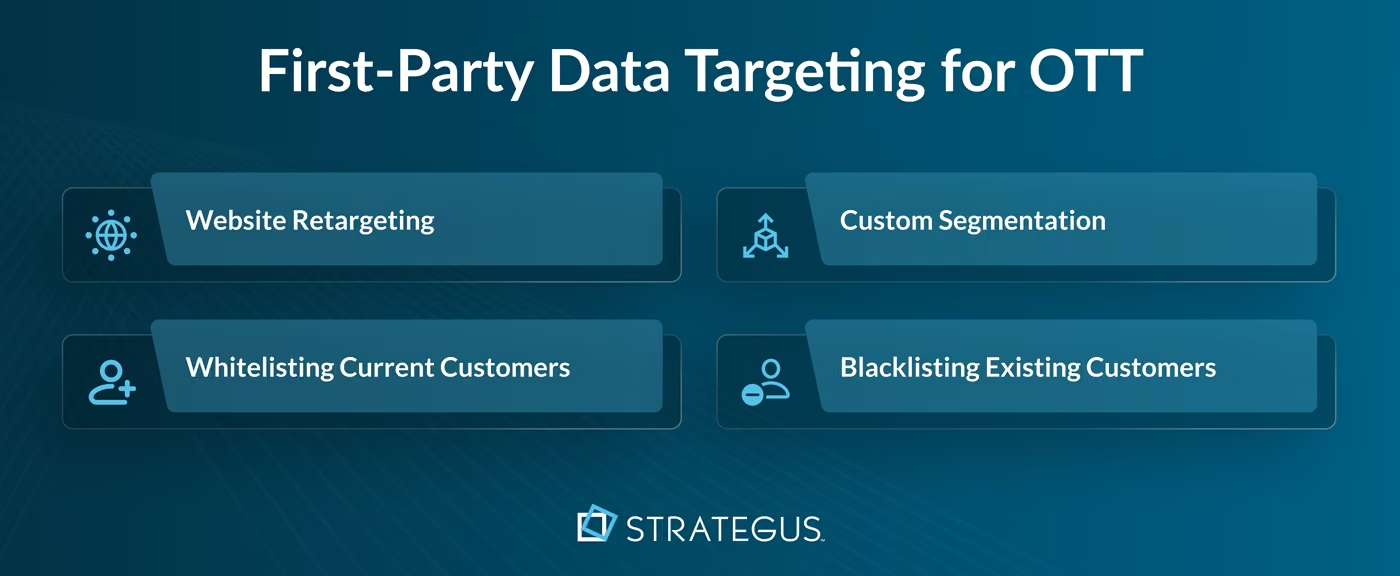
12. Website retargeting
Website retargeting transforms anonymous site visitors into engaged prospects by tracking their browsing behavior through strategically placed pixels and serving relevant OTT ads after they leave.
The key to effective retargeting lies in understanding which pages signal the highest purchase intent. Abandoned product pages, service detail views, or pricing pages usually indicate serious consideration that just needs an extra nudge.
By focusing your retargeting efforts on these high-intent behaviors and crafting messages that address common hesitations or highlight missed benefits, you can effectively guide users back into your funnel and dramatically increase conversion rates for purchases or bookings that might otherwise be lost.
13. Current customer whitelisting
Your existing customers represent your most valuable audience segment, yet many brands overlook them in favor of constant new customer acquisition. Creating a whitelist from your purchase history and CRM data allows you to deliver exclusive promotions, strategic upsells, or loyalty incentives through OTT ads that acknowledge and reward their ongoing relationship with your brand.
This targeted approach not only deepens customer lifetime value by encouraging repeat purchases and higher order values, but also keeps your brand top-of-mind between natural purchase cycles, ensuring customers think of you first when needs arise.
14. Existing customer blacklisting
Smart suppression lists built from your CRM data prevent the common mistake of showing acquisition-focused ads to people who've already converted, saving budget while improving message relevance.
This strategic exclusion reduces ad waste by ensuring you're not paying to reach customers who don't need convincing, while also avoiding the confusion that comes when loyal customers see "new customer only" offers they can't access.
The result is a more sophisticated campaign structure where every user sees messaging aligned with their actual relationship status, making your overall strategy more cost-efficient and your customer communications more coherent.
15. Custom segmentation
Advanced segmentation goes beyond basic demographics by using your CRM, transaction history, and behavioral analytics to create detailed audience groups based on product interest, lifecycle stage, spending patterns, or geographic location.
This granular approach enables you to deploy custom creatives that speak directly to each segment's specific needs, pain points, and intent levels. For example, a fitness enthusiast might see equipment recommendations while a beginner sees educational content.
The precision of custom segmentation delivers highly relevant ads that not only improve click-through rates and engagement metrics but ultimately drive more conversions by ensuring every viewer receives a message that feels personally crafted for their situation.
Advanced Tactics to Drive OTT Results
At Strategus, we've developed proprietary targeting methods to maximize campaign performance. These often combine insights from disparate data sources to take OTT advertising precision and relevance to the next level.
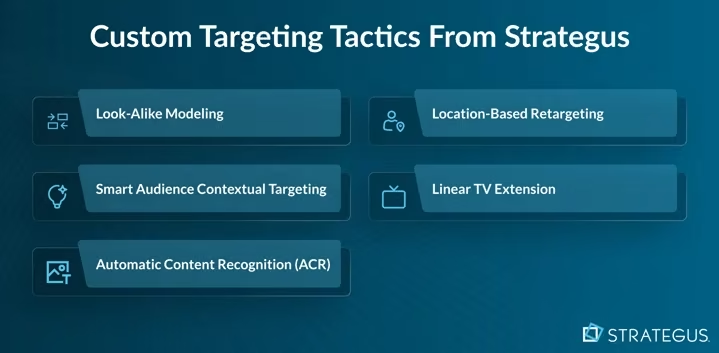
16. Look-alike modeling
Look-alike modeling transforms your best customers into a blueprint for finding new ones by analyzing their shared characteristics and behaviors to identify similar prospects at scale.
When you feed high-value customer lists into sophisticated platforms like Meta or The Trade Desk, their algorithms identify patterns, from demographics to browsing behaviors, that your top performers have in common.
Testing these modeled segments with your proven creative assets allows you to scale acquisition efforts efficiently while maintaining quality, essentially cloning your success by targeting users who exhibit the same traits and behaviors as your most profitable customers.
17. Location-based retargeting
Mobile GPS data and beacon technology create powerful opportunities to bridge the gap between physical and digital experiences by targeting users based on their real-world movements.
Whether someone visited your store and left without purchasing or spent time at a competitor's location, location-based retargeting delivers timely OTT ads featuring exclusive offers, new product launches, or location-specific deals designed to drive them back.
This approach captures real-world buyer intent at its peak, turning foot traffic patterns into actionable targeting signals that connect offline behavior with online advertising for measurable store visit lift.
18. Smart audience contextual targeting
Modern contextual targeting goes beyond simple content matching by combining environmental signals like genre, theme, and keyword clusters with behavioral data to create a multi-layered targeting approach.
This sophisticated strategy ensures your ads appear not just alongside relevant content, but at moments when viewers are most psychologically receptive to your message.
For instance, a travel ad during an adventure documentary hits differently than during a news program. The result is advertising that feels native to the viewing experience, captures attention when engagement is highest, and drives both immediate action and long-term brand recall through strategic content alignment.
19. Linear TV extension
Television advertising doesn't have to end when the commercial break does. Device graphs and household mapping technology allow you to extend your linear TV campaigns seamlessly into the streaming world.
By identifying households previously exposed to your traditional TV commercials and retargeting them across OTT platforms, you reinforce brand messaging and fill critical frequency gaps created by your audience’s fragmented viewing habits.
This cross-platform approach ensures your message stays consistent and top-of-mind whether viewers are watching cable, streaming services, or bouncing between both, maximizing the impact of your linear TV investment.
20. Automatic Content Recognition (ACR) targeting
ACR technology provides an unprecedented window into actual viewing behavior by detecting exactly what shows, genres, or networks viewers engage with on their smart TVs in real-time.
This granular data goes far beyond self-reported preferences or assumed interests, revealing true content consumption patterns that inform highly precise targeting strategies.
When your OTT ads align with these verified viewing habits, reaching comedy lovers during their streaming sessions or sports fans between games, you achieve contextual relevance that generic demographic targeting simply can't match, leading to significantly improved engagement and campaign performance.
21. Dynamic creative optimization
Dynamic creative optimization (DCO) tools allow advertisers to automatically personalize visuals, messaging, or CTAs for each audience segment.
This is where the targeting work covered above pays off at the creative level. The audience segments you built through behavioral data, geotargeting, and first-party CRM lists don't just determine who sees the ad; they can determine what the ad itself says.
DCO represents the same media spend across the same inventory, but the message adapts to the viewer rather than the viewer being forced to fit the message.
Consider a retail brand running a single campaign across three segments:
- Behavioral segment (browsing outdoor gear): Sees an adventure-focused message
- Location segment (within 10 miles of a store): Sees a local offer and in-store CTA
- First-party segment (lapsed customers): Sees a "we miss you" win-back offer
All three viewers see an ad that feels personally relevant; none see a generic spot, and none require reshooting the creative. As a single person moves through all three of these stages in the buying journey, they’ll move into different ad segments, and the creative they see will align with their intent at each stage.
Strategus delivers this through dynamic CTV creative, ads that automatically adjust messaging, offers, or overlays based on the audience segment being served.
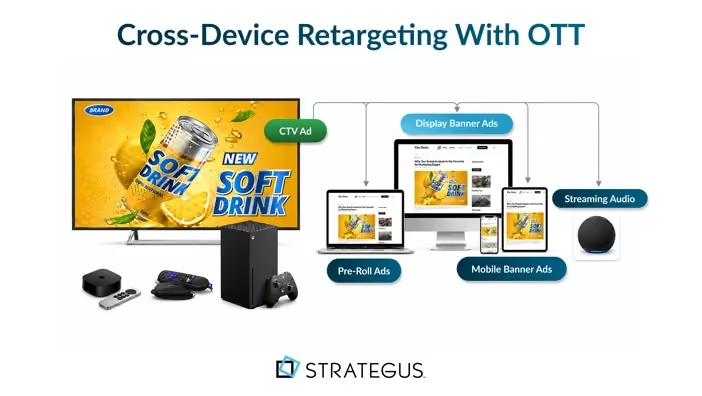
22. Cross-device retargeting
Cross-device identity graphs can reconnect with users who saw your OTT ad on CTV via their mobile or desktop devices. The segment built upstream (behavioral, location, first-party) doesn't expire once the CTV ad is served; it follows the viewer across devices.
You can then serve them follow-up messages, promotions, or product reminders that maintain continuity and nudge them toward conversion, creating a consistent, omnichannel brand experience.
Strategus manages this flow end-to-end. The same targeting logic that built the OTT segment drives the retargeting sequence across every device, ensuring message continuity and measurable performance outcomes throughout.
Here’s what our cross-device retargeting campaign typically looks like:
- Segment is built and activated (e.g., auto brand targeting users showing in-market vehicle research behavior)
- CTV ad is served to that segment on the big screen
- Identity graph matches that household to mobile and desktop devices
- Follow-up ads serve on those devices, display, pre-roll, mobile banner, with a similar message and offer, but different creative
- Each touchpoint builds on the last rather than starting over and repeating the same thing on a different device
This kind of ad experience is crucial for CTV-based ad programs, as viewers don’t convert on the TV screen itself. The conversion happens on a smaller device, often hours or even days later, so the follow-up is where the targeting investment actually pays off.
23. Time-of-day targeting
Time-of-day targeting simply means restricting ad delivery to specific time windows based on when a target audience is most likely to be watching and most receptive to a message.
The advertiser sets their desired time windows in the DSP, ads are only served during those windows, and, as a result, the budget is only spent where it will have the most impact.
For example, a food delivery brand might focus its ad spend on the hours between 5pm and 9pm, when hunger and decision-making align, and avoid morning hours where the message has less relevance and urgency.
Primetime evening hours (7pm-11pm) drive the highest CTV usage, but the right window depends on who you're targeting and what action you want them to take.
How to Layer OTT Targeting Tactics for Maximum Impact
The OTT targeting tactics we’ve covered here don’t have to be applied in isolation. In fact, the most effective OTT campaigns combine multiple targeting layers to build audiences that are precise, efficient, and hard to replicate.
The key consideration here is that each signal tells you something about your audience, but not everything.
Behavioral data tells you what someone is interested in. Location data tells you where they are. First-party data tells you who they actually are. Each is a different building block, and when you stack them together, you get an audience defined by interest, intent, and identity at the same time.
Here’s how that might look for a home services brand:
- Start with a behavioral layer: Users browsing home renovation content, visiting contractor sites, and searching for home improvement keywords.
- Add a location layer: Narrow to households within the serviceable zip codes the brand actually operates in (a plumbing company in Denver, for example, has no use paying for impressions served in Phoenix), eliminating anyone they can't convert.
- Add a first-party layer: Suppress existing customers from the CRM so the budget focuses entirely on net new acquisition, or target lapsed customers specifically to drive re-engagement.
When you run a layered OTT targeting approach like this, you’ll find that reach narrows compared to a single-tactic campaign. But while you reach fewer buyers, the quality and likelihood of purchase increase dramatically.
That’s because every impression serves someone who meets multiple qualifying criteria, not just one. As a result, you’ll generally see ROAS improve because wasted impressions are eliminated at each layer.
The layering principle applies across any combination of tactics in this article; the specific mix depends on campaign goals, available data, and whether the objective is acquisition, retention, or conquesting.
A retail brand running a conquesting campaign, for example, might layer behavioral data targeting competitor shoppers with demographic targeting for their core buyer profile, then add a location layer to focus on markets where they're actively expanding.
Closing Thoughts — Doing OTT the Right Way
While many platforms offer OTT advertising, Strategus stands apart as the industry's most comprehensive managed service provider, combining cutting-edge technology with hands-on expertise that turns complex targeting strategies into measurable business outcomes.
We've pioneered programmatic CTV advertising since the channel's earliest days, giving us the deep experience and battle-tested playbooks that agencies and brands need to succeed in the advertising world. Our fully managed approach means you get enterprise-level capabilities without the overhead, complexity, or learning curve of building these competencies in-house.
At Strategus, we help brands and agencies eliminate wasted spend and transform OTT targeting into predictable, scalable growth.
Here's how we drive superior results:
- Advanced data integrations that unlock precision audience targeting across 200+ premium publishers and every major DSP, giving you reach and accuracy that standalone platforms can't match.
- Custom audience tactics built specifically for your brand's unique goals, leveraging everything from sophisticated look-alike modeling to location-based retargeting and ACR data.
- Dynamic creative execution powered by real-time optimization that adapts messaging based on performance data, viewer context, and campaign objectives for maximum engagement.
- Hands-on campaign management from senior-level experts who obsess over every metric, constantly optimizing your campaigns to squeeze maximum ROI from every impression while you focus on your core business.
- Transparent reporting and attribution that connects every dollar spent to real business outcomes, proving ROI with cross-device tracking and comprehensive performance dashboards.
Ready to see why leading agencies and brands choose Strategus for their most important OTT campaigns? Speak to a Strategus expert to learn more today!
Frequently Asked Questions
1. What is OTT targeting?
OTT targeting refers to the different ways advertisers can create audience segments when running ad campaigns on over-the-top (OTT) platforms (streaming video delivered over the internet rather than through cable or satellite).
2. What does OTT stand for?
OTT stands for over-the-top, referring to the delivery of video content over the internet rather than through traditional cable or satellite infrastructure. The "over-the-top" name comes from the idea of going beyond legacy distribution systems to reach viewers directly via the internet.
3. What is an example of an OTT?
Netflix is the most widely recognized example of an OTT platform. Others include Hulu, Disney+, Peacock, and Amazon Prime Video. Each delivers content via the internet rather than through cable or satellite, which is the defining characteristic of OTT.
4. Which is the most popular OTT?
Netflix remains the dominant OTT platform globally by subscriber count, though competition has intensified significantly. In the US, Hulu and Amazon Prime Video also command large audiences, and ad-supported platforms like Peacock and Tubi have grown rapidly as viewers shift toward free, ad-funded options.
5. What are the types of OTT?
OTT platforms generally fall into three monetization models:
- SVOD (subscription video on demand), where viewers pay a monthly fee
- AVOD (advertising video on demand), which is free to viewers and funded by ads
- FAST (free ad-supported streaming TV), which mimics a linear TV experience with scheduled programming and ad breaks.
6. How to advertise on OTT?
Start by defining your audience and goals. Choose a DSP or managed service like Strategus to access OTT inventory. Upload creative assets, apply targeting filters like location or behavior, and track performance through analytics tools. Adjust the campaign based on data to maximize ROI.
7. What targeting methods work best for advertising within VoD content?
Use contextual targeting to align ads with the viewer’s current content. Combine it with behavioral, purchase, and intent data for precision. Retarget based on past views, use geotargeting for relevance, and layer in frequency caps to avoid oversaturation. Sequential messaging also performs well.
8. How to incorporate OTT streaming ads into media planning?
Blend OTT with linear and digital channels to extend reach. Use your CRM and audience data to build OTT segments. Allocate budget based on expected lift, and use view-through attribution to measure impact. Plan creatives and frequency to fit streaming behavior.
9. How to buy OTT advertising?
You can buy OTT ads through a demand-side platform (DSP) or a managed service provider. Choose targeting options like geo, interest, or device. Upload creatives, set a budget, and track results through performance dashboards. Managed partners handle setup, targeting, and optimization for you.
Frequently Asked Questions
Is Netflix AVOD or SVOD?
Layer interests, purchase behavior, and viewing habits on top of age and location — so every impression reaches someone who actually matters to your business.
What is 20+ OTT Targeting Tips Every Advertiser Must Know in 2026?
Still relying on broad targeting that wastes budget? OTT ads can do better.
How Does OTT Ad Targeting Work?
OTT ads, including those served on connected TV (CTV) devices, are often purchased programmatically. This means they're bought on a per-viewer basis rather than being tied to specific content.
What is 23 Pro Tips to Locate Your OTT Ads Audience?
OTT targeting spans a wide range of options and data sources. We recommend layering different targeting tactics to create highly customized audiences to maximize campaign impact.
What is third-Party Data Targeting?
Third-party data is information acquired from external providers that offers a broad market view. It's helpful for identifying new audience segments and enhancing existing strategies.
What is demographic targeting?
Basic demographic data like age, gender, and income form the foundation of most targeting strategies. While this approach may seem broad compared to more sophisticated methods, it remains incredibly valuable when layered with additional signals like behavioral patterns or geographic location.
get in touch
Subscribe to our
newsletter
Stay ahead with strategies and insights from streaming advertising experts.
Learn from the field
.webp)
.webp)
.webp)
.webp)
.webp)
.webp)
.webp)
Book a demo
Talk to an expert
Tell us what you want to achieve and we'll map the media strategy to get you there — no self-serve dashboards, just a partner who does the work.